

Plant and Care for New Trees
Plant and Care for New Trees
Related webpages
Planting trees is one tool to mold your forest into what you want it to be. Whether you are planting one large yard tree or thousands of small trees, you’ll need the same techniques for the planting to be successful. Any kind of tree-planting activity can be boiled down to these essential steps:
- Identify why you want to plant trees.
- Choose the right trees for the location.
- Plan which trees will go where.
- Prepare the site for planting.
- Plant using proper techniques.
- Care for your planted trees.
A great resource to get started is the DNR’s Personalized Tree Planting Plan, which asks you some basic questions about your project and provides general recommendations. Then, a conversation with a forester can help you figure out the details of your tree planting plan.
Below is an overview of the process of planting trees. For a more detailed guide, see Creating a Forest: A Step-by-Step Guide to Planting and Maintaining Trees (PDF) and Reforestation Guide: Enrich, Restore, and Adapt Northern Forests.
Identify why you want to plant trees
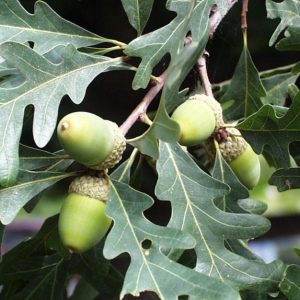
Just like any woodland stewardship activity, it’s important to have a clear goal in mind when you embark on a tree-planting project. Why are you planting trees, and what you do want the forest to look like 10, 20, or 50 years from now? Here are some common goals you might have in mind:
- Improve the aesthetic appeal and resilience of your land by creating diversity in the size, ages, and species of trees
- Create food sources and cover for wildlife
- Produce timber for income or for your own use
- Control erosion by stabilizing soil with deep-rooted trees
- Create windbreaks to protect structures and provide sanctuaries for wildlife
- Harvest non-timber forest products like maple syrup, nuts, or Christmas trees
Choose which types of trees to plant
More than 60 species of trees are native to Wisconsin—but that doesn’t mean you can pick any of them for your planting activity. Different species will be better choices than others based on the unique features of your woods as well as your goals. If your goal is to improve wildlife habitat, check out our publications Trees, Shrubs, and Vines with Wildlife Values (PDF) and Woody Cover for Wildlife (PDF). If your goal is to create a windbreak, check out Windbreaks that Work (PDF).
Climate conditions
There is some north/south variability in what can grow where in Wisconsin. Winter temperatures, frost timing and precipitation tend to be the main limiting factors in climate. For example, although many people want to plant black walnut for its timber value, it will only grow to its potential in the southern part of the state. On the other end, black spruce does better in the northern half of the state.
Soil characteristics and water movement
You can find your soil type on maps provided by the Natural Resources Conservation Service (NRCS) at their local office or online. If you want more detailed data, you can check your soil fertility through a soil test by the UW Soil and Forage Laboratory. The soil type impacts the moisture content of soil. Some trees prefer well-drained soils (sandy), while others prefer moist soils (clays). And some trees prefer fertile soils, while others can take advantage of nutrient-poor soils. For example, black spruce prefers very moist and nutrient-poor soils, which is reflected in their presence in boggy wetland areas. On the other hand, red and jack pine do well on very dry soils.
How much sunlight will reach the new trees
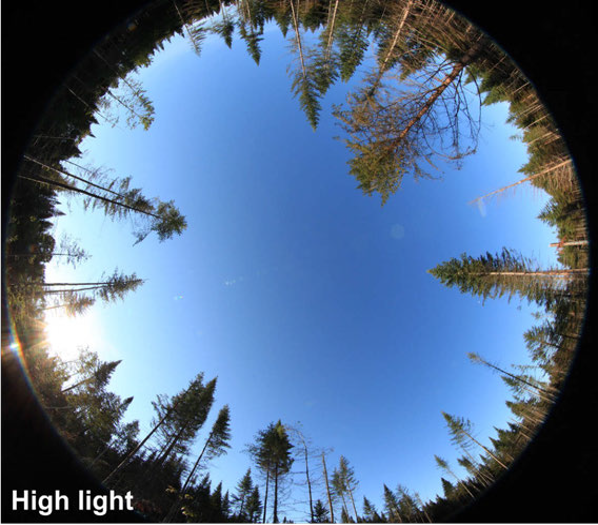
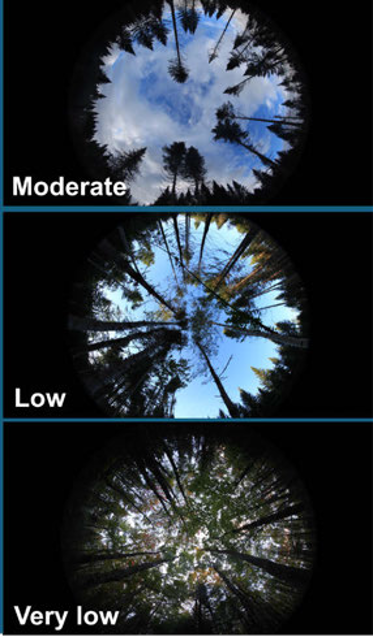
Are you planting trees below an existing canopy, in a completely open area, or somewhere in between? This is important to consider because some trees (like red pines) need lots of sunlight to thrive, while others (like hemlocks and sugar maples) are perfectly happy hanging out in the shade.
Forest health conditions
Native insects and diseases are a natural part of the ecosystem, but some of these make it difficult to establish particular species of trees. Additionally, the overpopulation of deer and the presence of invasive species like emerald ash borer affect which trees are likely to grow well. Check with a forester to find out about the problems that are most relevant in your county and on your woodland property.
Plan the arrangement, prepare the site, and plant the trees
Arrangement
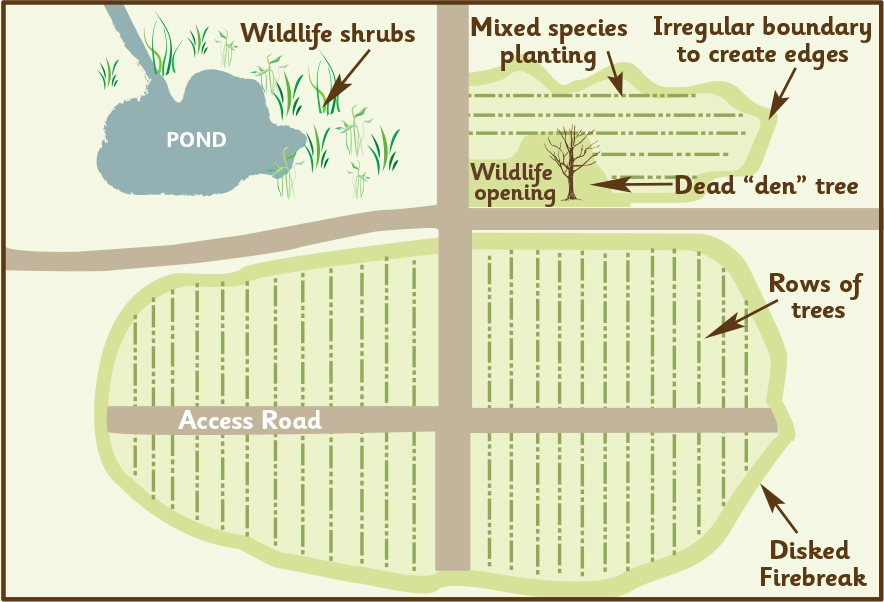
When deciding how many trees to plant and how you will plant them, you’ll need to think about the arrangement. If you want to maximize tree growth and make your maintenance easy, then planting the trees in rows will probably be best. If you are looking to create wildlife habitat, then creating clumps of trees for shelter is a good idea. If you want to minimize the visual impact of rows of trees, then you can alternate rows of conifers and hardwood trees, plant at an angle to any roads, and leave gaps in the rows for openings and viewing corridors.
It’s a good idea to leave space around the planting and leave roads within the planting so that you can easily get around in a vehicle. Doing this will also create firebreaks around and within your planting, which will slow or stop wildfires from burning your trees.
Site preparation
The best time to prepare the site for planting is the summer and fall before you plant in the spring. You want to reduce the presence of unwanted plants (which could be native or non-native) so that the new trees will have less competition for sunlight, water, and nutrients.
There are two main types of site preparation. Mechanical site preparation uses plowing, disking, chopping, crushing, furrowing, or other approaches to reduce vegetation and is usually used in fallow fields or other agricultural settings. Chemical site preparation uses herbicides. Depending on your situation and level of comfort with herbicide use, you can use some combination of these two approaches.
Planting
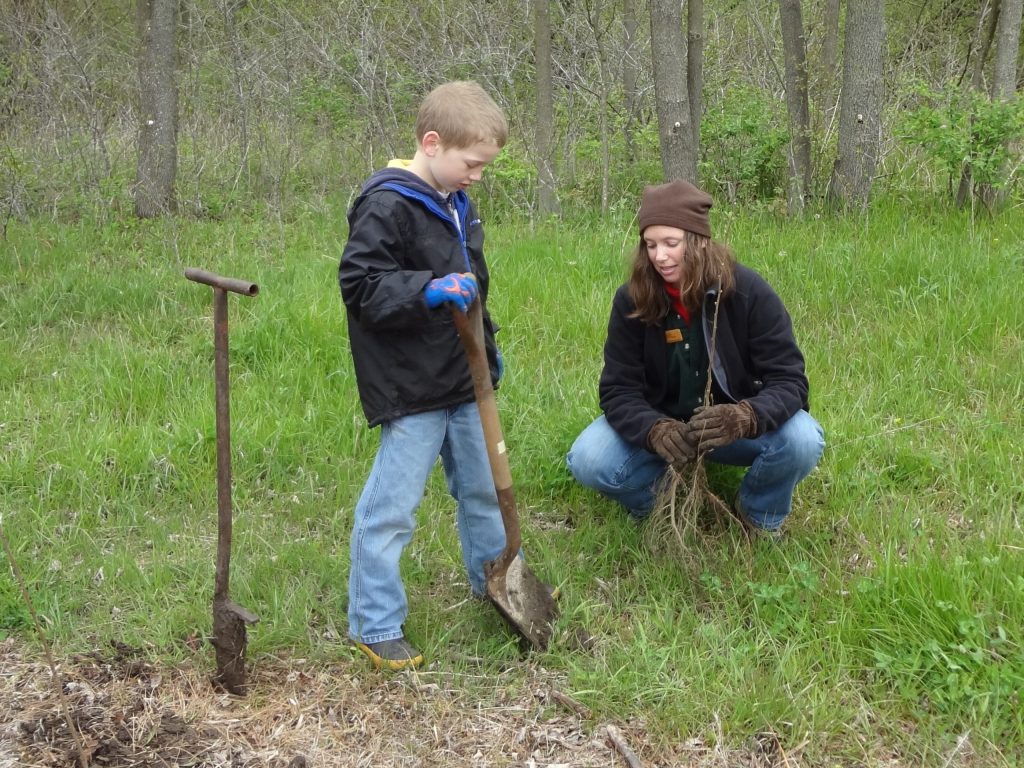
Make sure to handle seedlings carefully and keep them cool, shaded, and moist so that you do not injure them before planting.
Here are the basic steps in planting trees:
- Create a planting hole large enough for the seedling’s root system.
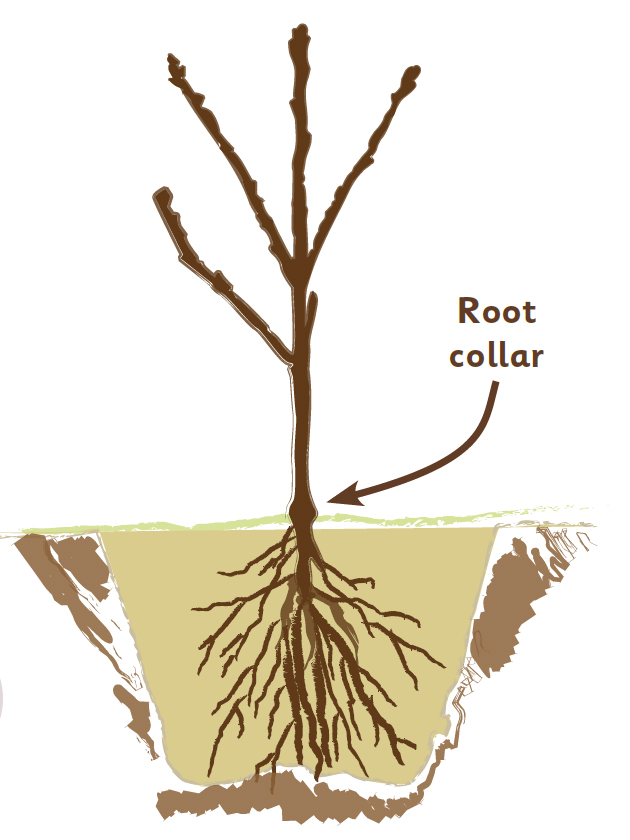
- For bare root seedlings, place the roots in the hole so that they are hanging freely. For seedlings that come in a container with soil, place the roots and soil in the hole so that they are pointing down and not jammed into the hole.
- Ensure the seedling is at the right depth. That means the root collar (a slight swelling on the seedling where the stem meets the roots) should be at ground level.
- Pack the soil firmly around the seedling.
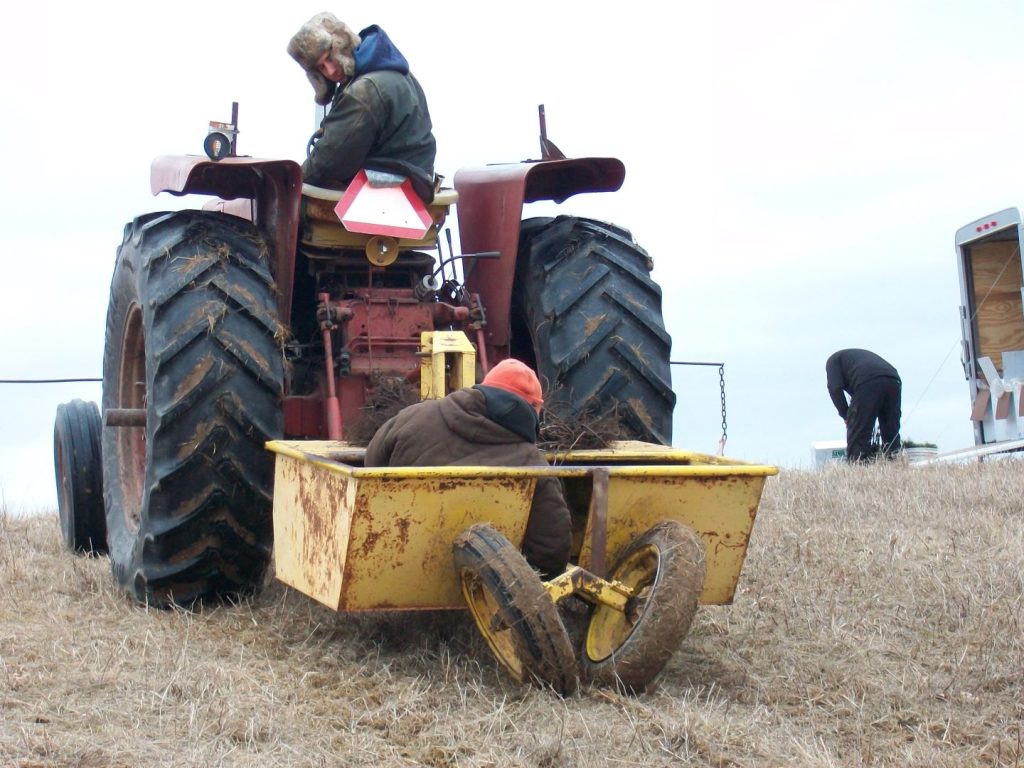
If you are just planting a few trees, a shovel will get the job done. But when you are planting hundreds or thousands of trees, you need tools specifically designed to make it easy and efficient.
A commonly used hand-planting tool is a planting bar, also called a dibble. A dibble makes a slit in the ground that you place your seedling into. You finish the planting by packing the seedling into the hole with the bar or your heel. When you get used to the tool, the whole process will take less than a minute per tree. On a good day you might plant up to 500 seedlings.
Machine planting is best suited for level terrain that is not rocky or steep, has few stumps, and is free from the tops and branches of recently harvested trees. The planter cuts roughly a ten-inch-deep furrow in the ground and then packs the soil around the seedling. One or two people will be seated in the planter placing seedings in the furrow, so it needs to be pulled by a tractor with at least 30 horsepower. With a little practice, you can plant around 5,000 seedlings a day.
Continue to take care of your new trees
If you let your planted trees fend for themselves, they are unlikely to survive. Instead, you should proactively protect and nurture seedlings. To give them an advantage over undesired plants competing for light, water, and nutrients, you can mulch, mow, and/or use herbicide. To protect against hungry predators like deer, mice, voles, and rabbits, you can use physical barriers or repellants.
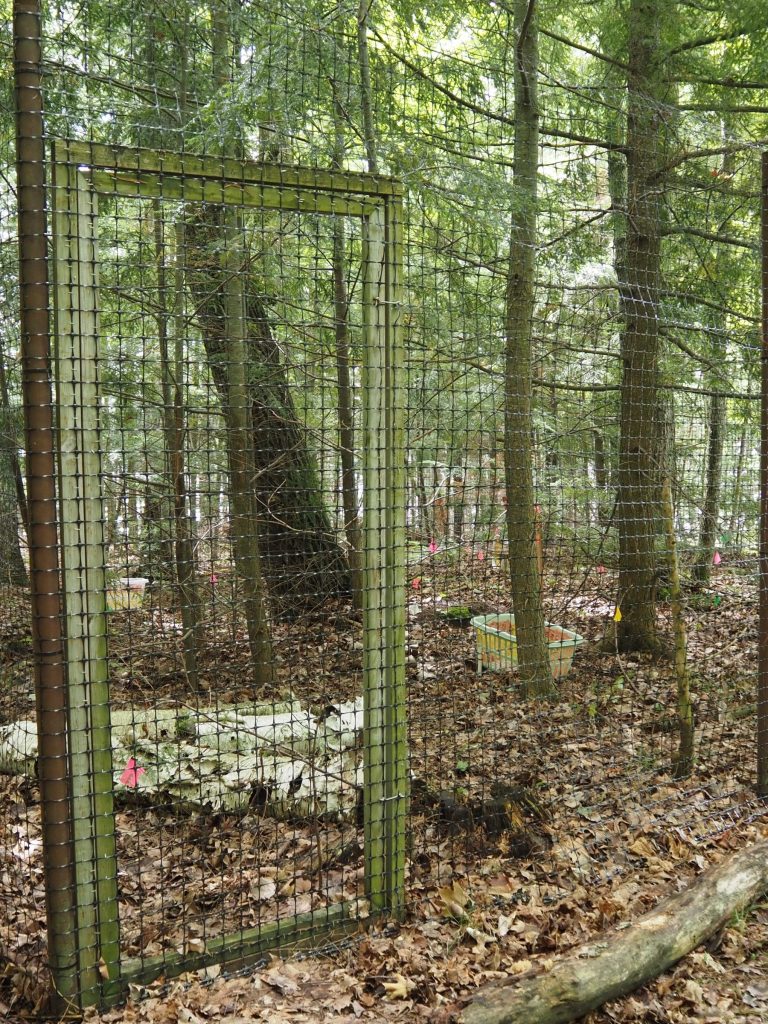
Fencing that surrounds the entire planting is often best for the health of the woods because it protects both trees and understory plants from deer. To protect individual trees, you can use tubes or cages (or, for conifers, caps on the main buds). Deer repellant sprays are another option, but you’ll likely need to reapply them during the growing season. If you conduct a timber harvest, you can create a slash wall out of slash and low-value tree tops as another way to keep deer out.
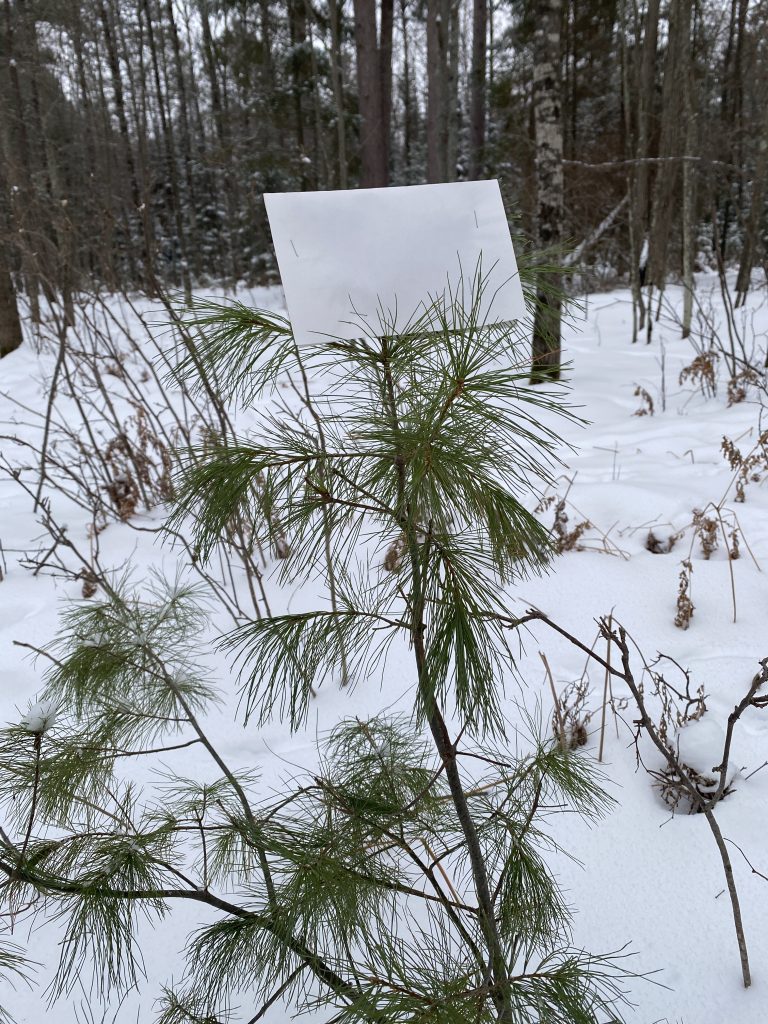
Finally, it’s a good idea to routinely monitor your tree plantings for several years. Multiple times during the growing season, you want to visit the planting area and ask questions like:
- How many of my new trees are still alive?
- Do I see any damage that I didn’t see before?
- Is other vegetation shading out my new trees?
Further Reading
- Creating a Forest: A Step-by-Step Guide to Planting and Maintaining Trees (Wisconsin DNR and UW–Madison Extension, 2023) (PDF)
- Reforestation Guide: Enrich, Restore, and Adapt Northern Forests (University of Vermont, University of Massachusetts Amherst, and Northern Institute of Applied Climate Science, 2025)
- Personalized Tree Planting Plan (Wisconsin DNR)
- Plantation Planning & Design (Wisconsin DNR)
- Web Soil Survey (USDA Natural Resources Conservation Service)
- Tree Planting Tips (Wisconsin DNR)
- Trees, Shrubs, and Vines with Wildlife Values (UW–Madison) (PDF)
- Woody Cover for Wildlife (Wisconsin DNR, 2012) (PDF)
- Windbreaks that Work (Wisconsin DNR, 2003) (PDF)
- Care and Handling of Bare Root Seedlings (Wisconsin DNR and UW Extension, 2021)

If you have questions about tree planting or feedback on this webpage, contact:

Keith Phelps
Working Lands Forestry Educator
keith.phelps@wisc.edu
920-840-7504
Page written by Kris Tiles, Bill Klase, and Scott Hershberger (UW–Madison Extension). Last updated March 2026.
Additional photo credits:
- Monitoring trees planted in an estuary: Lake Superior National Estuarine Research Reserve
- White oak with immature acorns: Paul Wray, Iowa State University, Bugwood.org.