

Home » Learn about Woodland Stewardship » Farming with Trees (Agroforestry) » Windbreaks
Windbreaks
Windbreaks
Learn about other agroforestry practices
Agroforestry consists of five very different practices (forest farming, riparian buffers, silvopasture, alley cropping, and windbreaks) that are applicable to a variety of situations. Despite often being associated with agriculture, the principles behind agroforestry practices are useful for any landowner to understand. Windbreaks are one of the most adaptable agroforestry practices.
What is a windbreak?
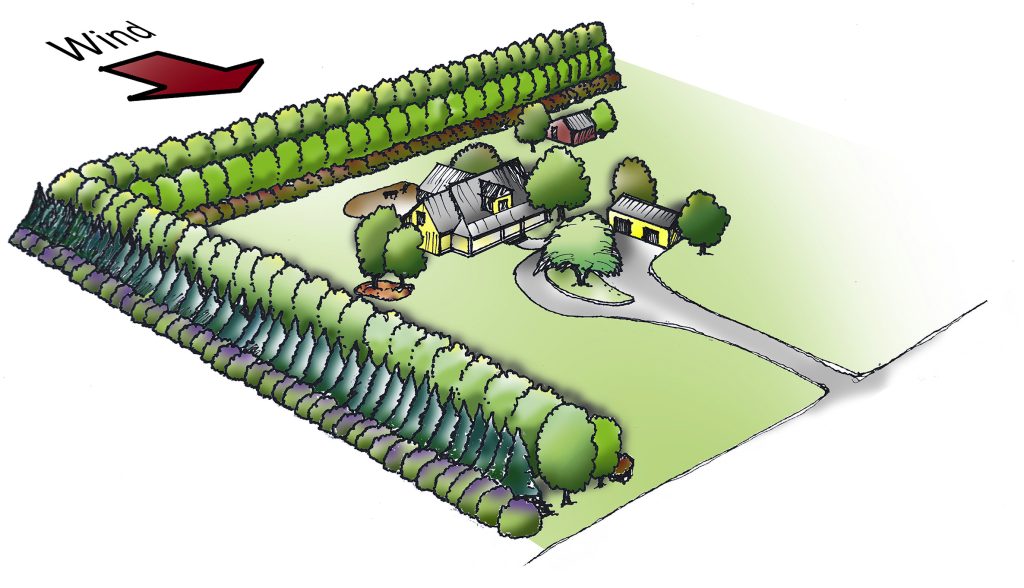
A windbreak, also called a shelter belt, is a planting of one or more rows of trees or shrubs that provides protection from the wind. Whether you’re trying to shelter structures, block snow from roadways, protect crops in the garden, or make your land more hospitable to wildlife, it’s worth considering installing a windbreak.
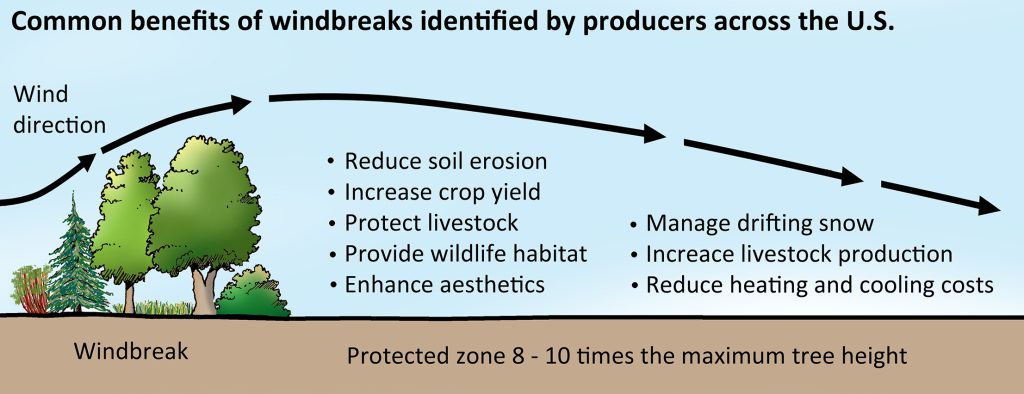
When properly planned, planted, and maintained, windbreaks have numerous economic and environmental benefits. Windbreaks can provide summer shade and block wind year-round to reduce home energy use. The planting can also include trees and shrubs that provide fruit or nuts for people and wildlife, and flowering species to help support pollinators. Using plants with colorful stems and foliage like red osier dogwood, ninebark, or serviceberry is a great way to improve the beauty of your property in every season.
Additionally, in the relatively flat topography found in many parts of Wisconsin, windbreaks add three-dimensional structure to the landscape. This structure can act as noise and visual screens and create micro-climates that improve habitat diversity. Micro-climates are small areas that differ in temperature and exposure to wind, light, and moisture. Increasing the variety of conditions on your property expands the diversity of species it can support, whether they’re wildlife, agricultural, or horticultural.
Planning a windbreak and getting assistance
Windbreaks work best when they consist of several rows of plants with different growth patterns. When choosing species and planting layout, it’s important to consider the plants’ potential height and density. Those factors help determine the necessary plant spacing and overall windbreak length and width. This species guide from the USDA (PDF) will help you select the right balance of species to create an effective windbreak.
Some great native plants from Wisconsin to consider including are hazelnut, highbush cranberry, serviceberry, elderberry, wild plum, aspen, dogwoods, cedars, oaks, and white spruce.
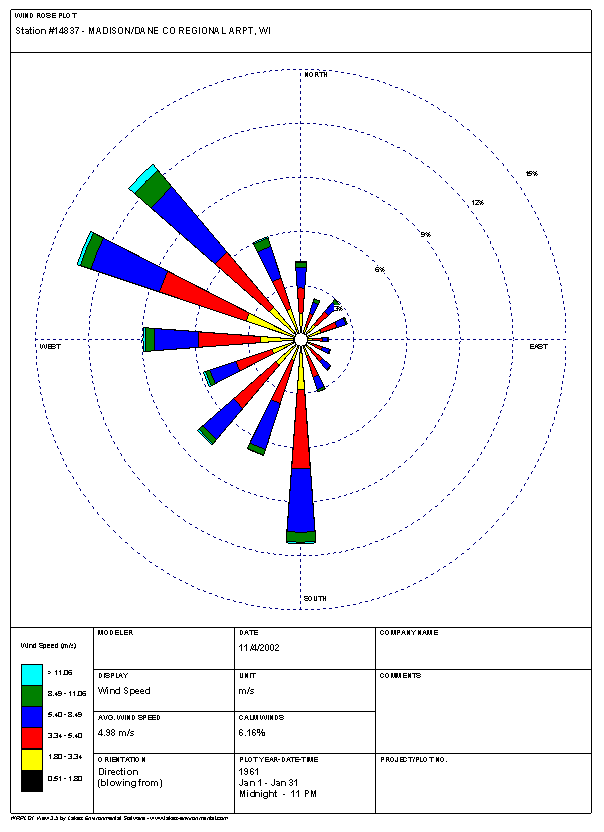
It may be worthwhile to consult a local wind rose (example shows average wind speeds on a compass rose) to help align the windbreak perpendicular to prevailing winds in the right season of the year. Just make sure the design fits both your goals and the local landscape, because windbreaks are not a cut and paste practice.
When planning a windbreak, it’s a good idea to talk with your county’s DNR service forester about your property and species selection. They can help with the layout and provide tips for site preparation and planting best practices. Windbreaks require maintenance after planting as well, like watering, weeding, and pruning. After establishment, it’s a good idea to continue monitoring plant health in an on-going basis, which your forester can help with too.
Recognizing all the benefits of living windbreaks, the USDA has included them as one of the core agroforestry practices in Wisconsin. Under the right circumstances, this makes them eligible for cost-share and technical assistance programs. Contact your local USDA service center to learn more. Even if you’re not eligible for their programs, the USDA’s technical standards (PDF) are a great guide for the decisions you’ll have to make if you think a windbreak is right for your land.
Additional resources
- Windbreaks overview (USDA)
- USDA Windbreak-Shelterbelt Establishment technical standards (2016) (PDF)
- Tree and Shrub Species for Windbreaks (USDA NRCS, 2011) (PDF)
Explore all learning hub webpages
Woodland stewardship topics
Use a chainsaw safely & effectively
> Protective gear for safe chainsaw use
> Grow mushrooms using sawdust spawn
> Grow mushrooms using plug spawn
People and programs who provide assistance
If you have feedback on this webpage, fill out this form. If you have questions about windbreaks, contact:

Tony Johnson
Forestry Educator
anthony.johnson@wisc.edu
608-386-8900
Page written by Tony Johnson (UW–Madison Extension). Last updated March 2026.
Additional photo credits:
- Aerial photo of windbreak: Ryan Armbrust, Kansas Forest Service, Bugwood.org