

Tree Identification
Tree Identification
Related webpages
Being able to identify different trees is a good starting point in getting to know your woods. Much of what you want to do with your woods—from wildlife viewing to recreation to hunting—depends on what types of trees you have or could have. Tree identification may seem tough at first, but it’s a skill that anyone can develop with a little practice.
It’s also a powerful way to overcome plant blindness, which is the human tendency to overlook the plants around us, even though they shape our landscapes and influence our well-being. Can you imagine becoming close friends with someone without knowing their name? Similarly, knowing the names of the trees around you is an important step toward deepening your relationship with the natural world.
A good way to get started is by using a dichotomous key, which offers a series of choices that narrow down what the tree might be. Each choice offers two options for a distinguishing characteristic, such as the branch, leaf, or fruit. For forest trees native to Wisconsin (we have more than 60 native species!), we recommend the keys offered by UW–Stevens Point and the UW–Green Bay Herbarium. For cultivated trees, check out the Wisconsin DNR’s guide to urban trees (PDF), and for trees across the whole U.S., check out the key from the Arbor Day Foundation.
Keep reading to learn about the various features that can help you figure out what tree you’re looking at!
A word of caution if you are trying to use an image recognition app to identify a plant: although they continue to improve, apps are often incorrect, especially for understory plants. In 2025, the accuracy of the most popular apps ranged from 30% to 80% (our colleagues have had the best results with PictureThis.) Lots of plants, including many trees, cannot be identified from just one photo—instead, you need photos of several different features of the plant in order to pin down an ID. We recommend confirming app-based identifications with an expert before making any important decisions.
Habitat and form
Experts are often able to identify a tree from hundreds of feet away. How do they do it? They are piecing together clues from the habitat as well as the form (shape) of the tree.
Habitat
Some species, like black walnut and shagbark hickory, are common in southern Wisconsin but are much rarer up north. Others, such as hemlock and balsam fir, are much more common in northern Wisconsin than in the southern part of the state. These species are adapted to different parts of Wisconsin because of regional differences in temperatures, length of growing seasons, soil types, and other factors.
Soil moisture is another habitat clue. Black spruce, tamarack, cottonwood, and silver maple are some of the species that thrive in wetlands. On the other hand, pines and Hill’s oak are most likely to be found in dry soils. Many Wisconsin forests have moderate moisture (the technical term is mesic), which is preferred by species such as sugar maple, American basswood, and red oak. The amount of sunlight reaching a tree and the other types of trees, shrubs, and herbaceous plants around it can also give you clues about its identity.
Form
The overall shape of a tree can vary dramatically depending on whether it is growing in full sun or is crowded by other trees, whether it experienced any major injuries in its younger years, whether the soil is nutrient-rich or nutrient-poor, and other factors.
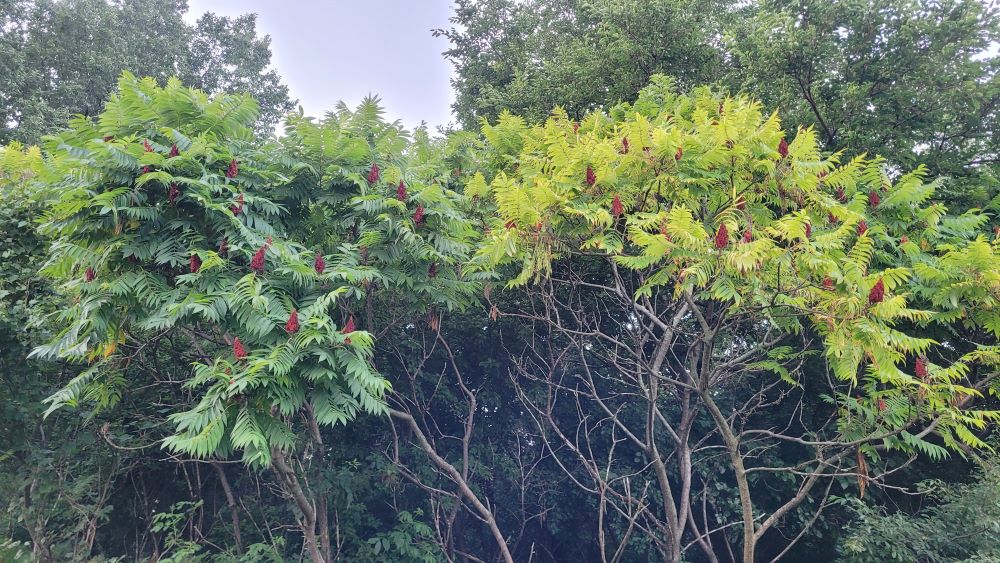
Staghorn sumac normally grows as a multi-stemmed shrub or short tree (above), but when crowded for space and light it can grow as a single-stemmed tree (right). These two photos were taken within a mile of each other. Credit: Sky Hershberger, CC BY-NC 4.0
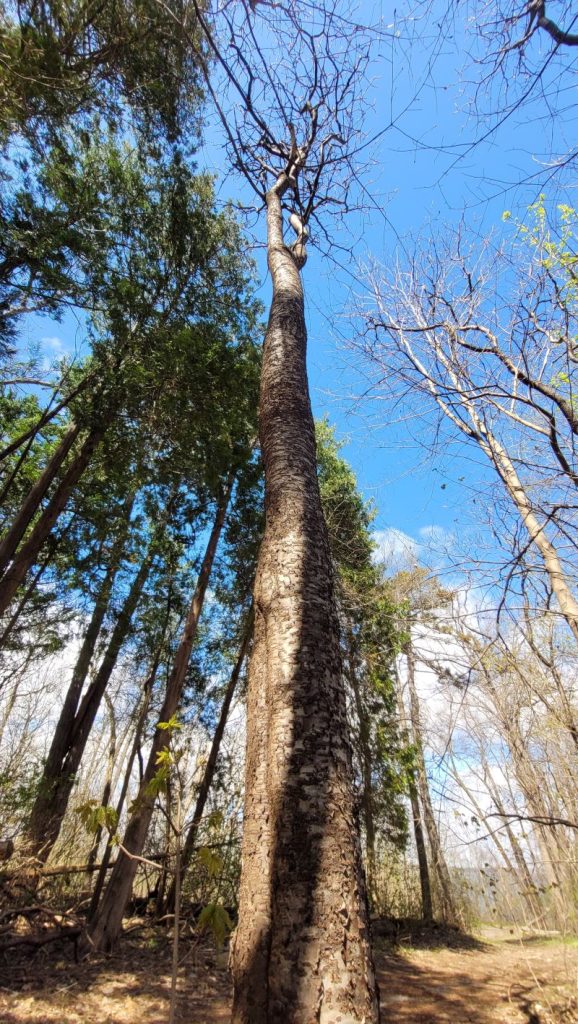
But many species do have characteristic forms that you can learn to spot. For example, balsam fir tends to have a conical shape, while hemlock is more irregular. American elm often takes a vase shape, while an open-grown oak may be wider than it is tall.
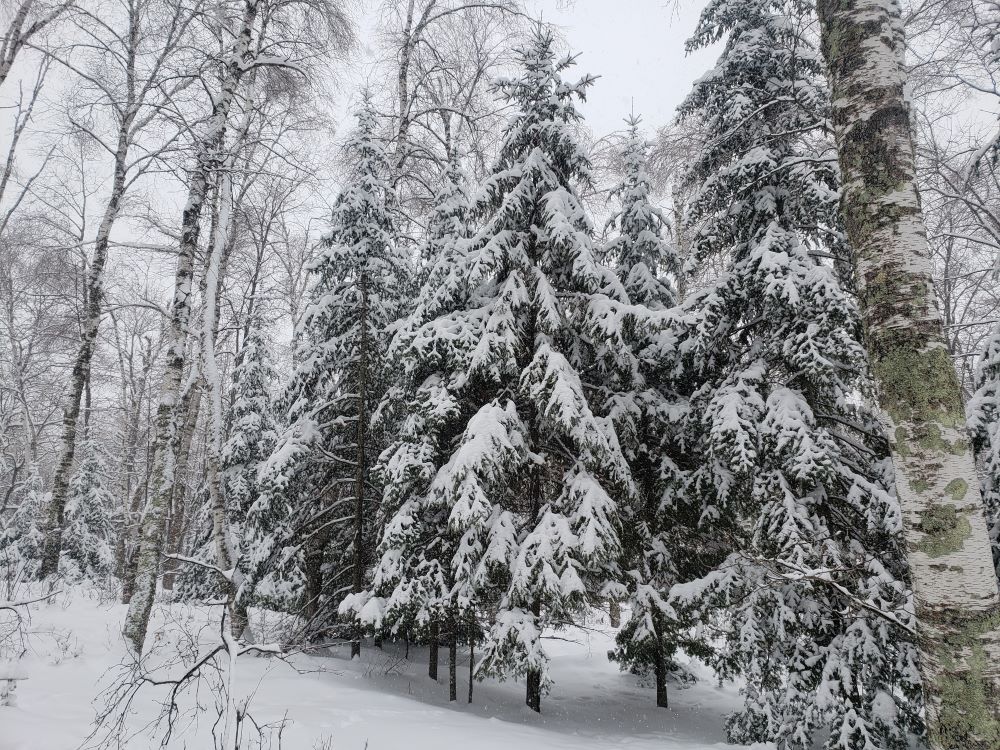
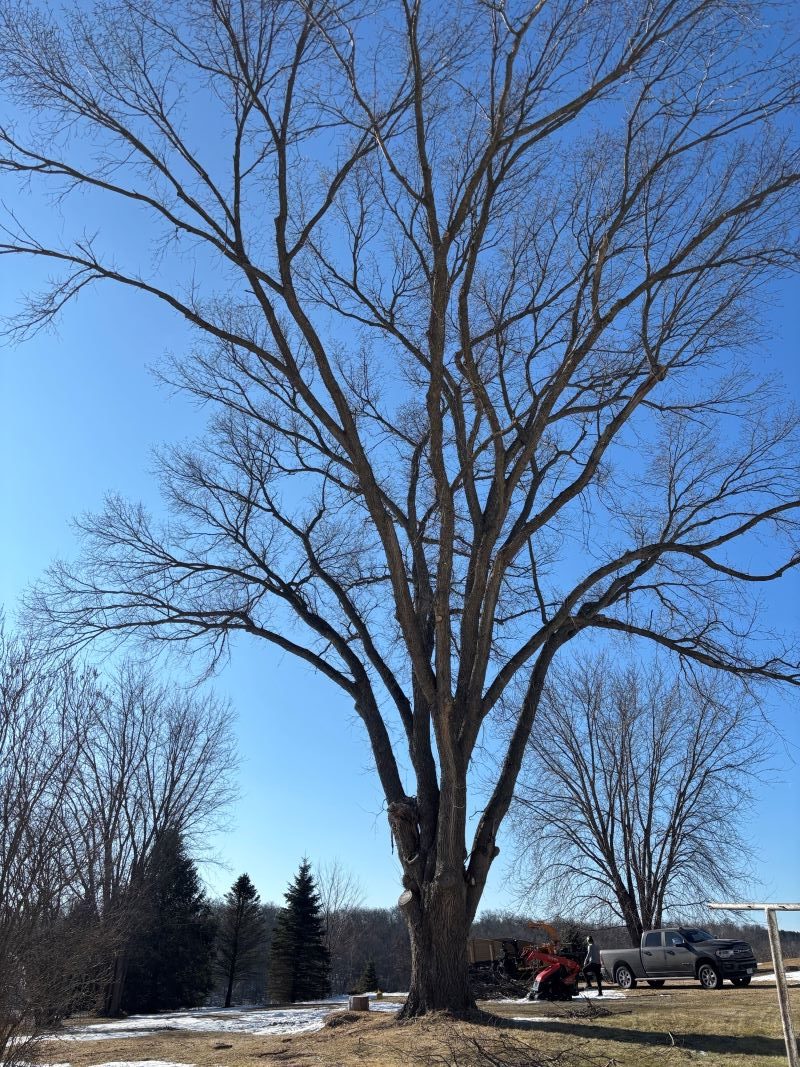
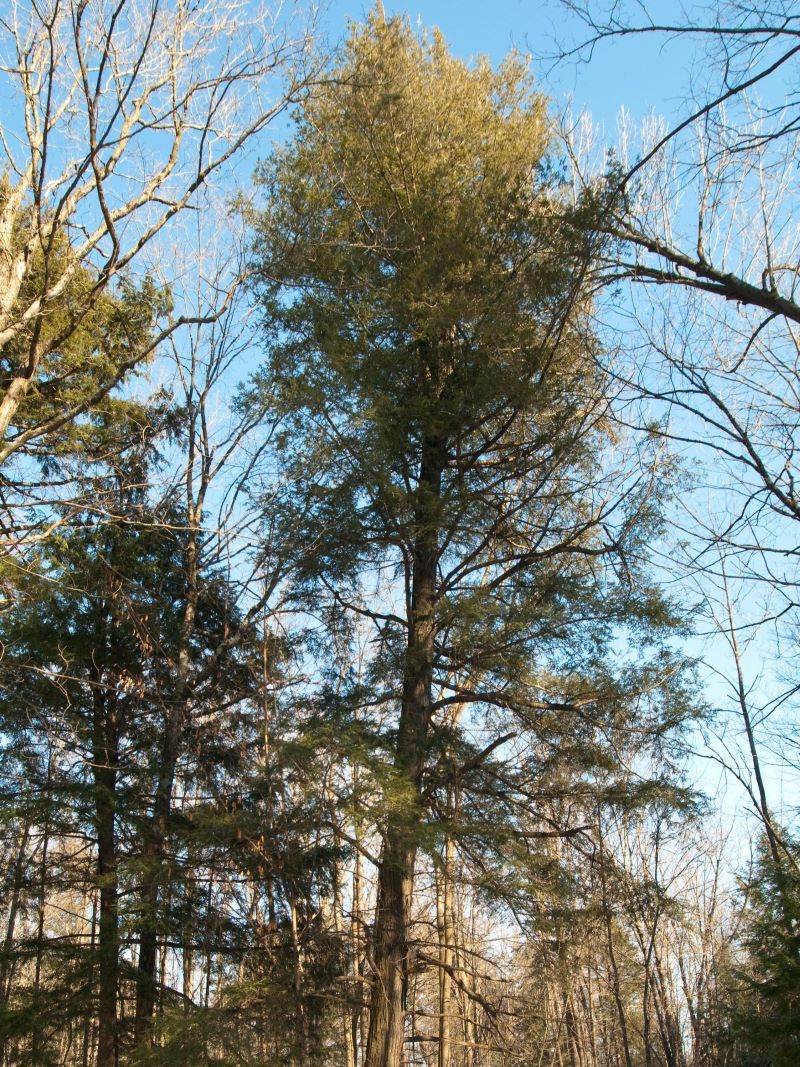
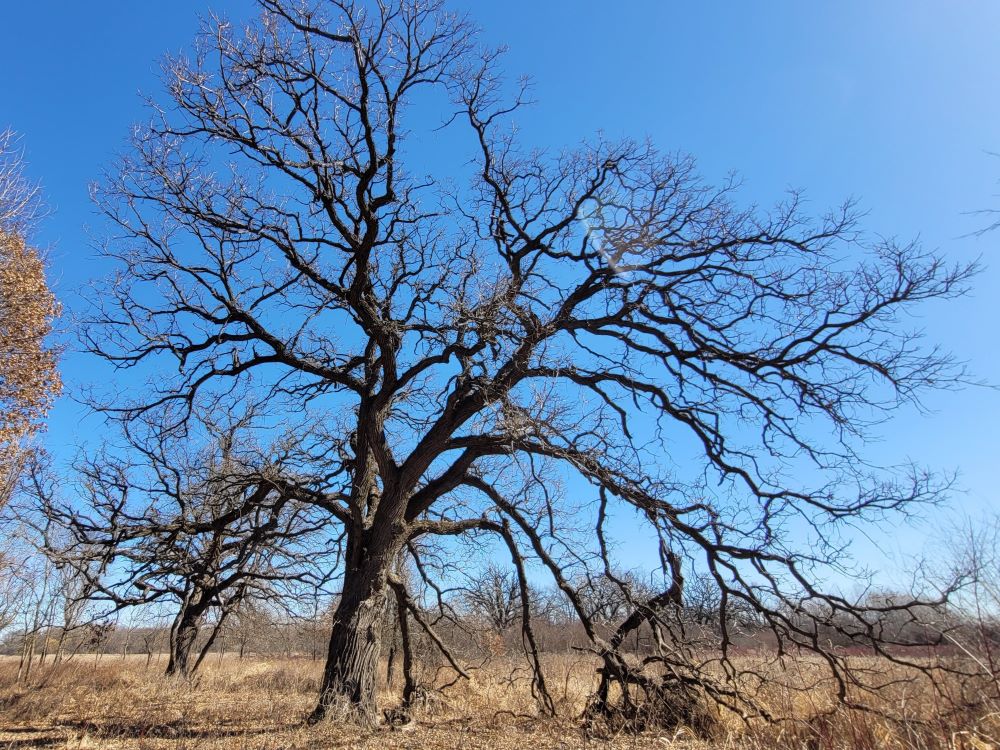
Clockwise from top left: balsam fir, eastern hemlock, bur oak, American elm.
Another form clue for broadleaf trees and shrubs is the branching pattern.
Maples, ashes, viburnums, and most dogwoods have opposite branching, meaning that twigs emerge in pairs on opposite sides of branches, and leaves emerge in pairs on opposite sides of twigs.
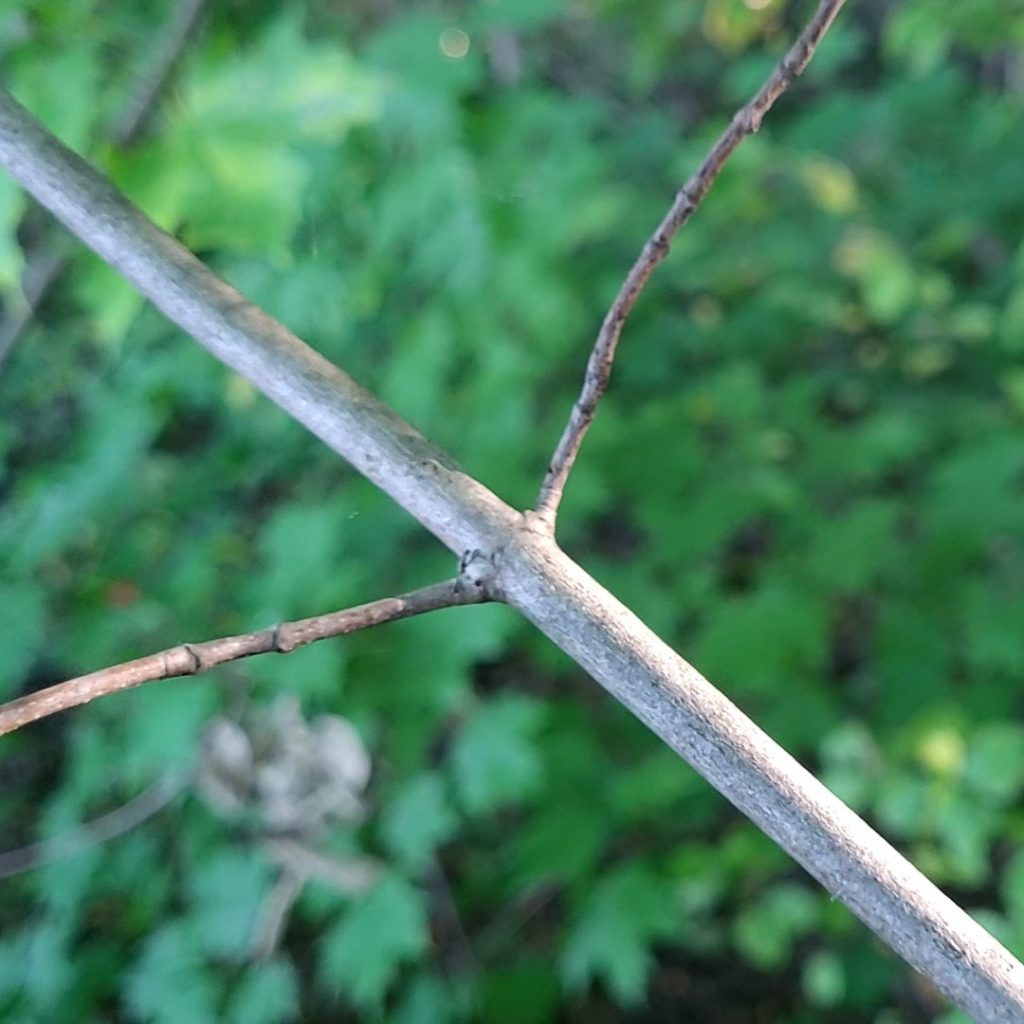
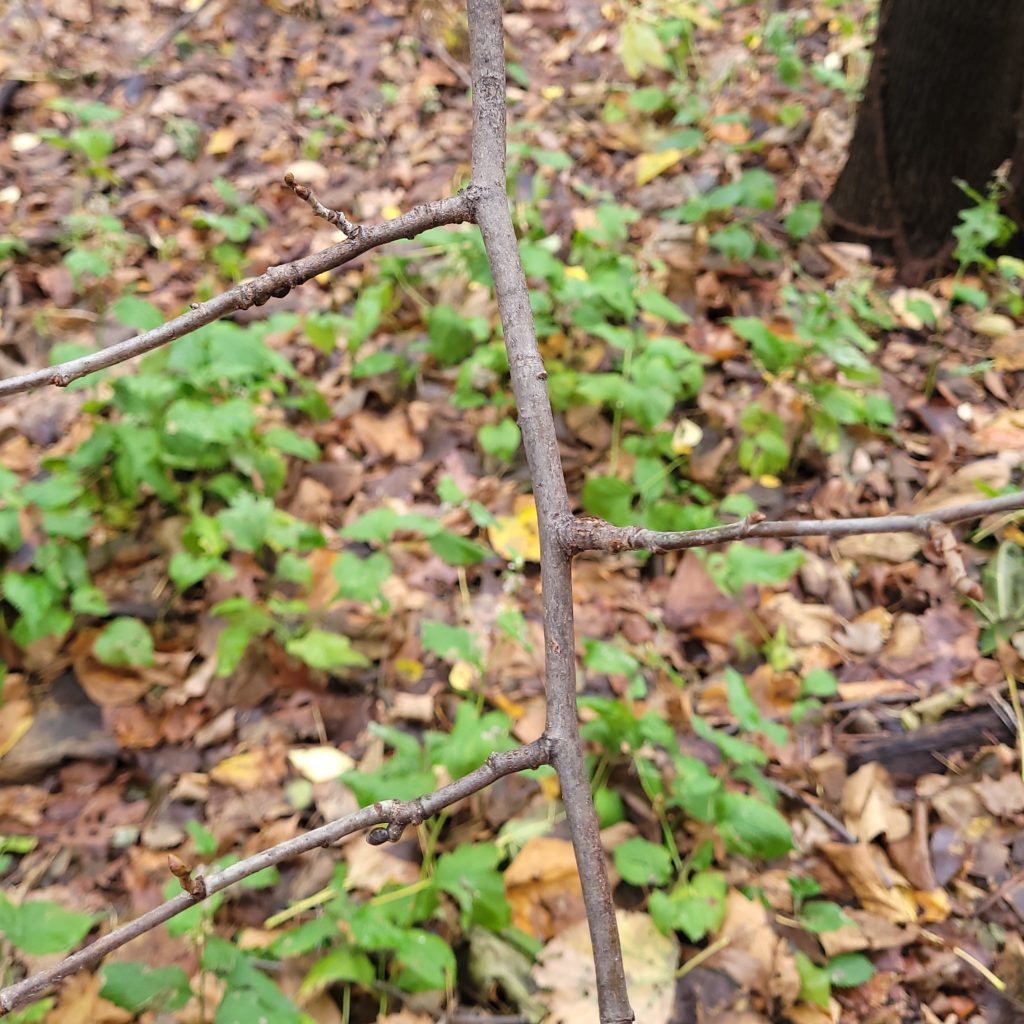
Nearly every other wild broadleaf tree or shrub you’ll encounter in Wisconsin has alternate branching. This characteristic is especially evident when looking into a tree’s canopy in winter.
Leaves
For many people, leaves are the first feature they learn to use to tell apart different types of trees. Leaves are often distinctive enough to tell you which species of tree you’re looking at—but sometimes other features will be more useful.
Conifers
Conifers are trees that have needles and produce cones. Most conifers are evergreen, meaning that they keep their needles year-round.
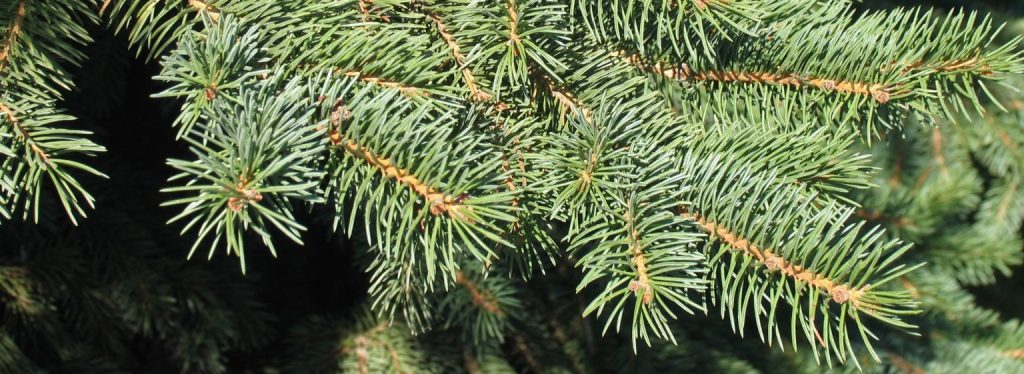
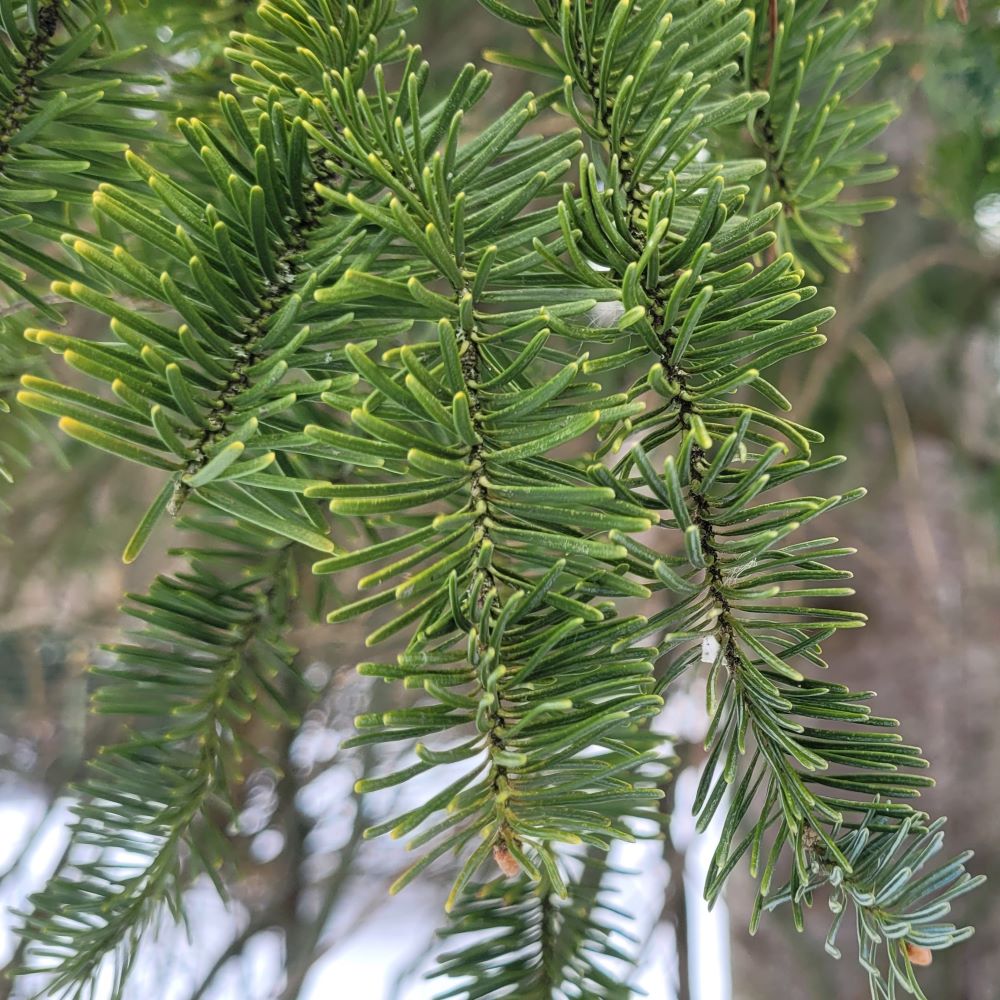
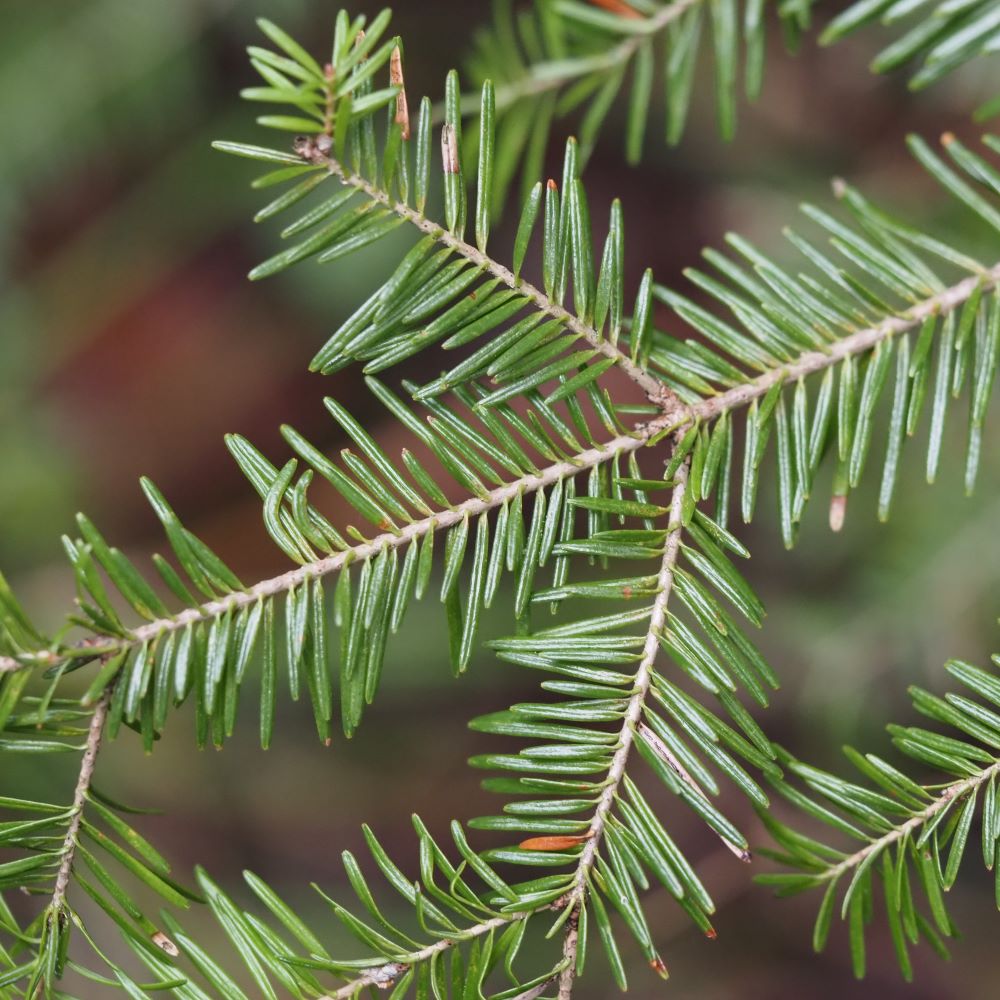
Balsam fir needles can point in all directions (left) or just horizontally (right) depending on the growing conditions of the branch.
On conifers, pay attention to the shape and arrangement of needles. Spruces have sharp needles that you can roll between your fingers, while firs have softer-tipped needles that are flat. Spruce and fir needles grow individually from the twig.
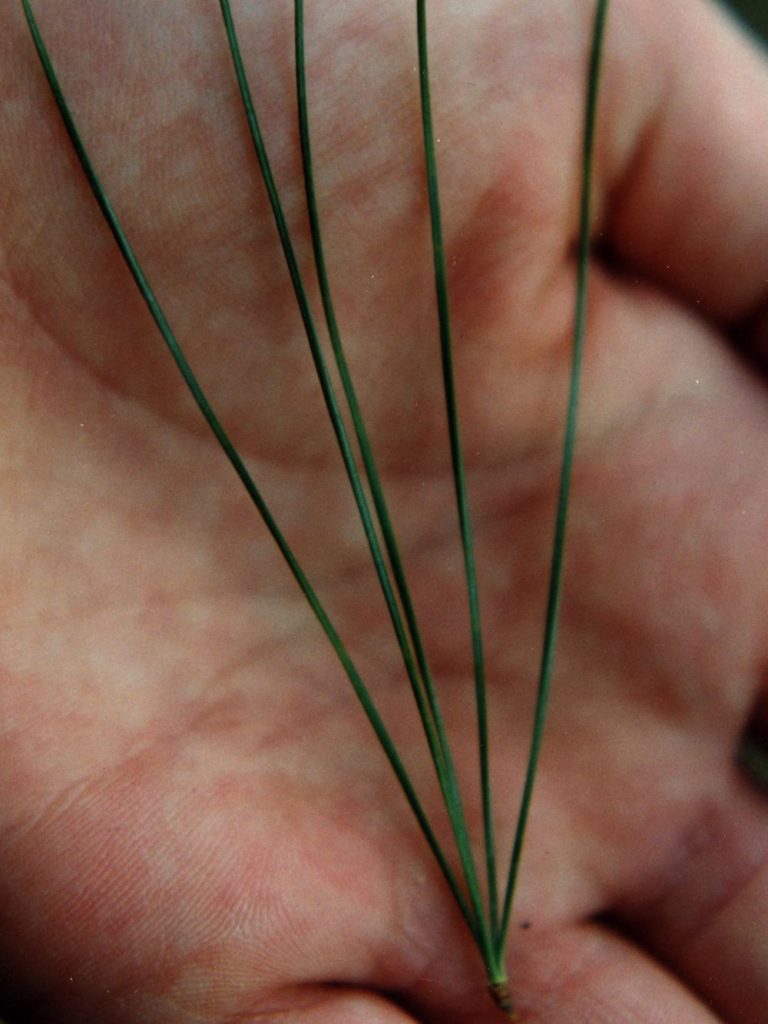
Pine needles grow in bundles. White pine needles grow in bundles of five, while red pine and jack pine needles grow in bundles of two.
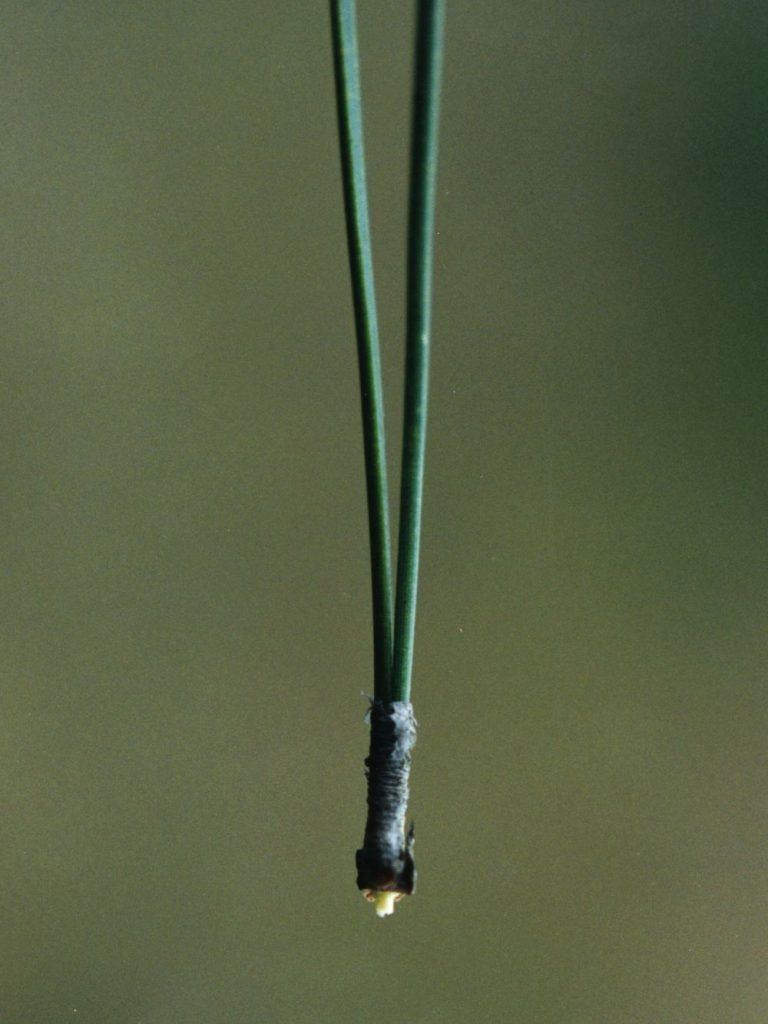
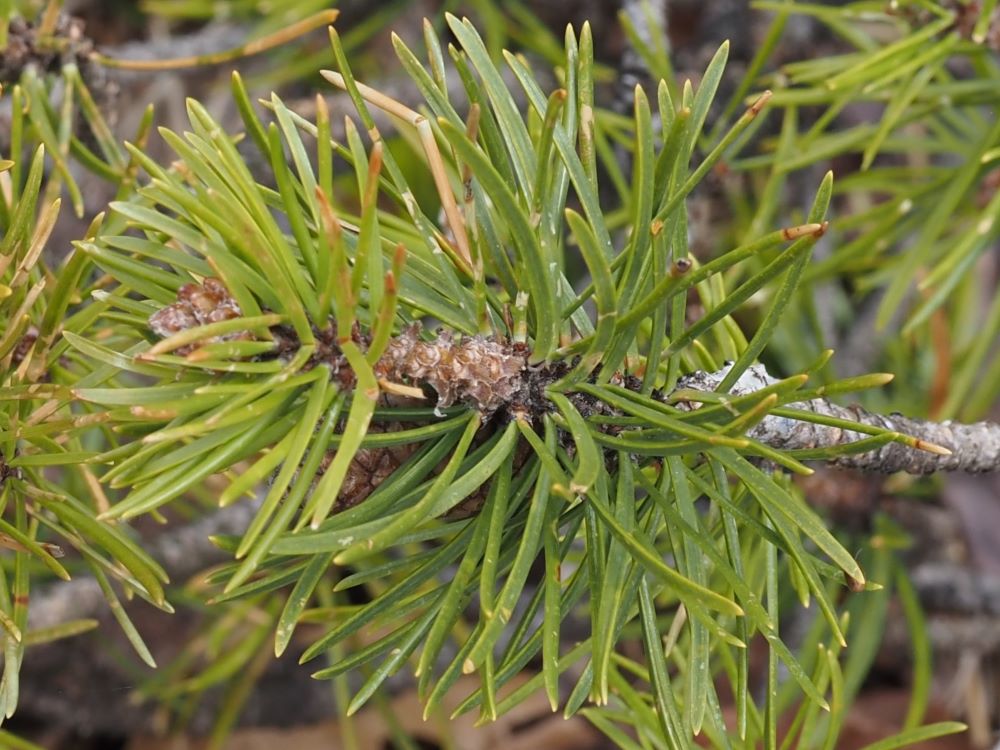
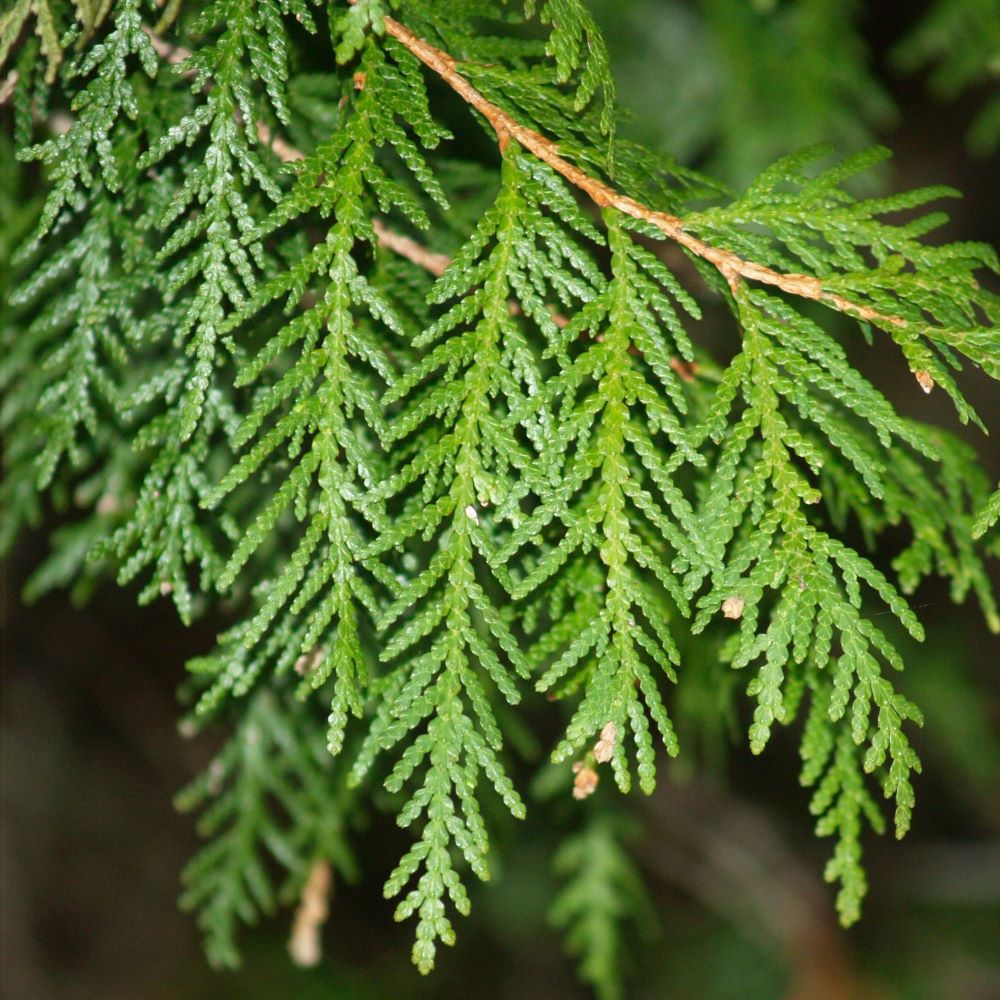
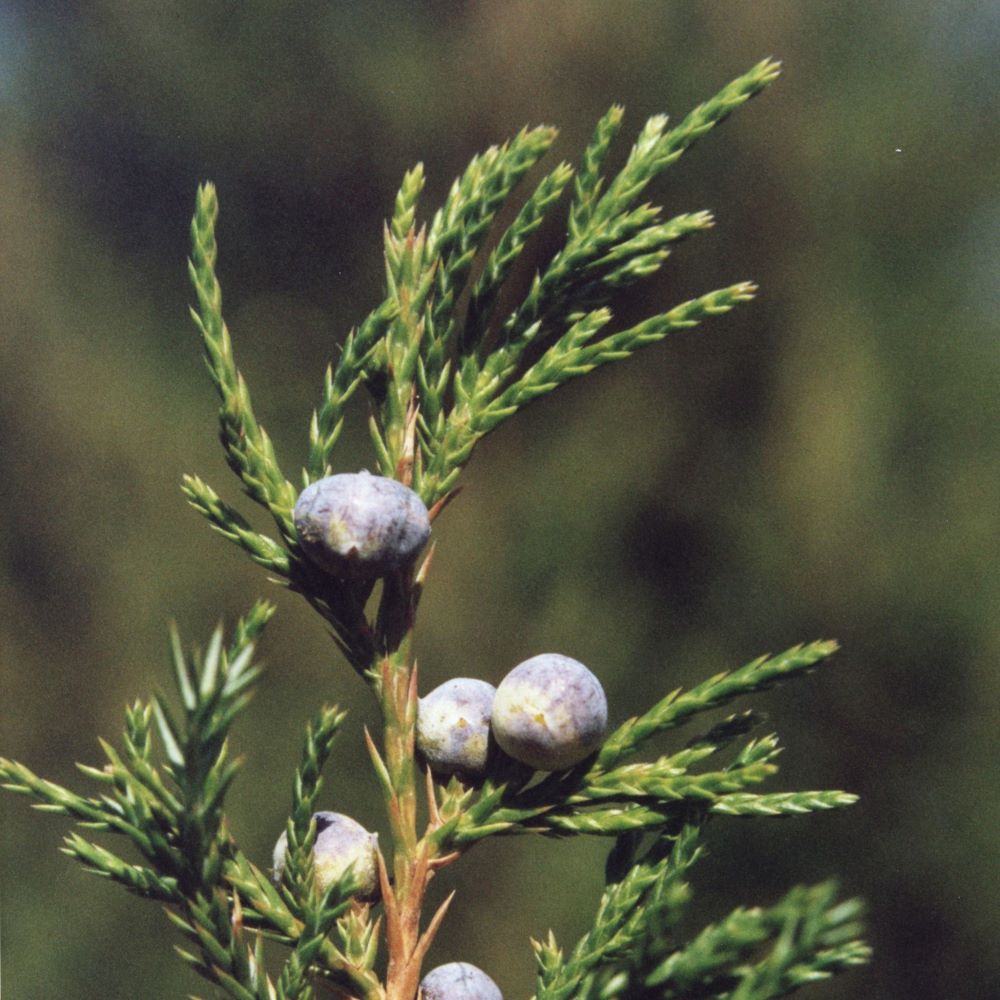
Tamarack, hemlock, northern white-cedar, and eastern red cedar can also be reliably identified based on their needles.
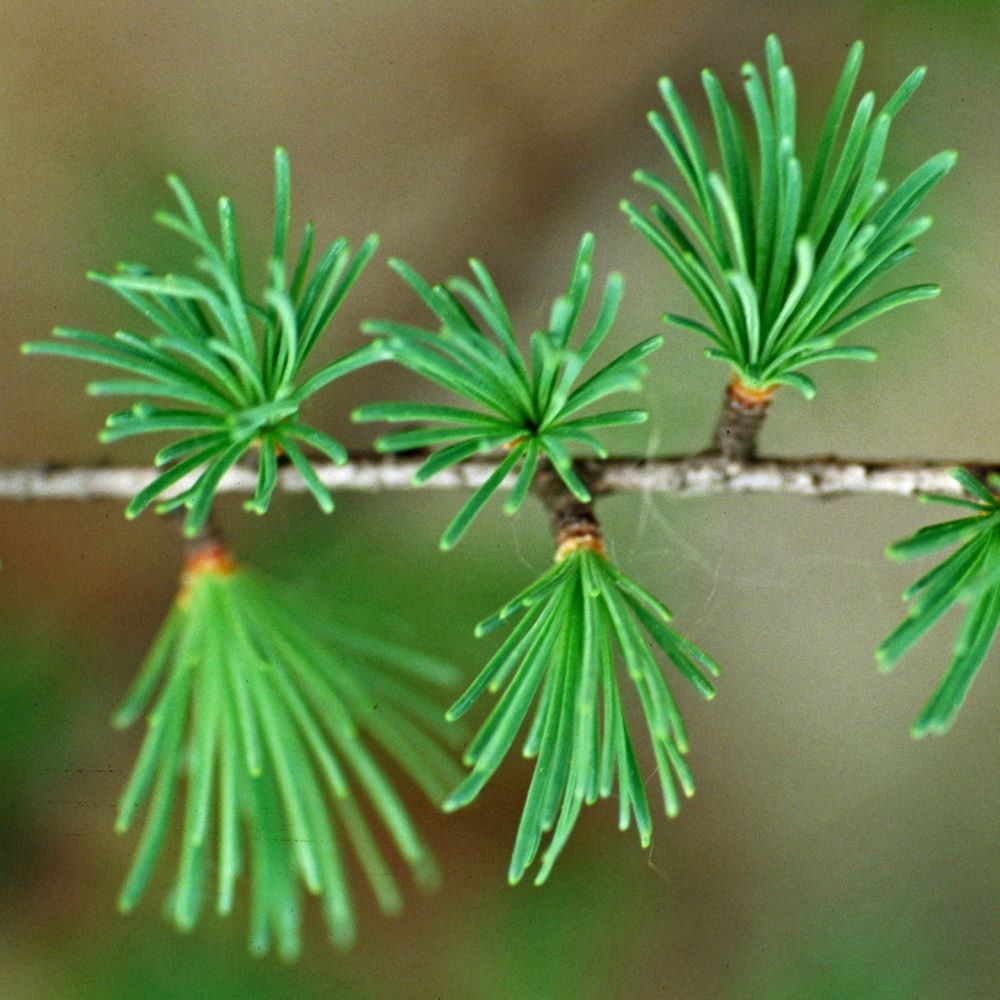
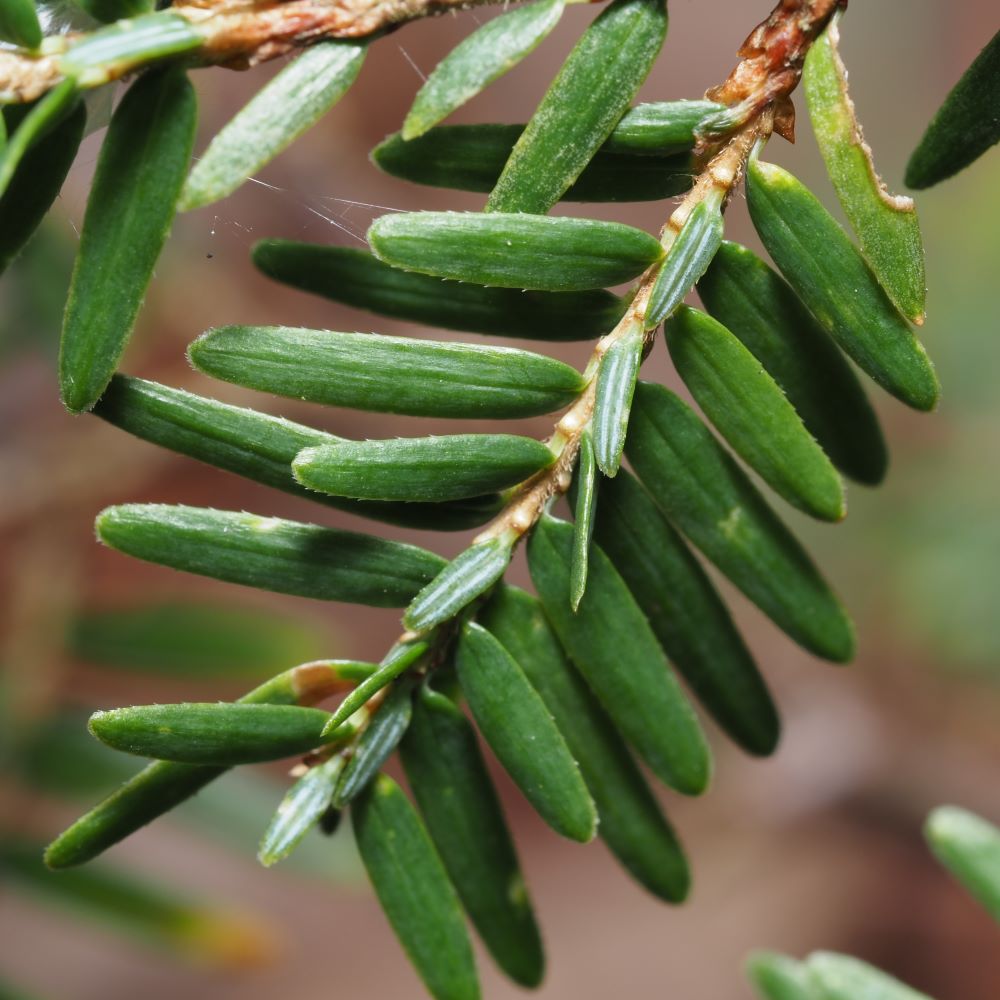
Broadleaf trees
Broadleaf trees have broad flat leaves. In Wisconsin, all our broadleaf species have leaves that change color in the autumn, and then they usually fall off, leaving the canopy bare in winter.
On broadleaf trees, leaf shape and size can vary dramatically between individuals of the same species—and even within the same individual. Because of that, you should examine multiple leaves rather than just one, especially if you’re trying to tell apart closely related species. Here are some leaf features of broadleaf trees to pay attention to.
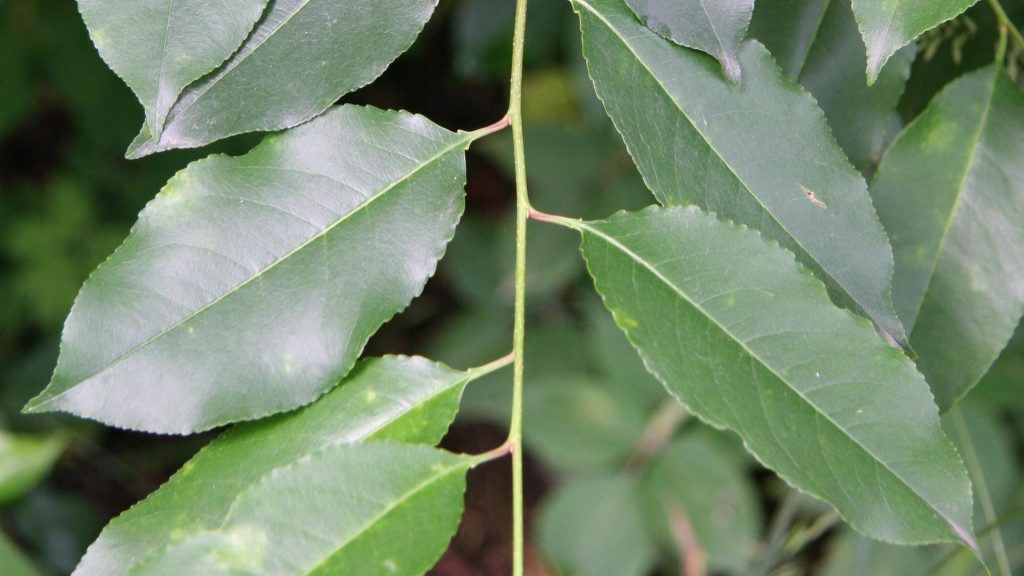
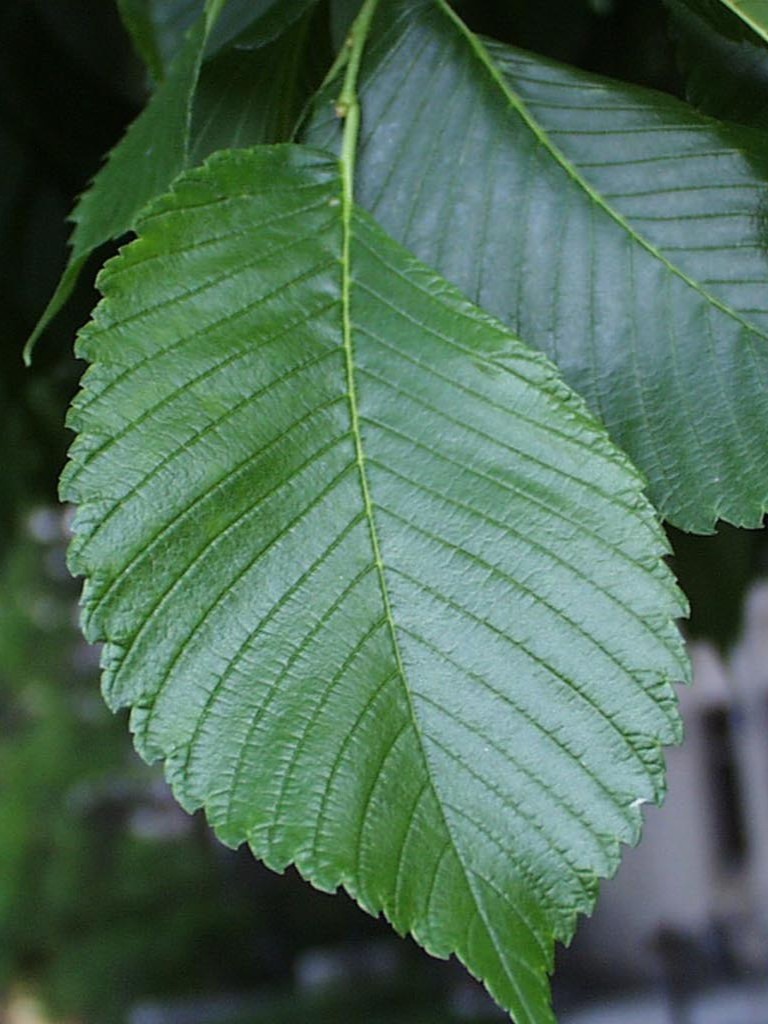
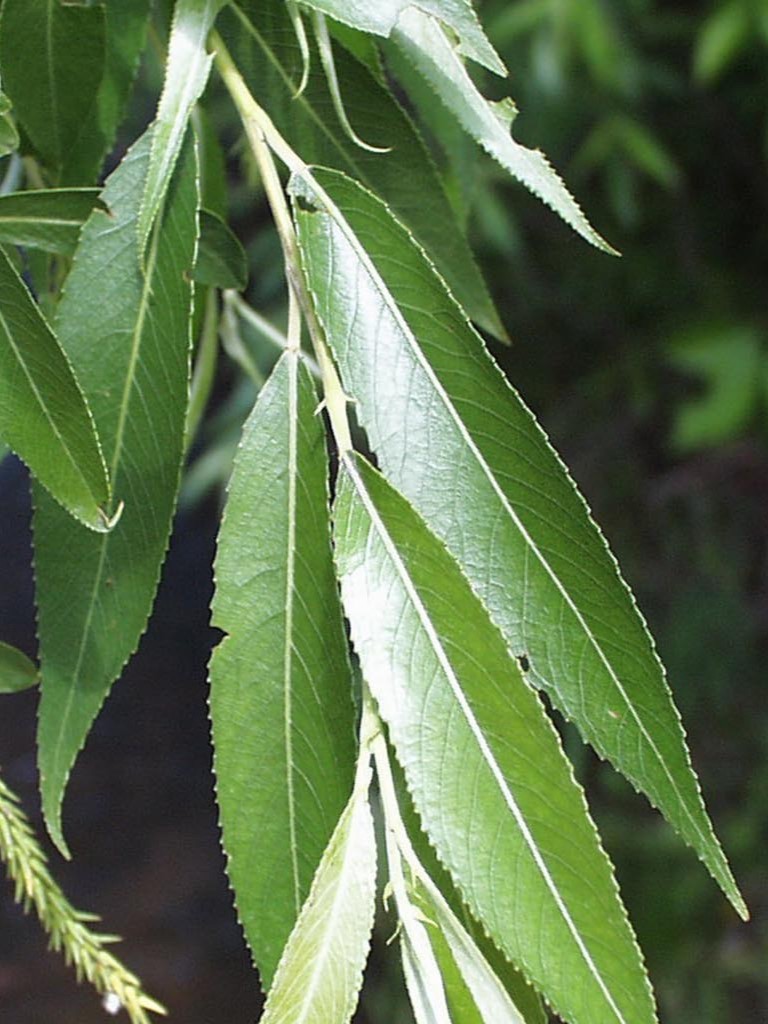
Simple leaves consist of just one leaf blade attached to each stalk (petiole). Cherries, elms, and willows are examples of trees with simple leaves.
Compound leaves consist of many leaflets—as few as 3 or as many as 20 or more. The typical number of leaflets varies between species. For example, box elder leaves typically have 3 leaflets but sometimes have 5, green ash leaves typically have 7 to 9 leaflets, and black walnut leaves typically have 13 to 23 leaflets.
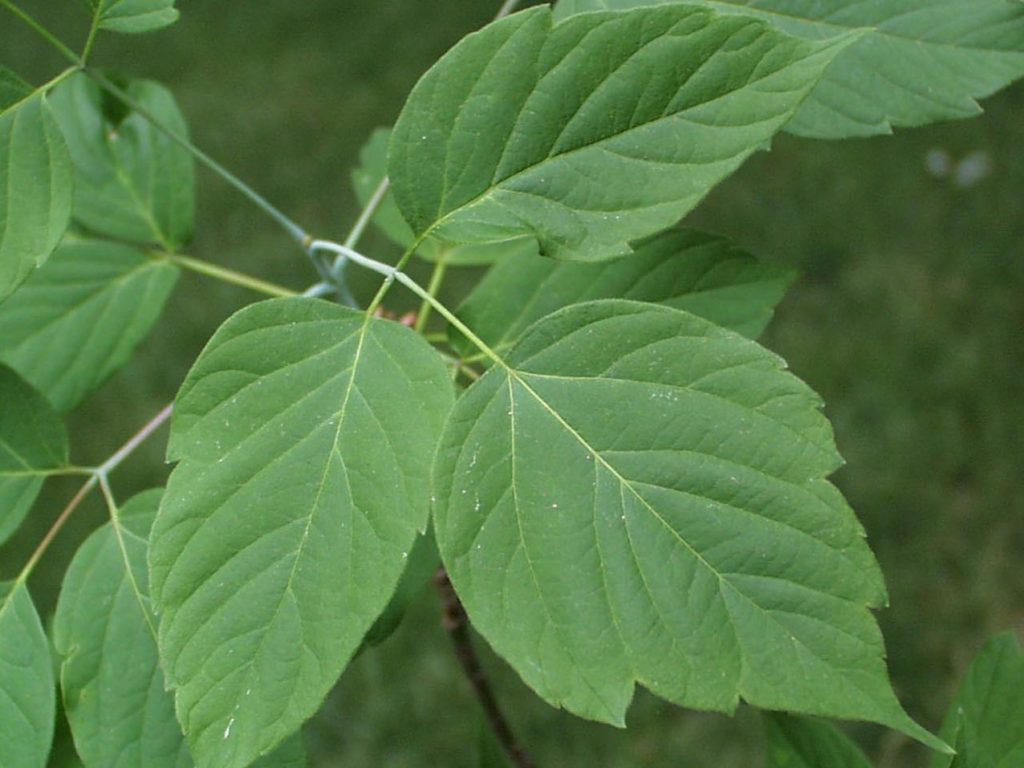
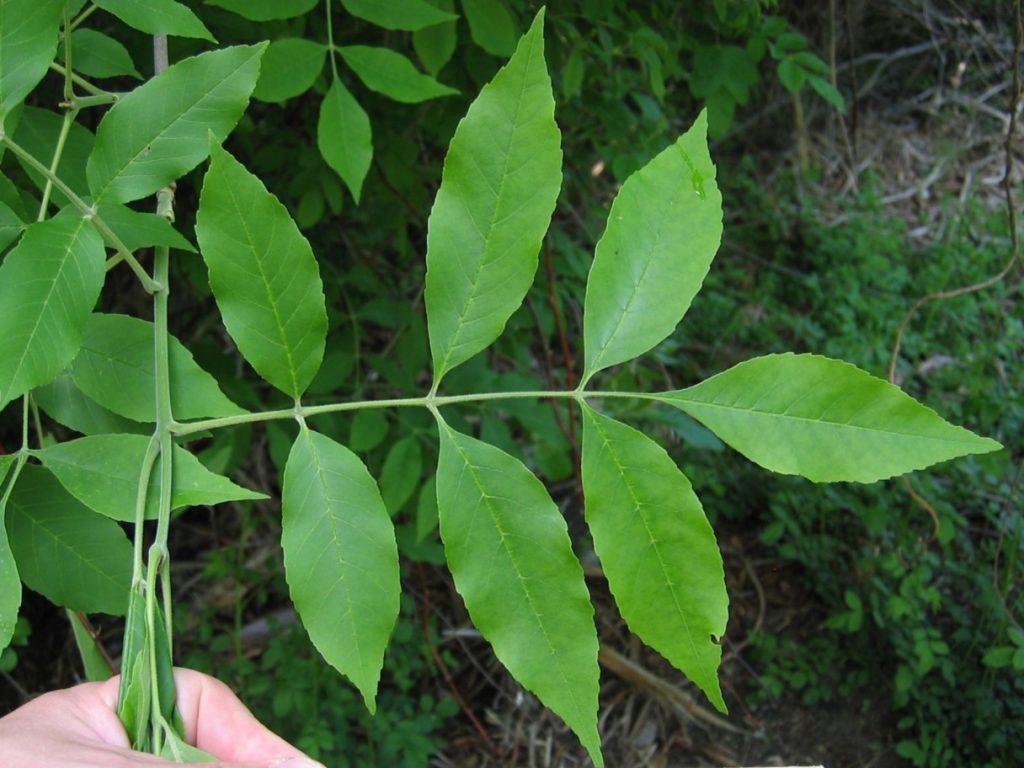
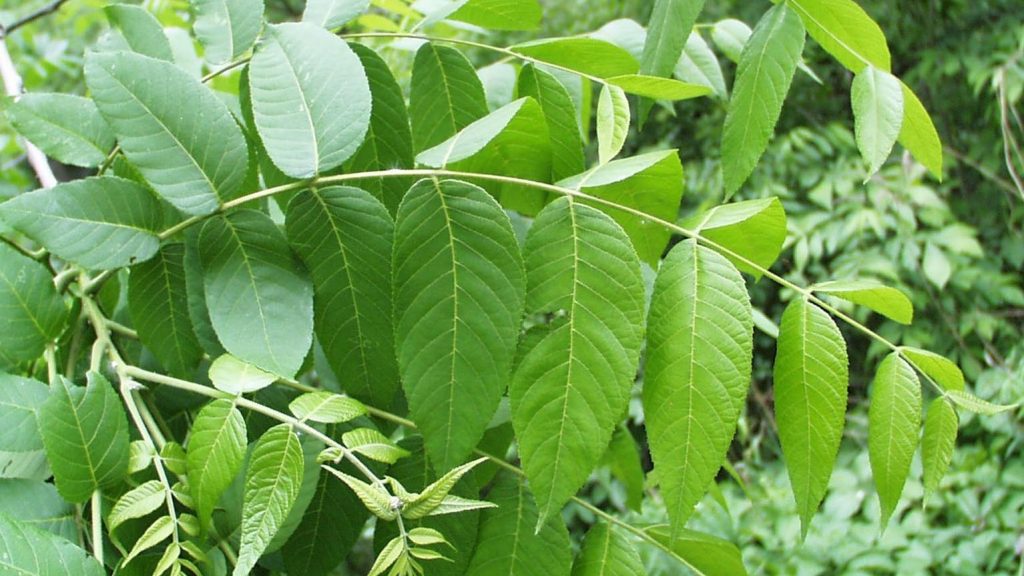
To distinguish between simple and compound leaves, look for buds, which form at the base of a leaf stalk, but not at the base of a leaflet.
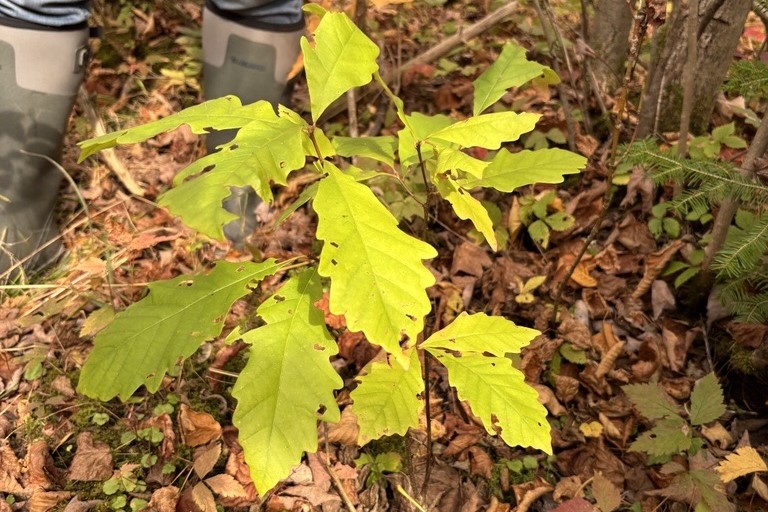
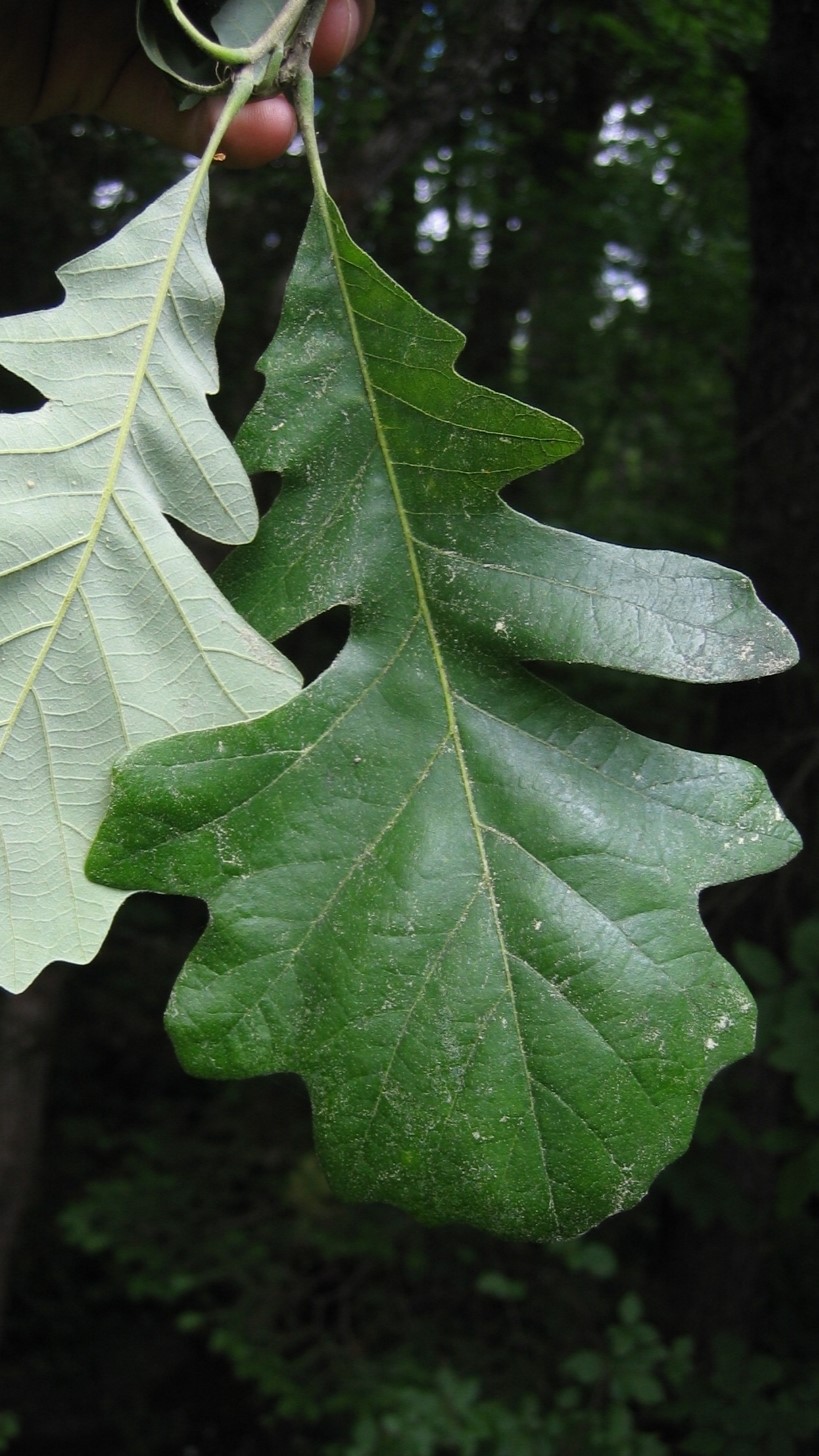
Some species with simple leaves have lobes that project outward. Northern red oak, northern pin oak, and black oak have pointed lobes, while eastern white oak, bur oak, and swamp white oak have rounded lobes.
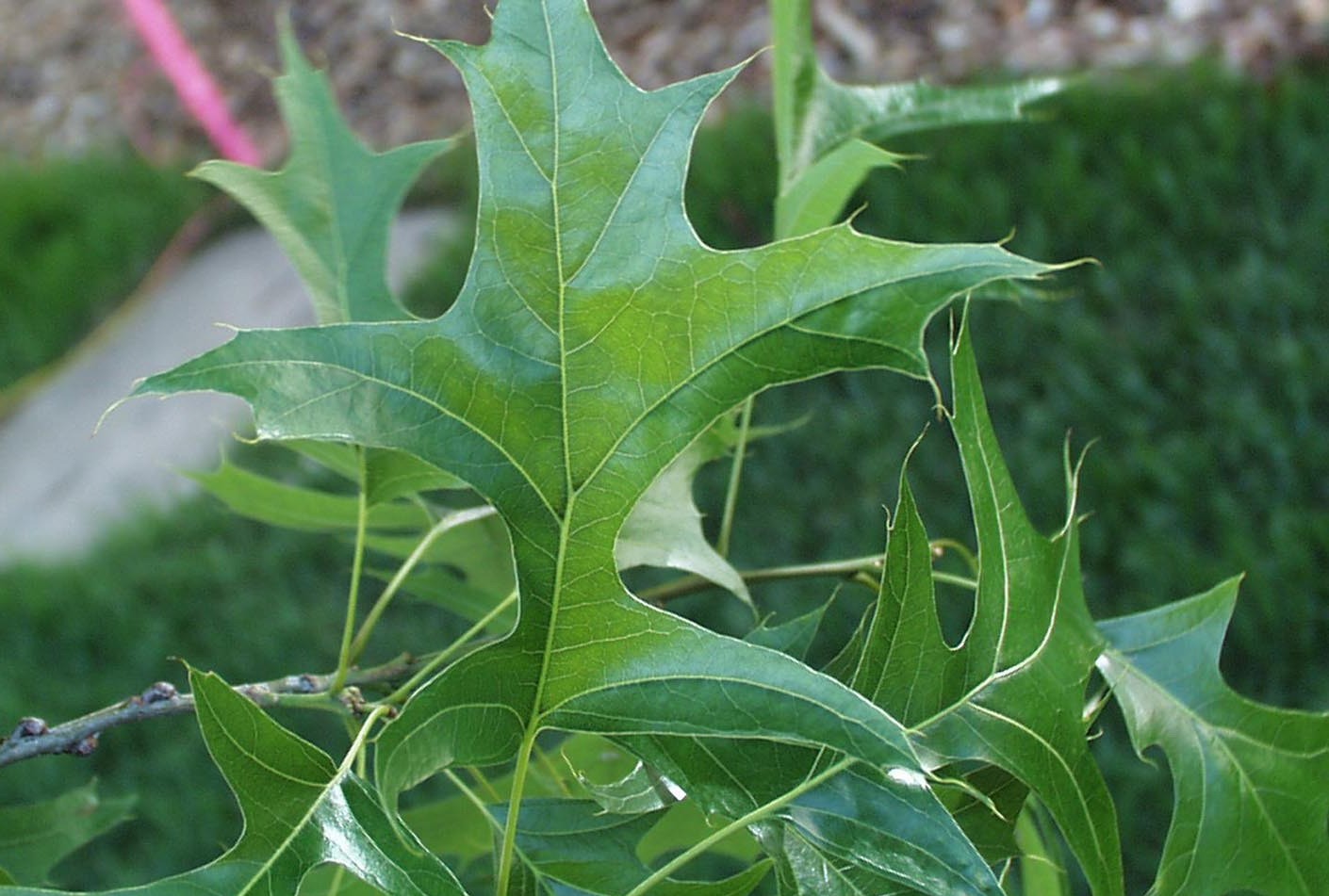
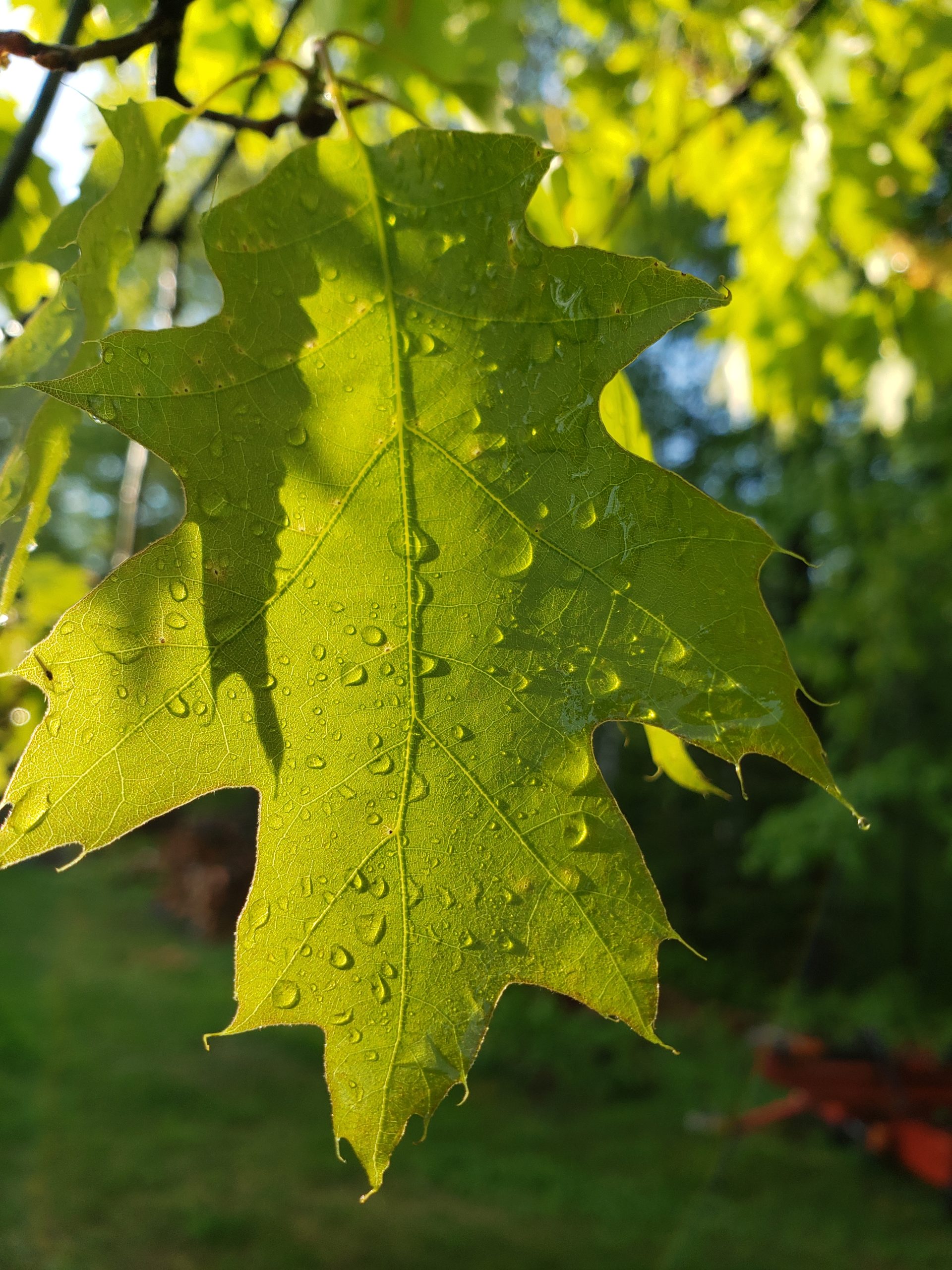
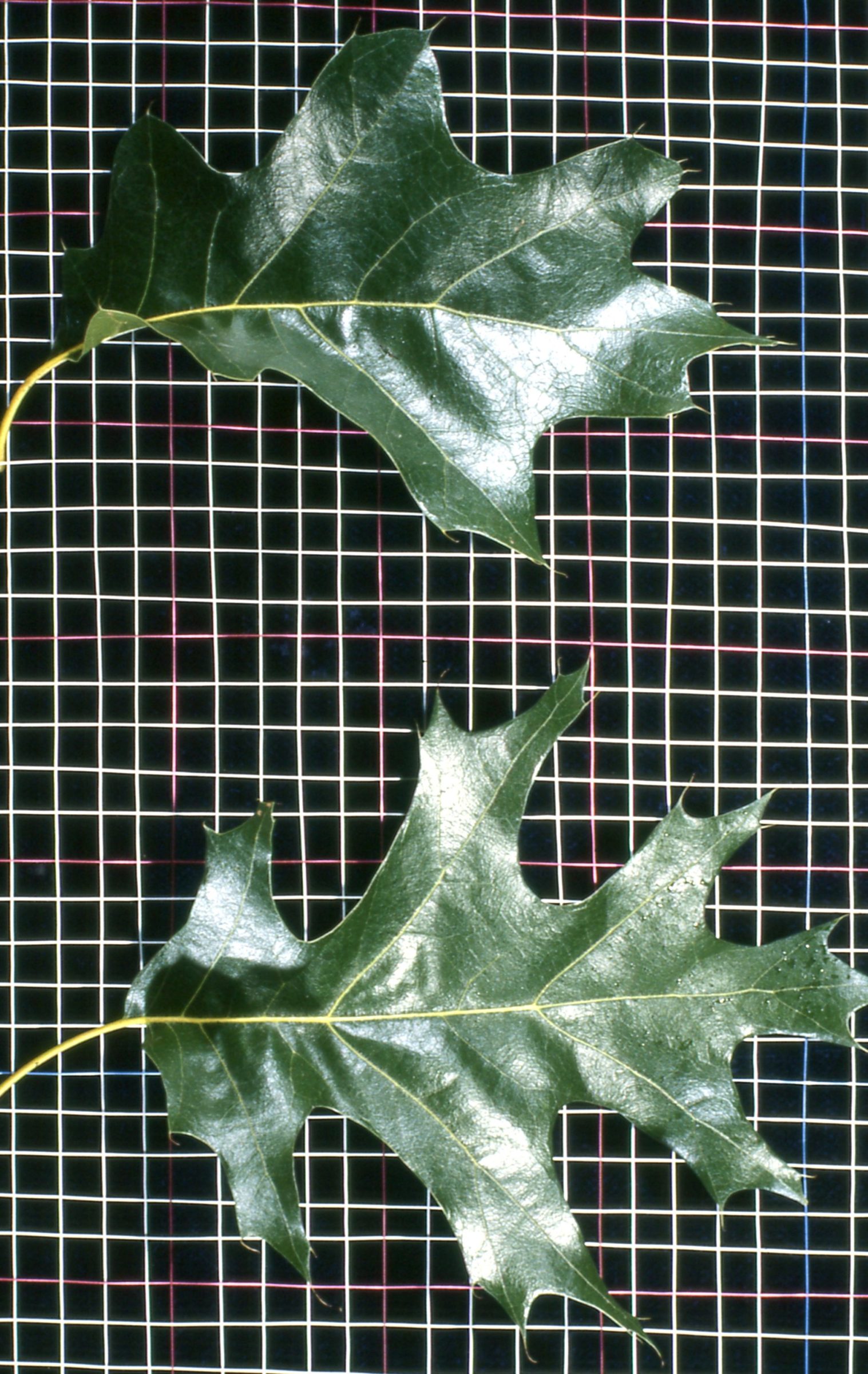
Clockwise from bottom left: northern red oak, northern pin oak, black oak. Notice the variation in shape in the two leaves from the same black oak.
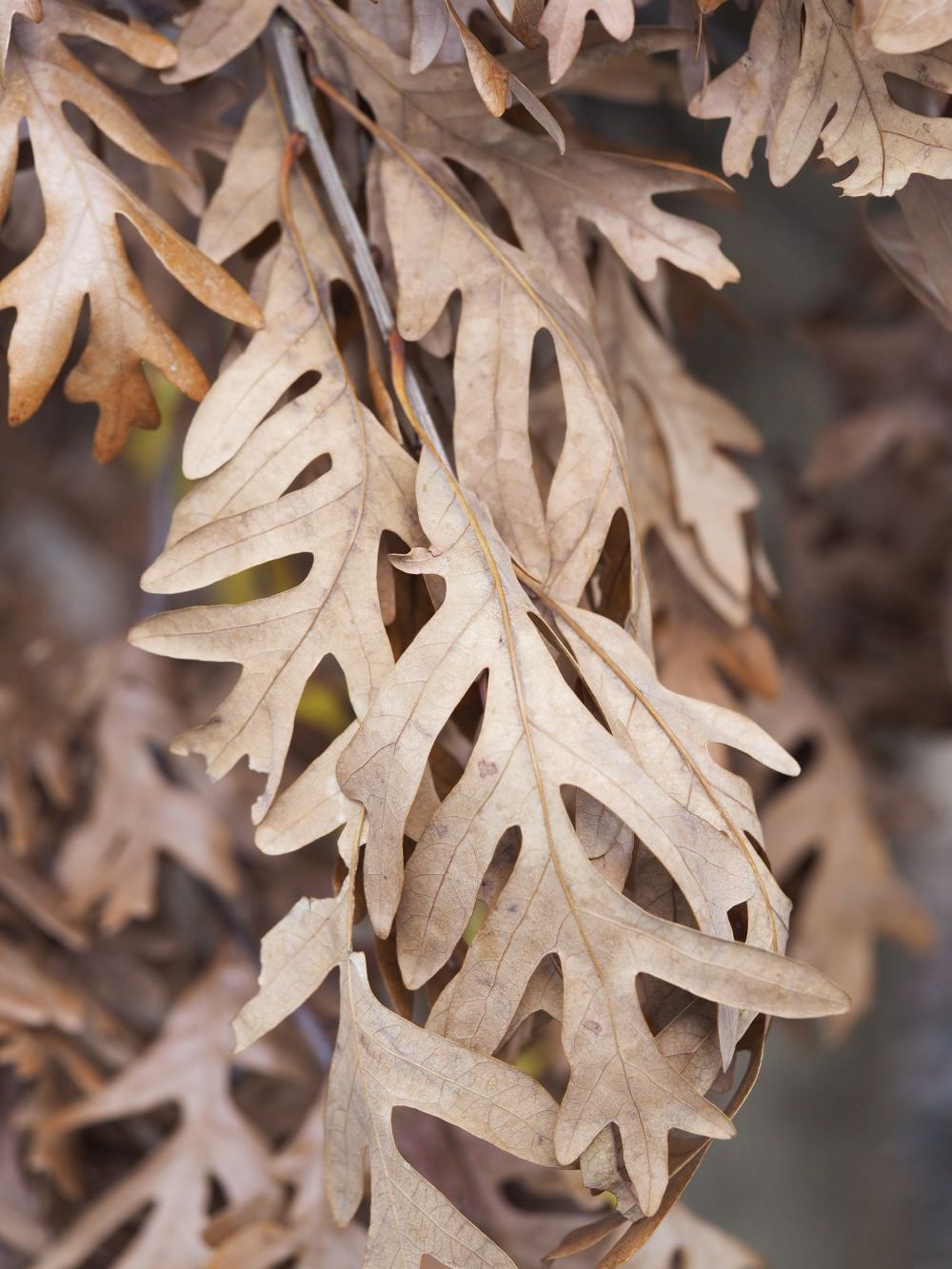
Clockwise from top left: eastern white oak (in winter), swamp white oak, bur oak.
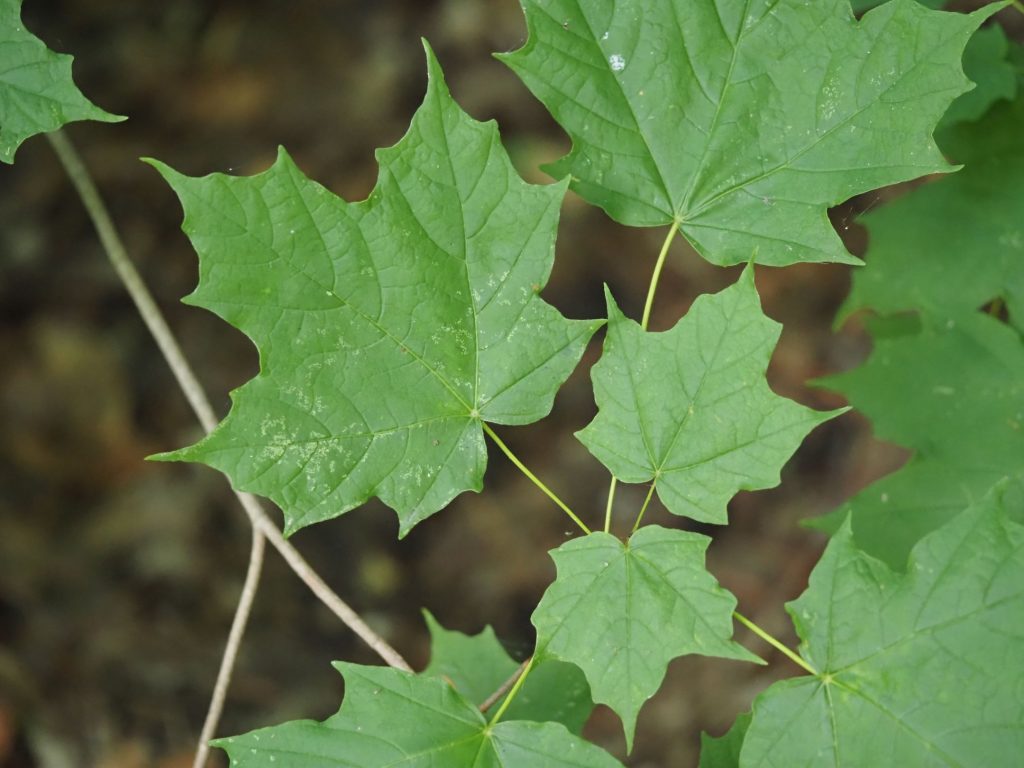
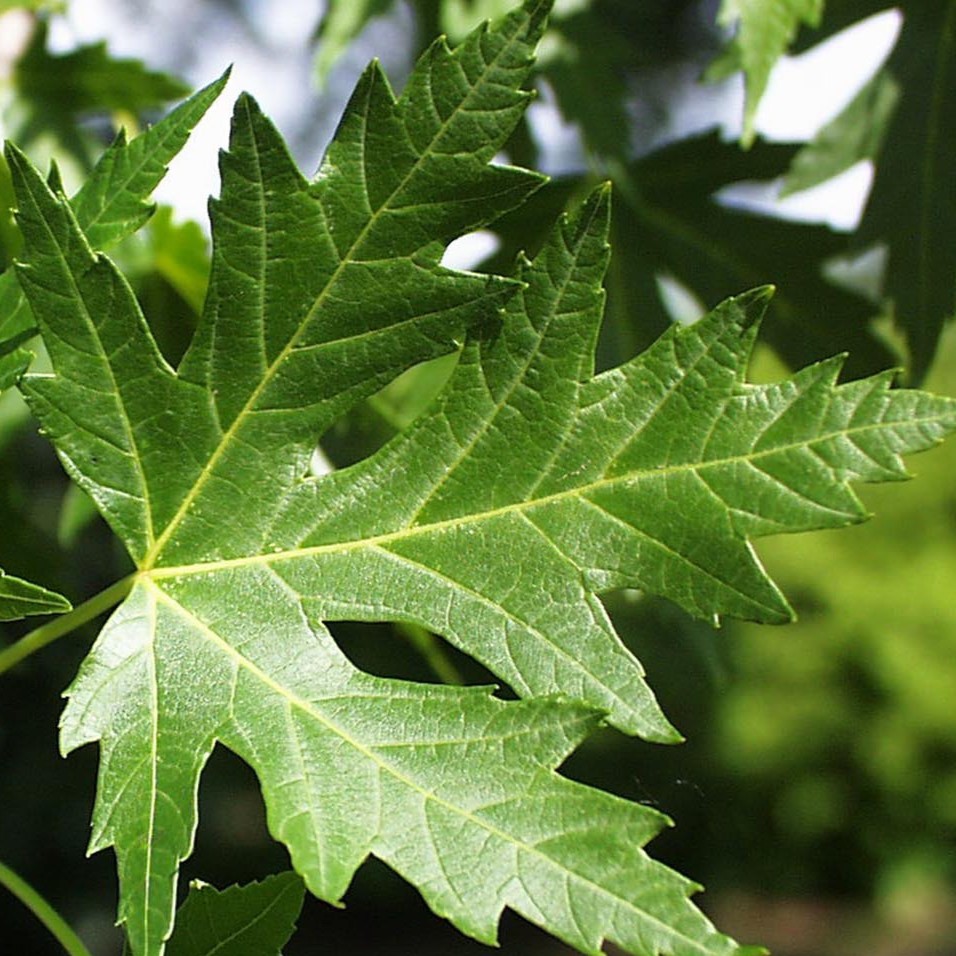
Silver maple and sugar maple both have five lobes, but the indentations (sinuses) between lobes are deeper on silver maples than sugar maples.
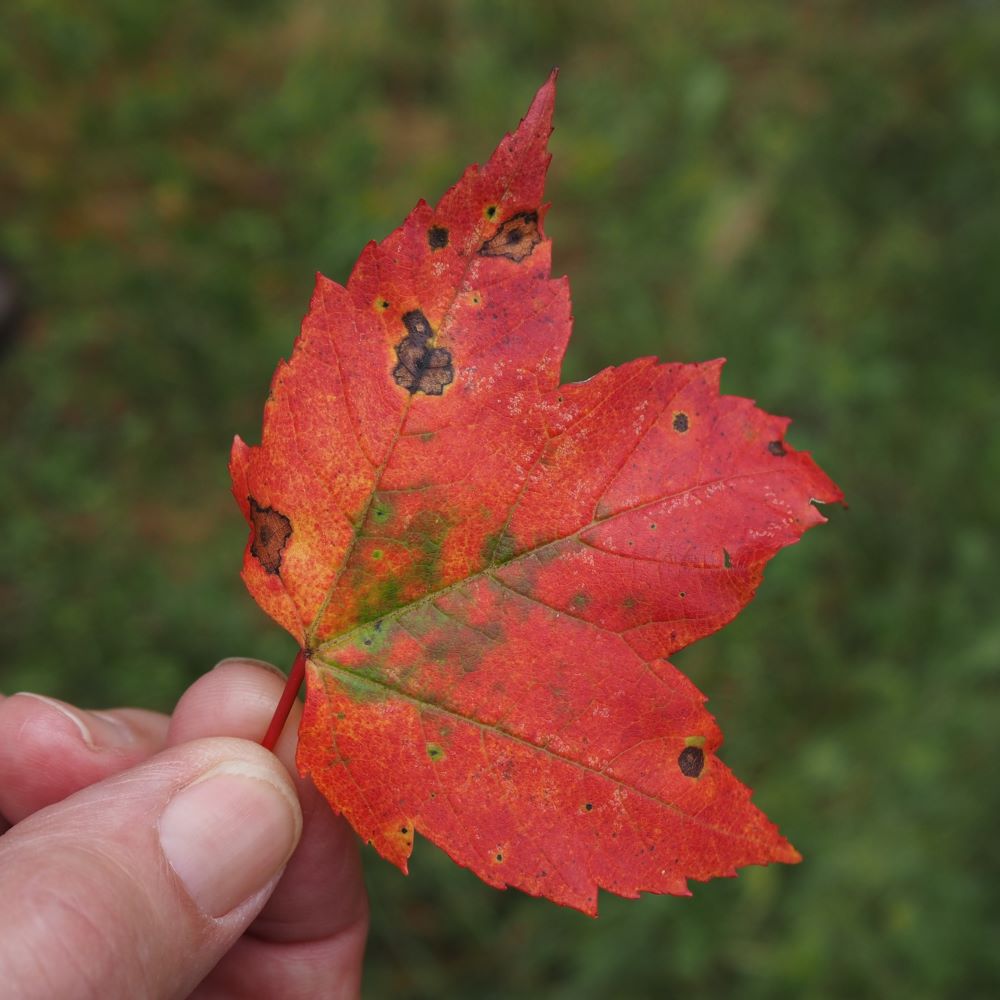
The margin (edge) of a leaf can be smooth or toothed. Sugar maple leaves have smooth edges, while red maple leaves have toothed edges.
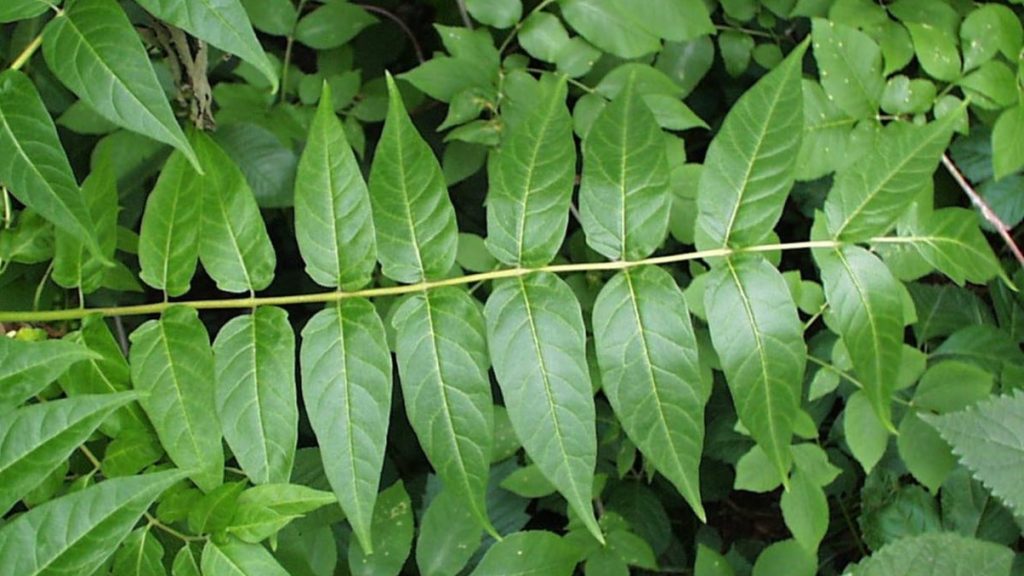
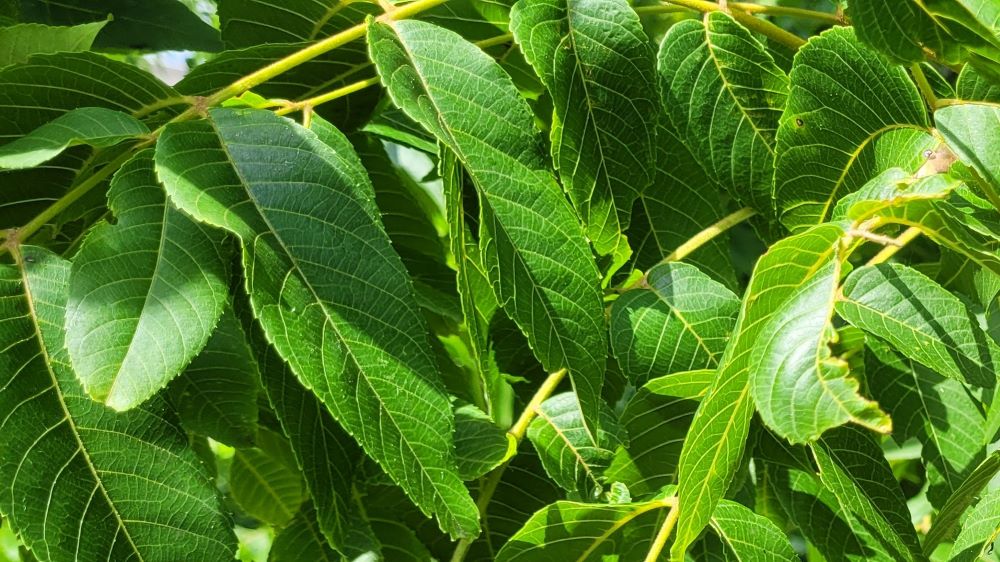
Leaves of the invasive tree-of-heaven have smooth edges, while black walnut leaves have toothed edges. Many other species with toothed leaves can be distinguished based on the pattern of teeth.
Fruit and cones
The fruit of broadleaf trees and the cones of conifers aren’t around all year, but when they are present, they can be another helpful clue.
Botanically, a fruit is the structure of a flowering plant that contains seeds. That definition includes familiar culinary fruits like cherries and berries, but it also includes nuts (like oak acorns), samaras (like maple helicopters), legumes (like black locust pods), and several other types of structures.
Different types of broadleaf trees often have very different types of fruit, even if the leaves look similar. Details of the fruits are also helpful for telling apart closely related species, like black cherry and pin cherry or northern red oak and black oak.
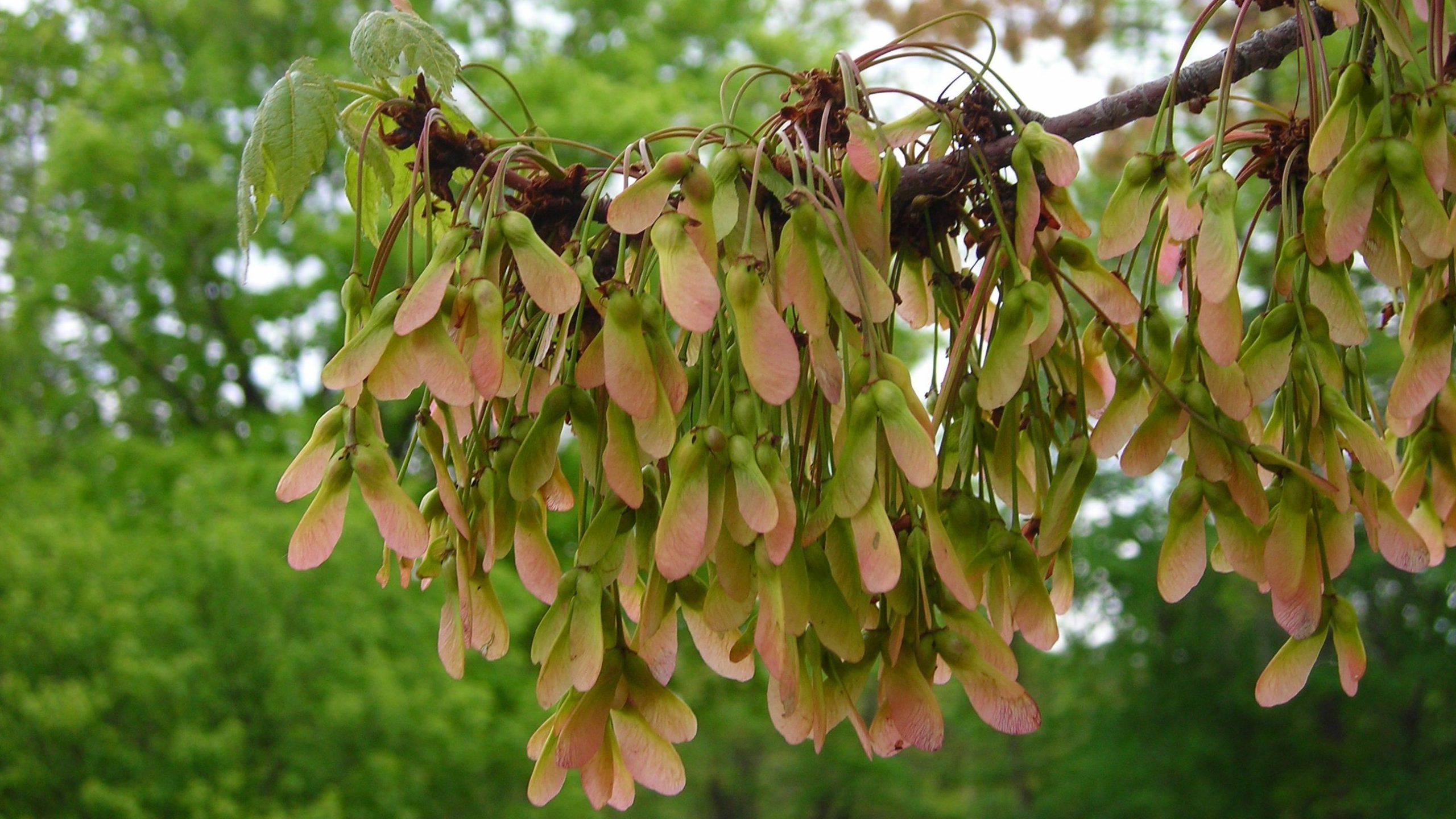
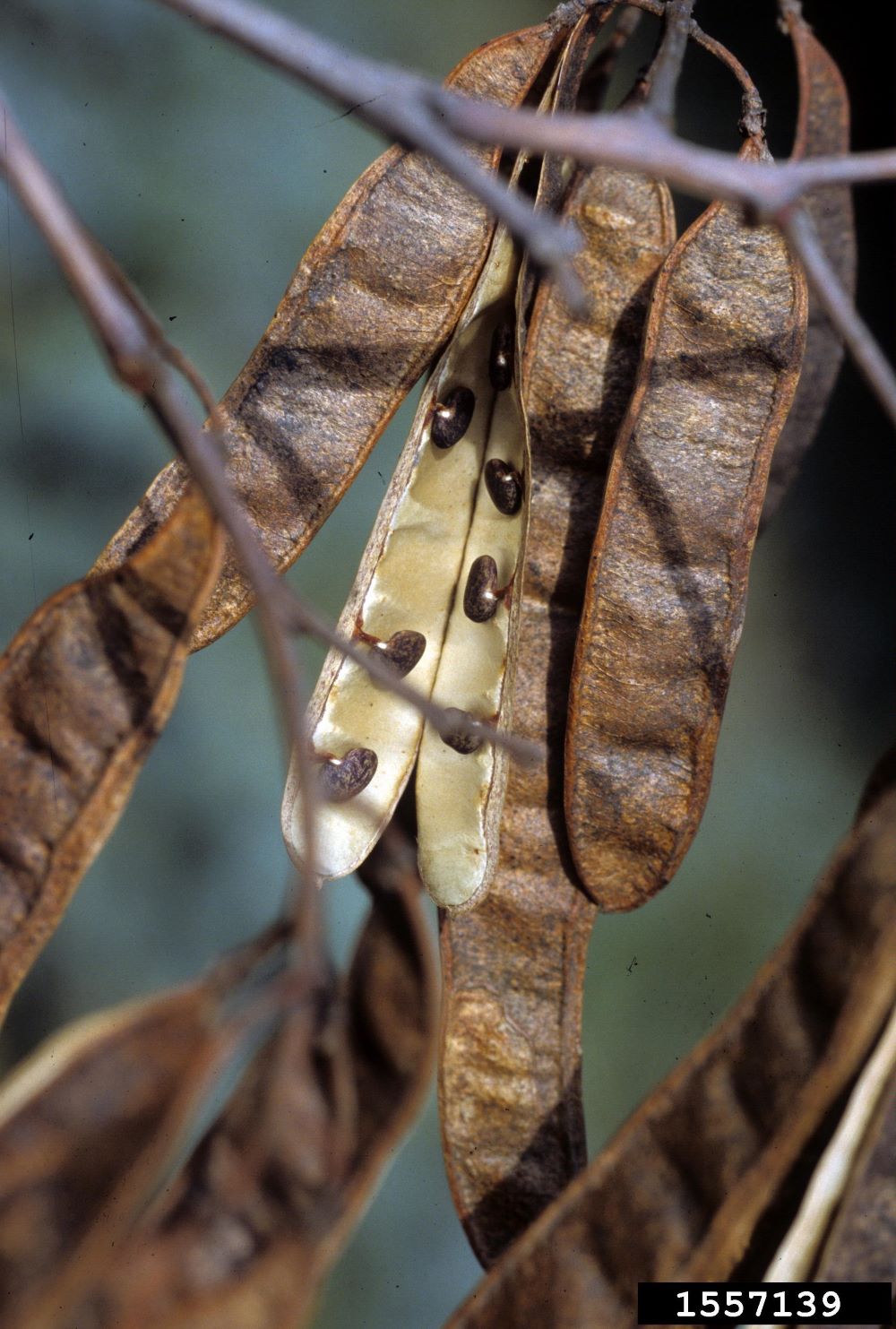
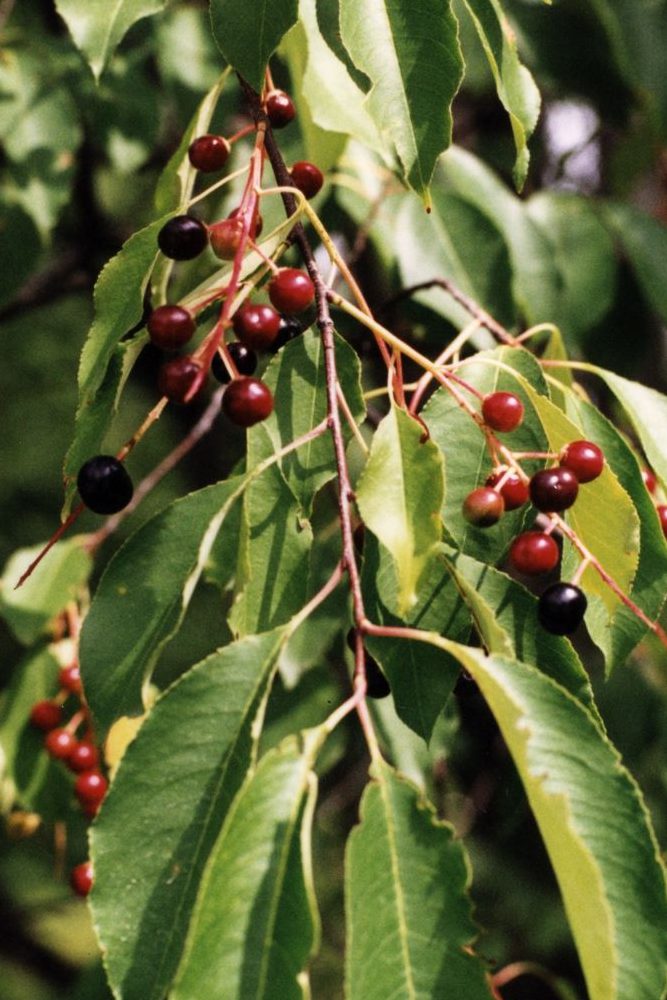
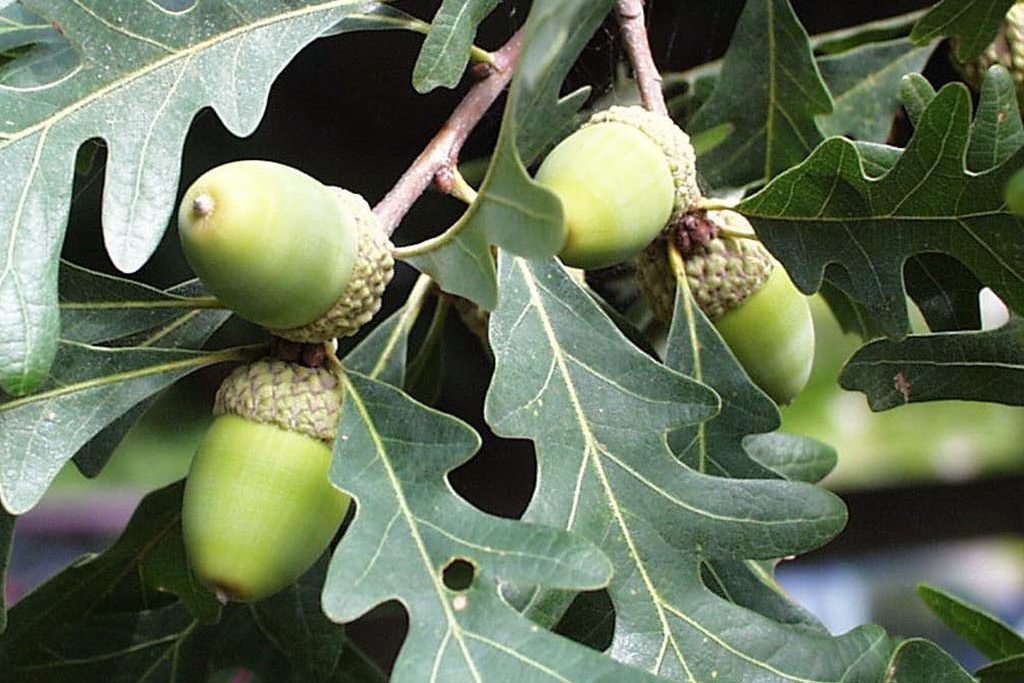
Clockwise from top right: black cherry, white oak, black locust, red maple.
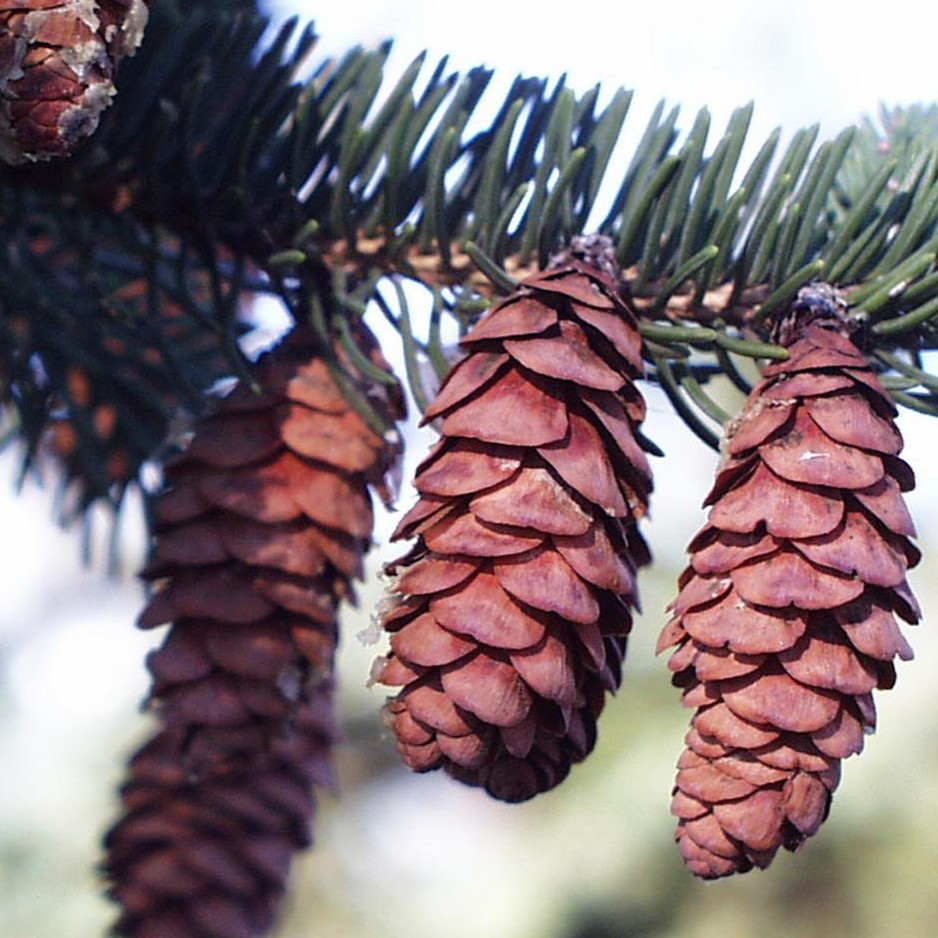
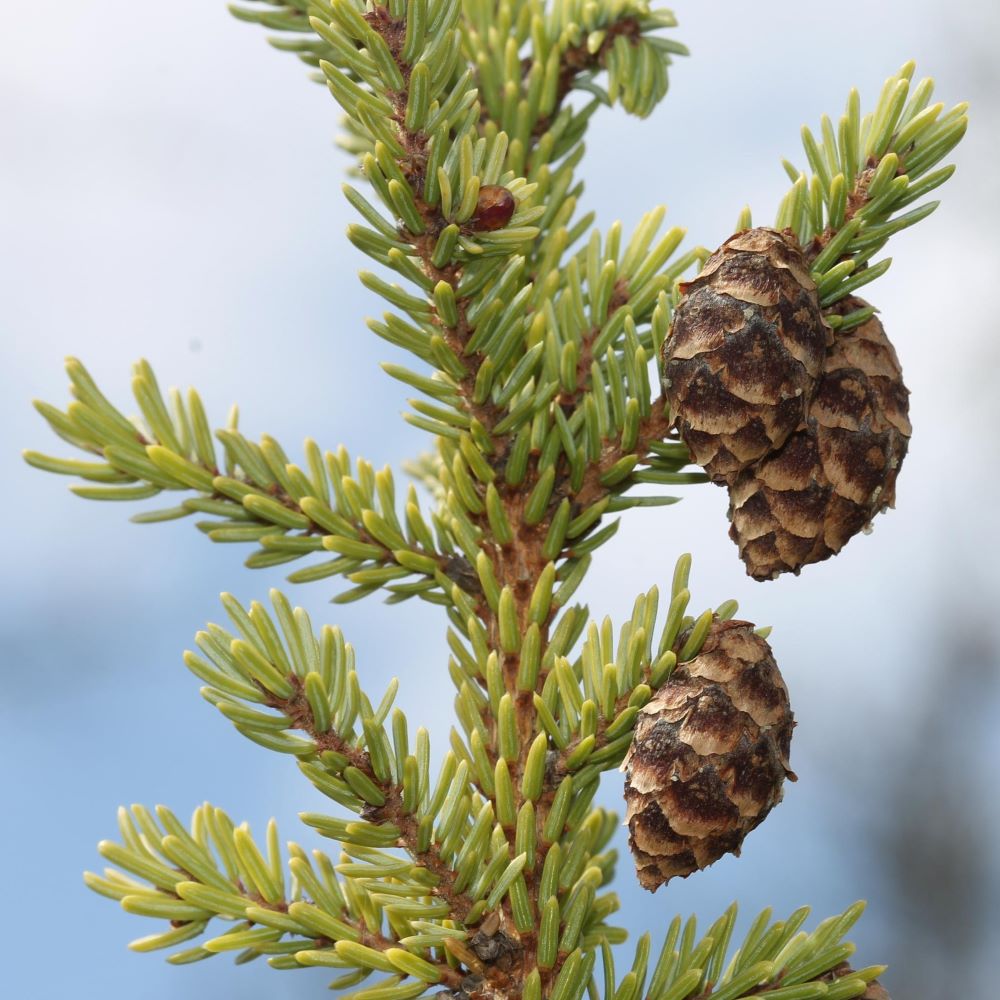
The cones of conifers are similarly useful in identification. For example, white spruce cones are longer and narrower than black spruce cones.
Bark
For some trees, bark color and texture are a dead giveaway. For others, the differences are much more subtle.
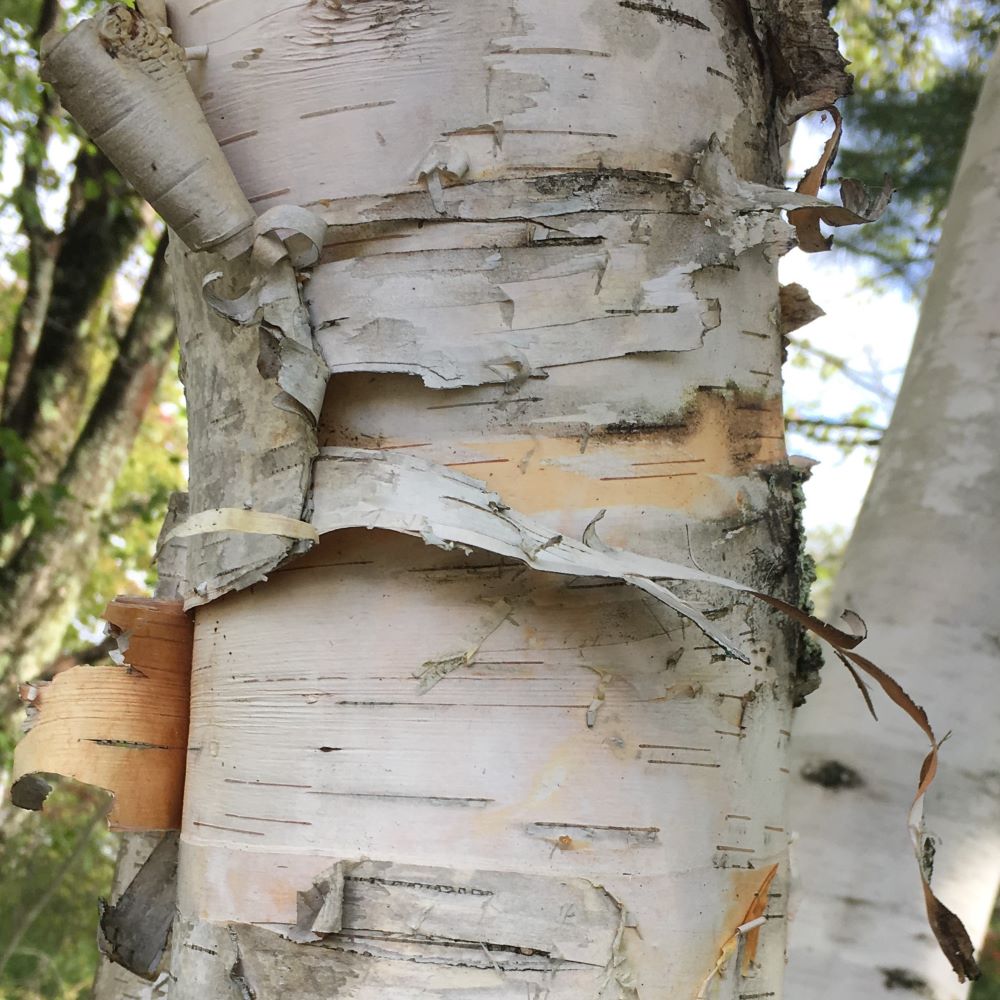
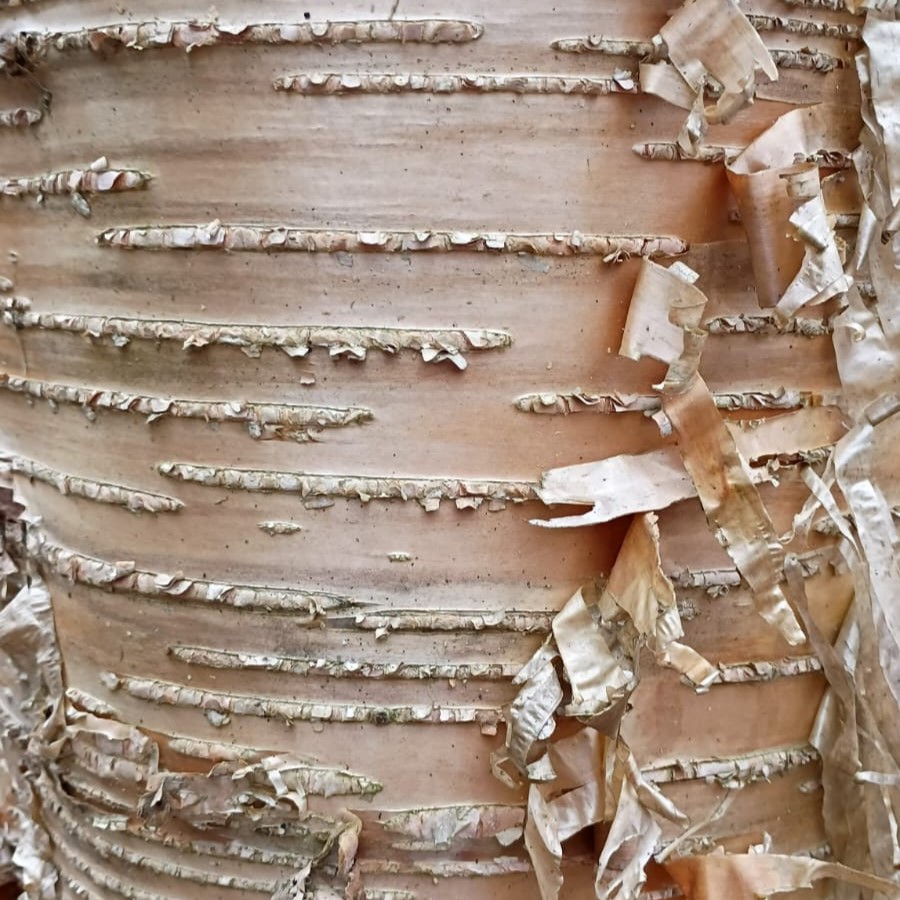
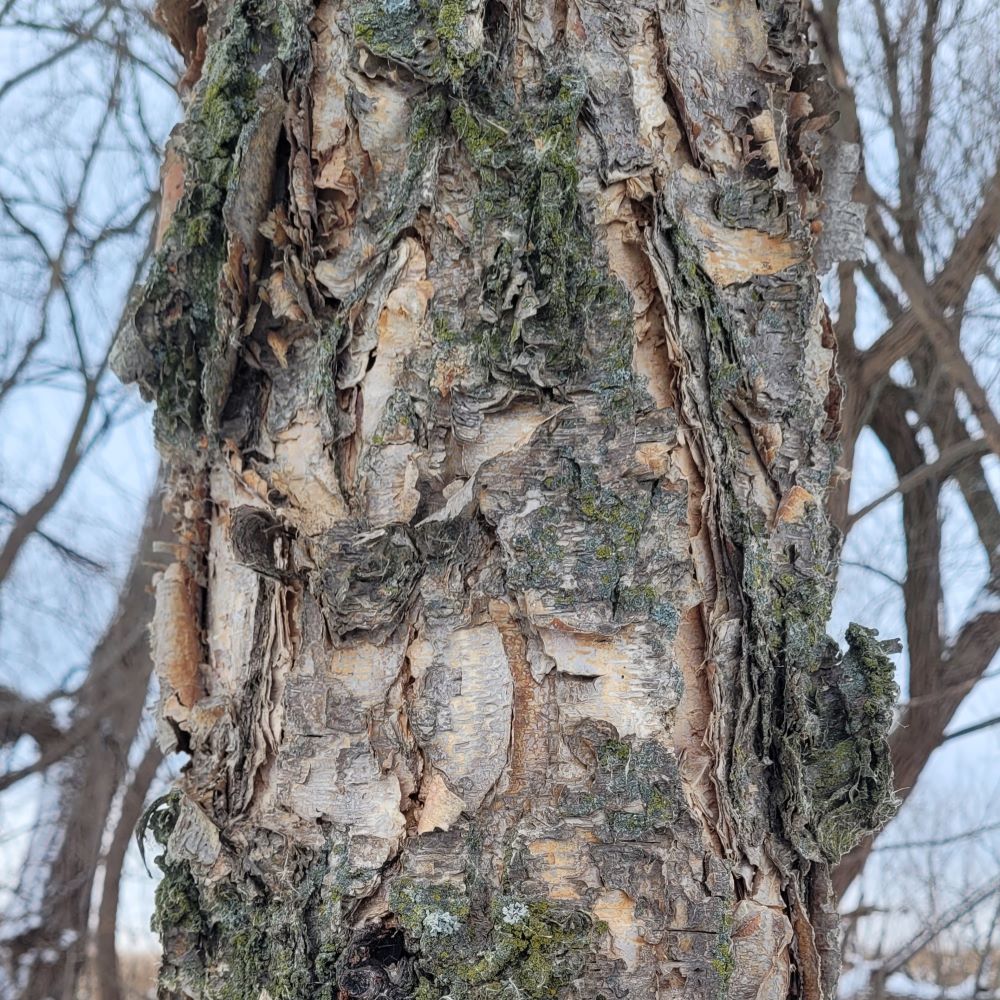
Some of Wisconsin’s native trees have very distinctive bark. Birch bark peels off in thin strips—white on paper birch, yellow or copper on yellow birch, and pinkish on river birch. Shagbark hickory bark peels off in thick vertical strips that curl upward.
Two other examples are hackberry, which has warty bark, and mature black cherry, which has blocky bark often compared to burnt potato chips.
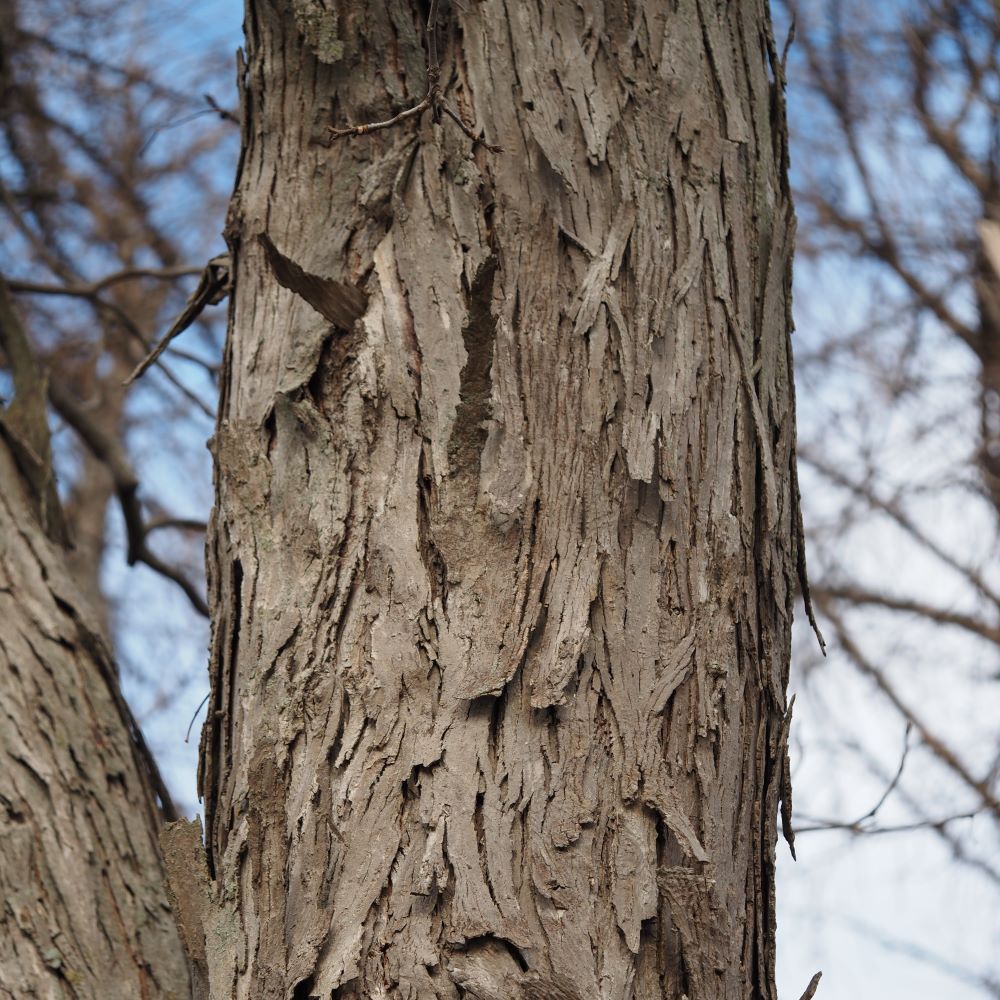
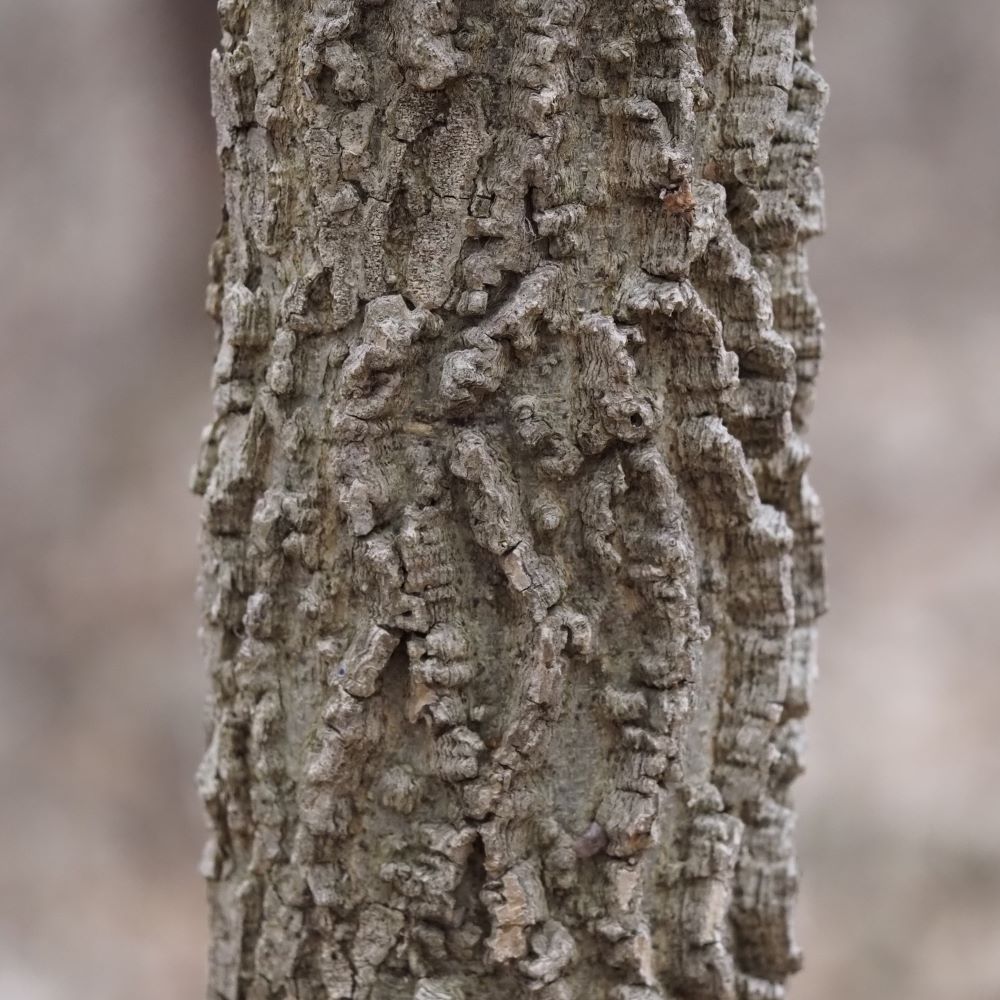
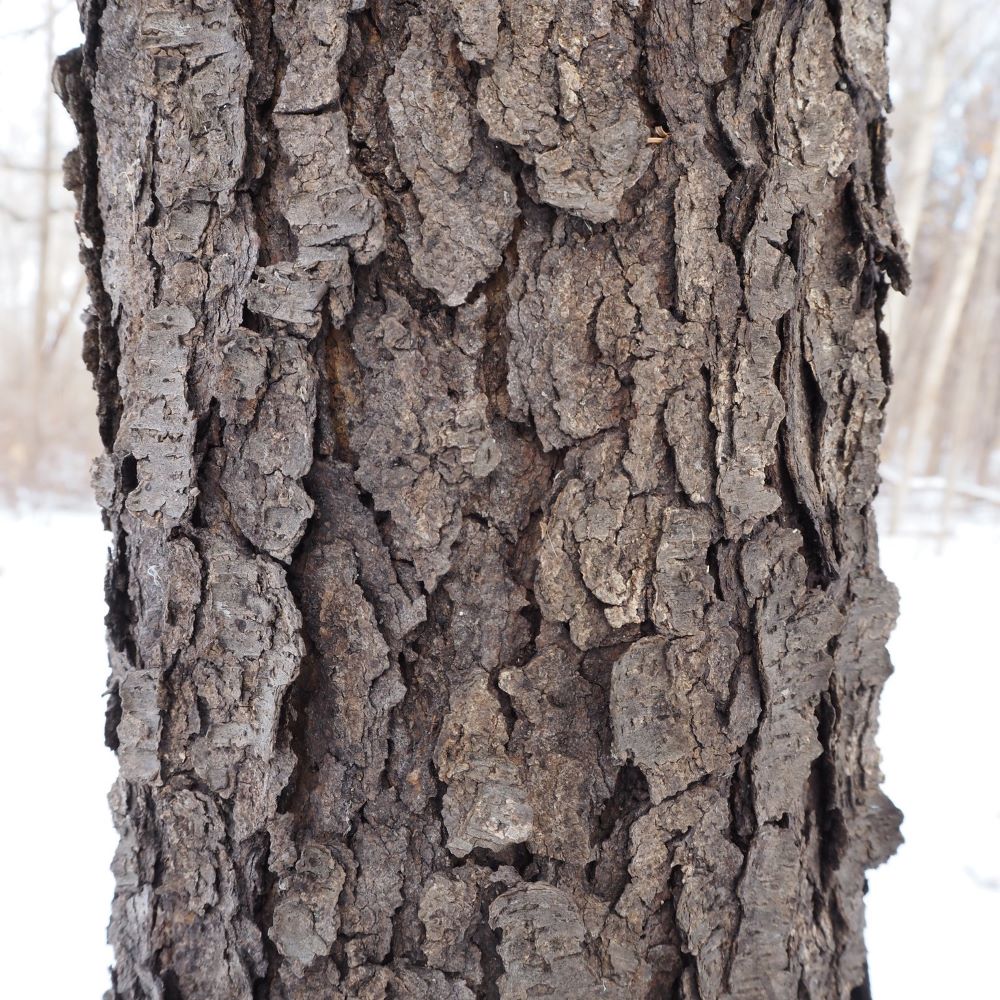
Identifying many other species by their bark is more challenging—but still possible. A tree’s size, age, and rate of growth affect the color and texture of its bark. So you’ll need to see a lot of different trees of each species in order to learn the subtle differences that separate one species from another.
Also, remember that the outer bark protects the tree and the inner bark transports nutrients and water—so it is very important to not carve into trees with knives or peel off the bark unless you are trained and doing so for a specific scientific, cultural, or forest management purpose.
Buds
If you haven’t paid close attention to trees before, you might think that the buds of deciduous trees only appear in the early spring right before leaves emerge. In reality, buds form during the growing season and are present all winter long.
The shapes, sizes, colors, and textures of buds vary widely between species, so buds are very helpful for winter tree identification. Terminal buds—the buds at the very end of a twig—tend to be the largest and most distinctive. For some species, leaf scars—the structures left behind when leaves fall off—are also helpful for narrowing down an identification.
Identifying a tree by its buds is easiest when the tree has branches that are low enough for you to grab a branch or twig and examine it closely. But with some practice (and binoculars), you’ll be able to distinguish buds higher up in the tree, too. Click the + buttons to explore some sets of species that you can distinguish based on their buds and other details of their twigs.
Maples
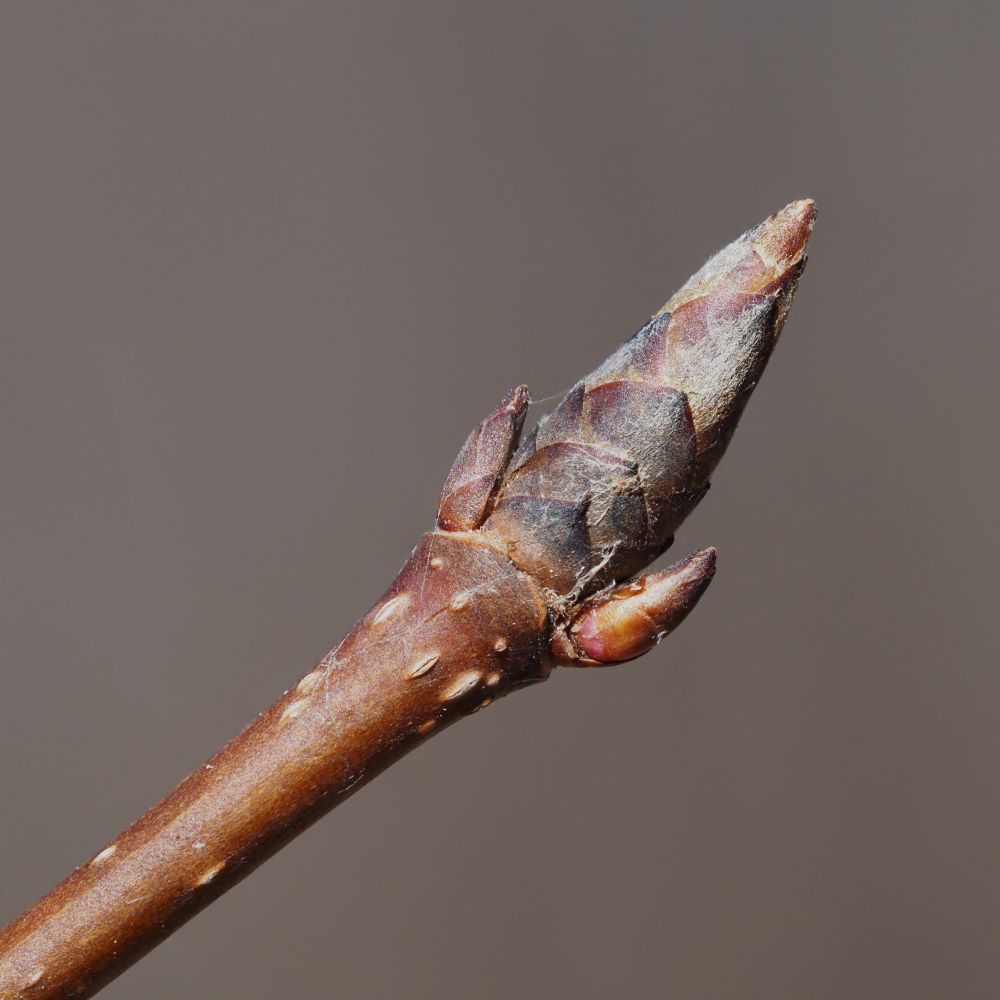
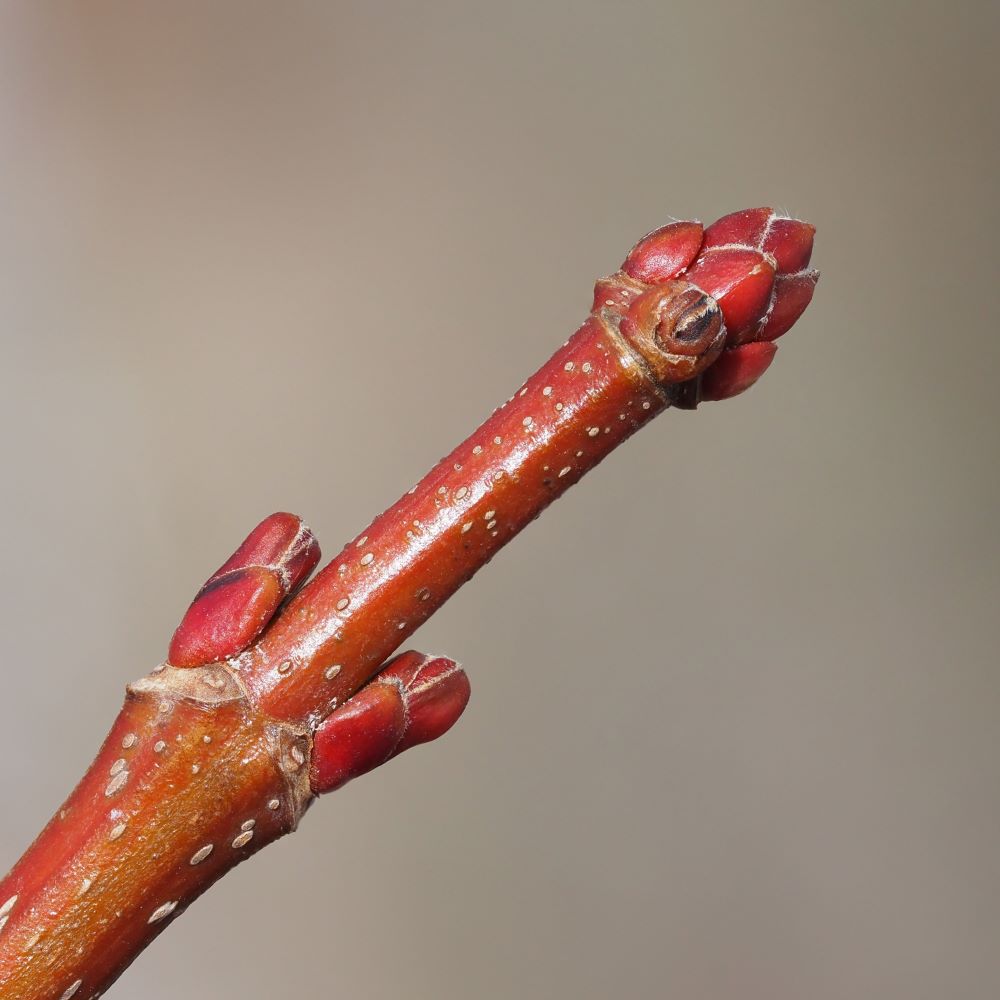
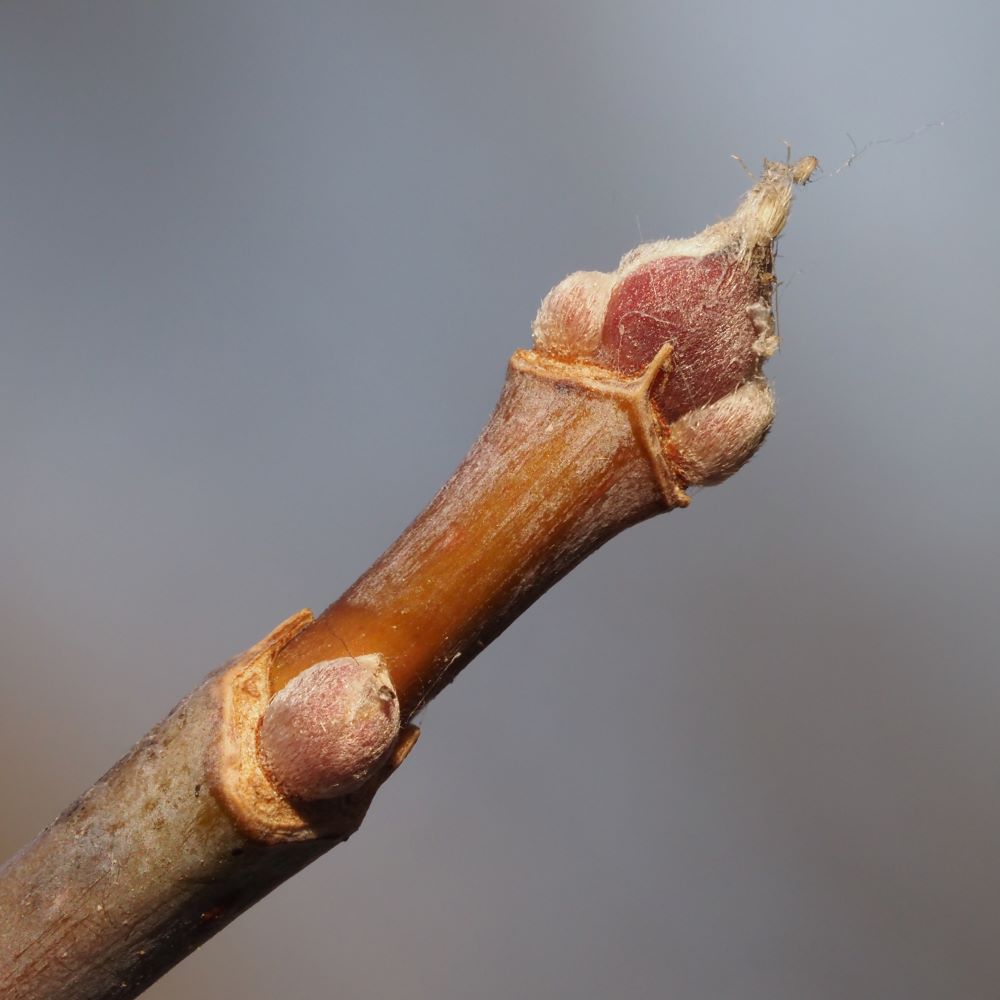
Sugar maple buds are brown and pointy, with many scales that are reminiscent of tiny pine cones. Silver maple and red maple buds are red and rounded. Red maple twigs tend to be redder than silver maple twigs. Box elder has fuzzy white buds and green or purplish twigs.
Ashes and walnut
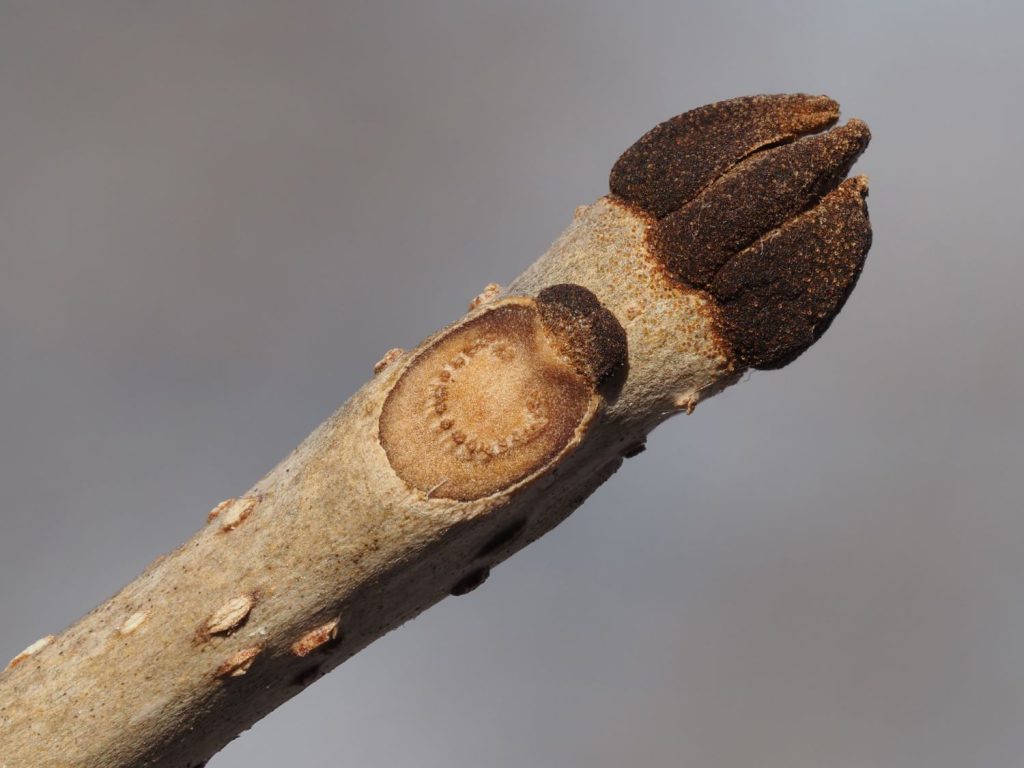
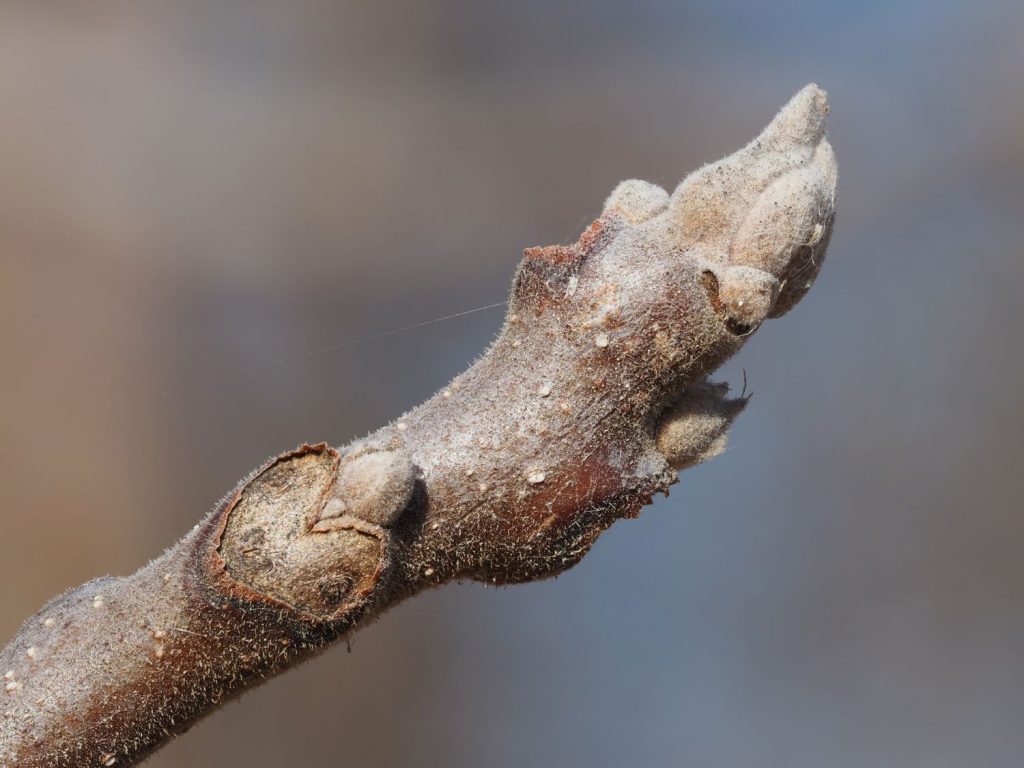
White and green ash bark can be confused with walnut bark. In addition to the different branching patterns (ashes have opposite branching, while walnut has alternate branching), the buds look quite different. White and green ash terminal buds are dark brown and look a bit like hooves or chocolate kisses. Black walnut terminal buds are cream-colored and fuzzy, and black walnut leaf scars are heart-shaped, often described as “monkey faces.” White and green ash can be distinguished from each other based on the shape of their leaf scars.
Elms and basswood
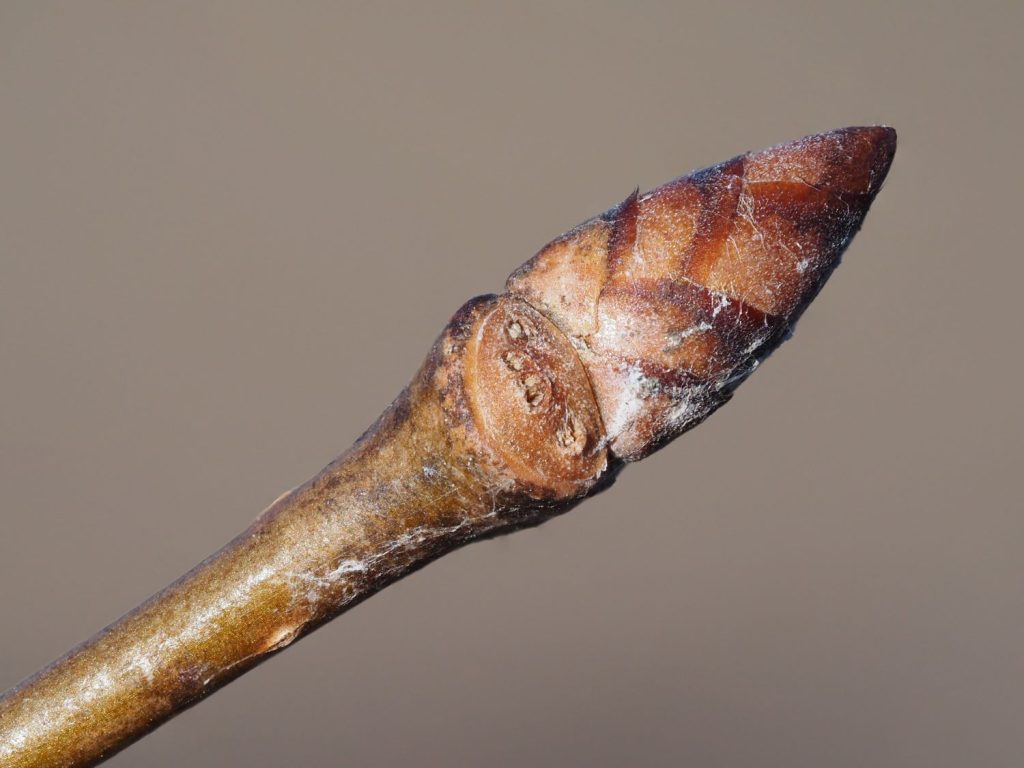
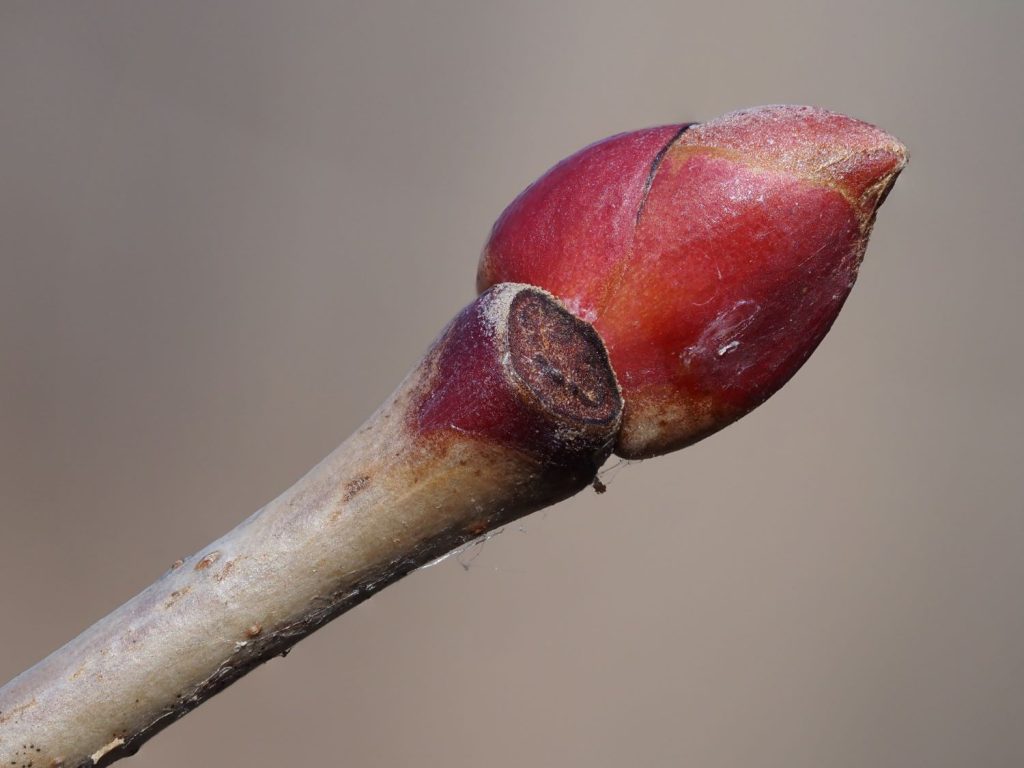
Elms and American basswood both have alternate branching and somewhat similar bark, but their buds are quite different. American basswood buds are round and red with only two bud scales. Elm buds are darker-colored and have many bud scales. (Distinguishing different species of elms from each other based on buds alone is difficult.)
Oaks
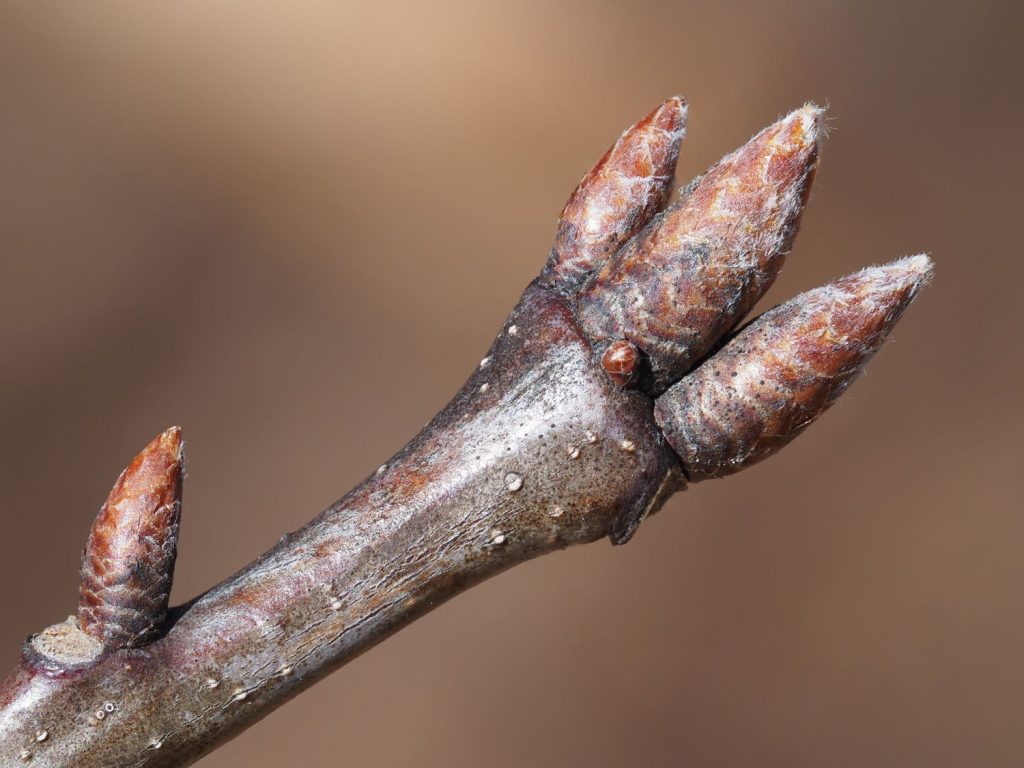
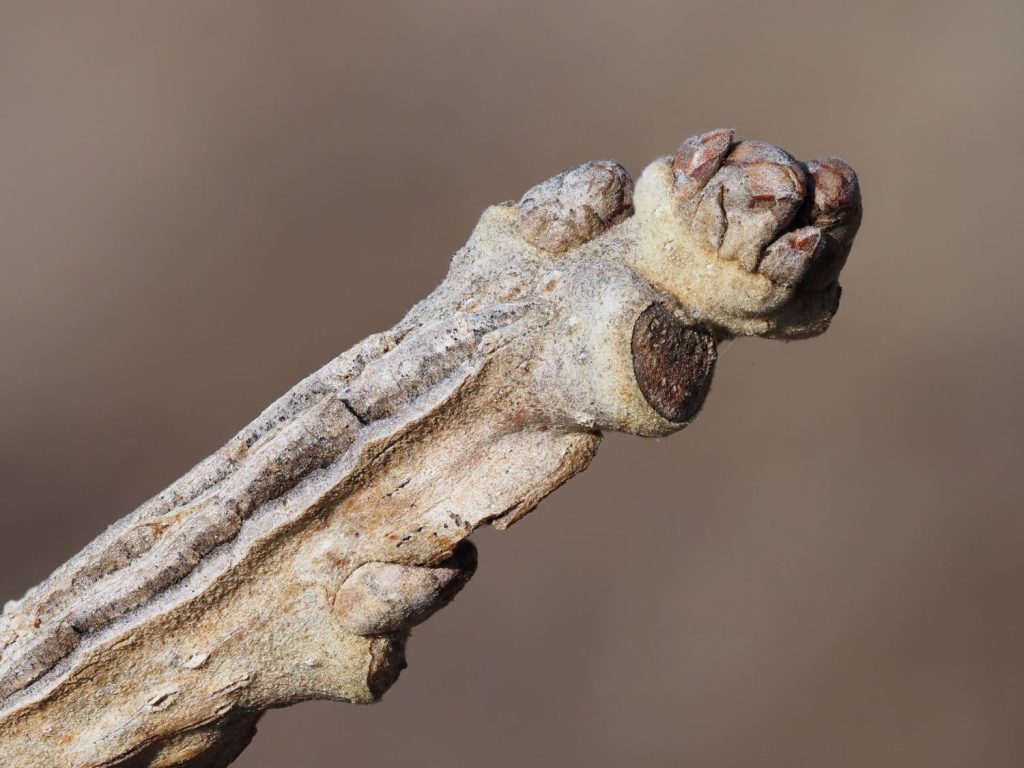
Unlike most other Wisconsin trees, oaks have twigs with a cluster of buds at the tip. Oaks can be divided into two groups: red oaks and white oaks. Species in the red oak group have pointed buds, while species in the white oak group have rounded buds. (To tell apart species within the same group, you’ll want to look at other features like bark and acorns.)
Buckthorn and black cherry
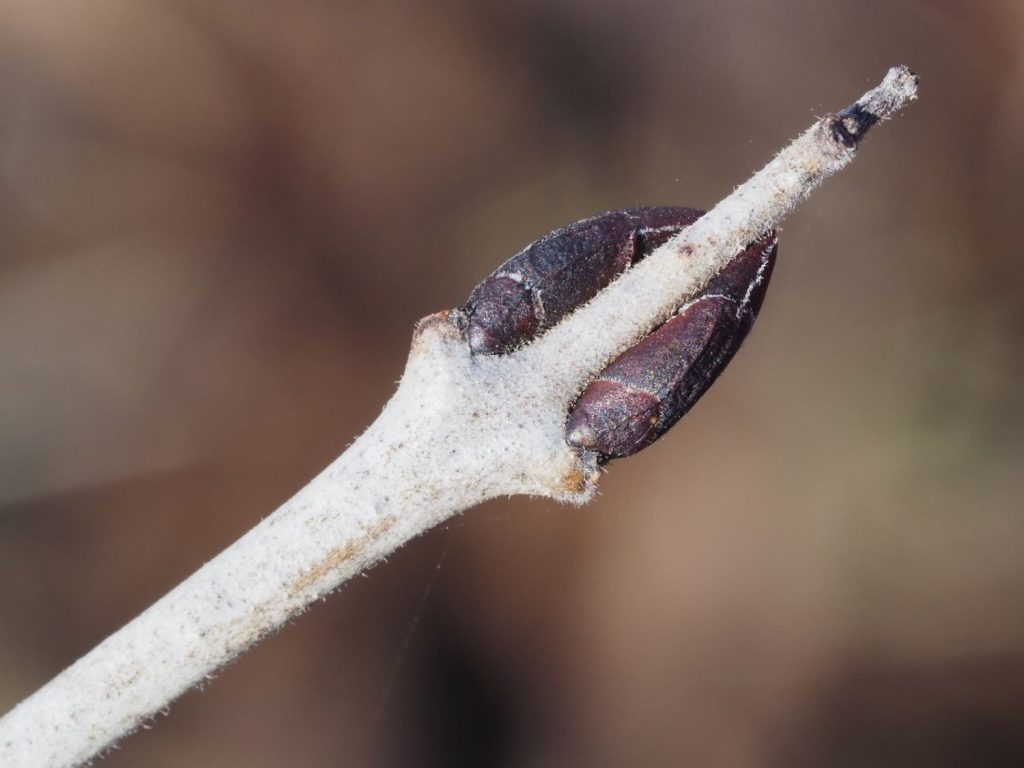
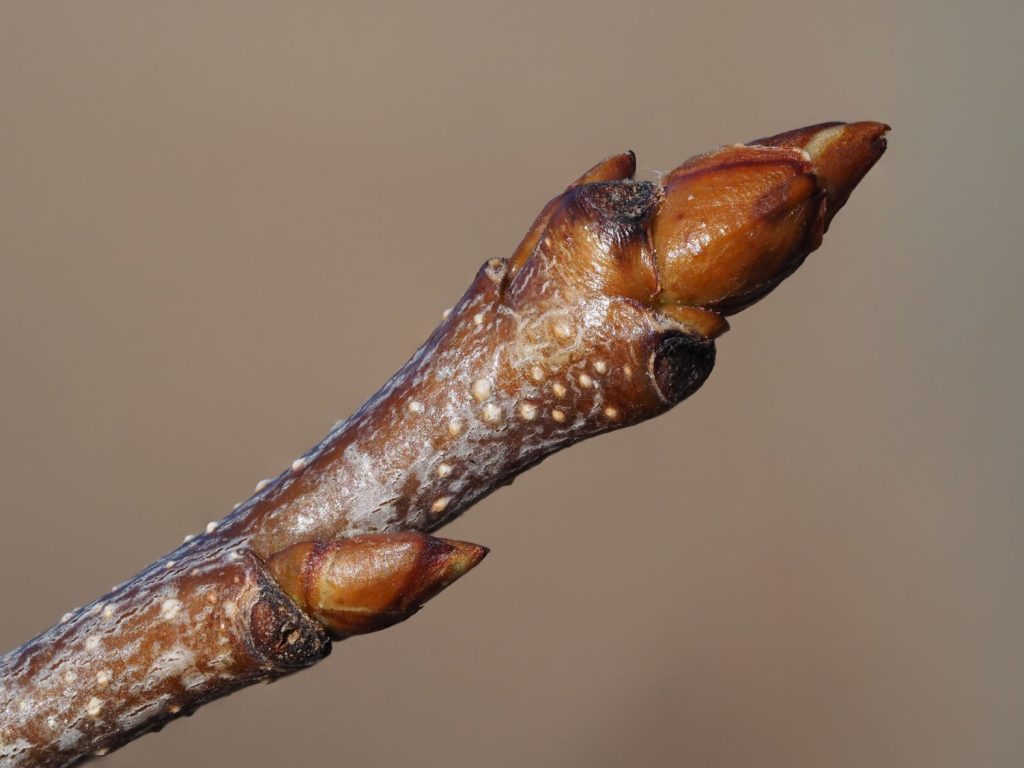
Buckthorn bark can be confused for the bark of a young black cherry tree. However, the twigs look quite different. Buckthorn buds are dark brown, pressed tightly against the twig, and look like hooves. The end of a buckthorn twig often has a sharp thorn-like structure. Black cherry buds are a dull red, are not pressed tightly against the twig, and are somewhat cone-shaped. Additionally, buckthorn has opposite (or sub-opposite) branching, while black cherry has alternate branching.
Now that you know which characteristics of trees can be helpful for identification, we encourage you to pick up a field guide and your camera, head out into your woods, and start practicing identifying the trees around you!
Additional resources
Field guides
- Michigan Trees, Revised and Updated: A Guide to the Trees of the Great Lakes Region by Burton V. Barnes and Warren H. Wagner (2004)
- Trees of Wisconsin Field Guide, 2nd Edition by Stan Tekiela (2021)
- The Sibley Guide to Trees by David Allen Sibley (2009)
- Forest Trees of Wisconsin: How to Know Them (Wisconsin DNR, 2006)
Dichotomous keys
Other resources
Explore all learning hub webpages
Woodland stewardship topics
Use a chainsaw safely & effectively
> Protective gear for safe chainsaw use
> Grow mushrooms using sawdust spawn
> Grow mushrooms using plug spawn
People and programs who provide assistance
If you have feedback on this webpage, fill out this form. If you have questions about tree identification, contact:

Olivia Kovacs
Forestry Educator
olivia.kovacs@wisc.edu
608-509-3012

Tony Johnson
Forestry Educator
anthony.johnson@wisc.edu
608-386-8900
Page written by Sky Hershberger and reviewed by Olivia Kovacs (UW–Madison Extension). Last updated August 2026.
Additional photo credits:
- Balsam fir: Linda Williams, Wisconsin DNR
- Eastern hemlock: David Lee, Bugwood.org
- Bur oak: Sky Hershberger, CC BY-NC 4.0
- American elm: Scott O’Donnell, Wisconsin DNR
- Tamarack needles: Joseph OBrien, USDA Forest Service, Bugwood.org
- Northern white-cedar needles: Becca MacDonald, Sault College, Bugwood.org
- Eastern red cedar needles: Bill Cook, Michigan State University, Bugwood.org
- Northern red oak leaf: Wisconsin DNR
- Northern pin oak leaves: Paul Wray, Iowa State University, Bugwood.org
- Black oak leaves: T. Davis Sydnor, The Ohio State University, Bugwood.org
- Eastern white oak leaves in winter: Sky Hershberger, CC BY-NC 4.0
- Bur oak leaves: Keith Kanoti, Maine Forest Service, Bugwood.org
- Red maple samaras: Jeremiah Auer, Wisconsin DNR
- White oak acorns: Paul Wray, Iowa State University, Bugwood.org
- Black locust seed pods: Ohio State Weed Lab, The Ohio State University, Bugwood.org