

Pests and Diseases
Identifying & Managing Pests & Diseases
Related webpages
Many different types of insects and diseases can affect the health of trees. If you look up and see something wrong with your trees, don’t panic—death is not the only possible outcome. Sometimes your trees will fully recover, and sometimes they will survive for decades at less than peak health. It all depends on what is causing the problem and what other stresses your trees face. By learning about both native and non-native pests and diseases, you can take steps to protect your trees before any issue arises, notice potential problems early, and take action quickly if necessary.
How to figure out what’s making your trees sick
For our purposes, a pest is an insect that negatively affects the health of trees. A pathogen is an organism (fungus, microbe, etc.) that causes a disease—and very few of them are diagnosable by sight. Figuring out what is making your trees sick is like detective work, piecing the clues together to draw the most logical conclusion. Start by asking yourself three key questions.
What types of trees are affected?
Some insects and diseases only affect one type of tree, while others can affect many types of trees. By positively identifying which tree species are sick, you can quickly eliminate some potential culprits. For example, oak wilt only affects oak and emerald ash borer only affects ash, whereas spongy moth eats many broadleaf species and heterobasidion root disease affects many conifer species.
How many trees are affected?
Maybe one individual tree caught your attention because it looked especially unhealthy. But is the issue widespread, or is just that one tree affected? Check the trees nearby as well as the trees in other spots in your woods.
If many trees of many different species seem unhealthy, a non-living (abiotic) cause could be at play. Trees along roads can be hurt by road salt spray or other chemical sprays. Drought, wind, hail, flooding, and sunscald can affect tree health as well. It’s worth addressing these issues when possible. We humans are more likely to get sick when we are experiencing lots of stress, and trees are similar: anything that stresses a tree will make it more vulnerable to insects and diseases.
Which parts of the trees look unhealthy?
Notice where on the tree you are seeing issues. Look at the leaves, branches, trunk/bark, and down near the roots for signs and symptoms of what is wrong. However, keep in mind that just because you see symptoms in a particular plant part does not mean that a disease is actually occurring in that plant part. For diseases that harm roots, the first symptoms you notice might be in the leaves and branches.
A sign is evidence of the pest or pathogen itself. Here are a few examples.
- An insect egg, larvae, or adult: hemlock woolly adelgid eggs are noticeable on the base of hemlock needles; spotted lanternfly adults are large and colorful.
- Damage from an insect: emerald ash borer creates holes in bark and tunnels in the trunk; spongy moth chews leaves.
- Growth of a pathogen: the fungus that causes Armillaria root disease produces honey-colored mushrooms that often grow at the base of infected plants but can also show up anywhere in the root zone of infected plants.
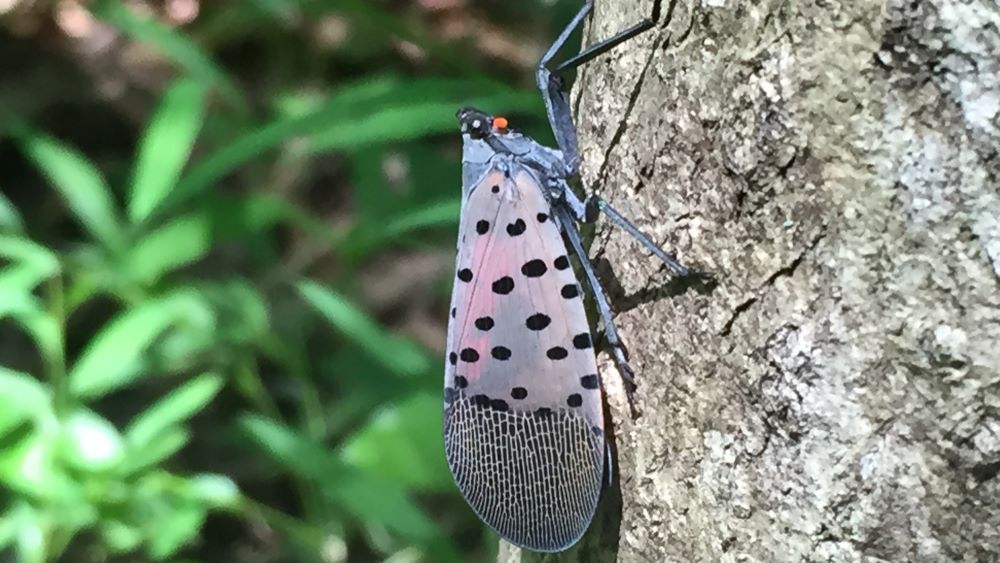
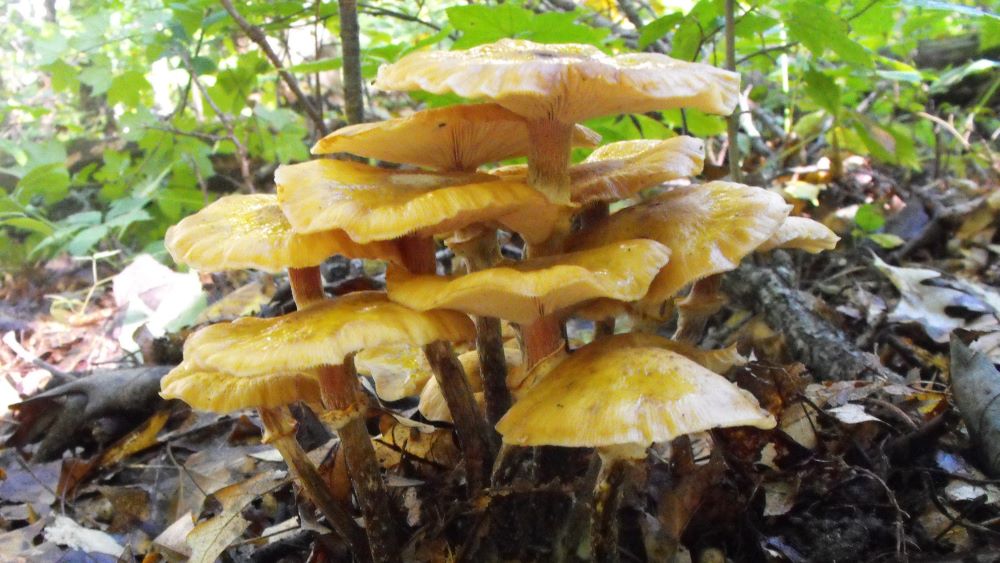
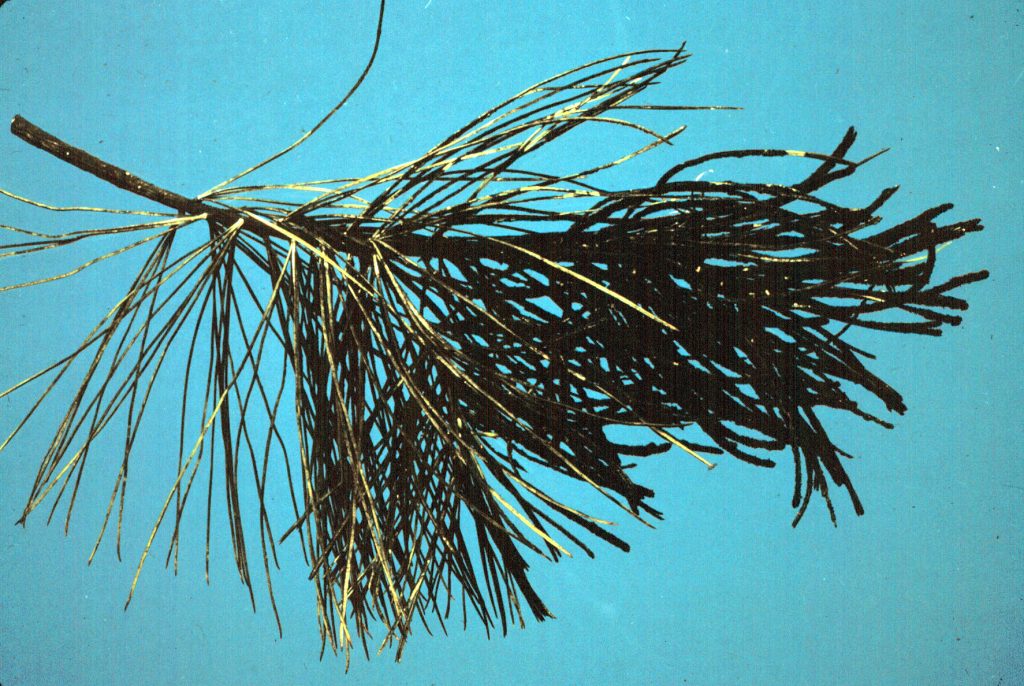
Symptoms are what the tree does in response to something attacking it. Here are a few examples—but remember that there are hundreds of plant pests and diseases in Wisconsin, many of which have similar symptoms!
- Leaves wilting, changing color, or falling off: oak wilt affects leaves starting from where the fungus was introduced and moving outward; anthracnose tends to affect leaves starting from the bottom of the canopy moving upward.
- Branches or trunk with cankers or galls: Ramorum blight can cause oaks to form bleeding cankers; black knot fungus causes cherry and plum trees to grow black galls often described as “poop on a stick.”
- Branches or trunk oozing sap: bark beetles can cause conifers to form “pitch tubes” around the insects’ exit holes near the bottom of the tree; Diplodia shoot blight and canker causes infected conifer branch tips to ooze lots of resin.
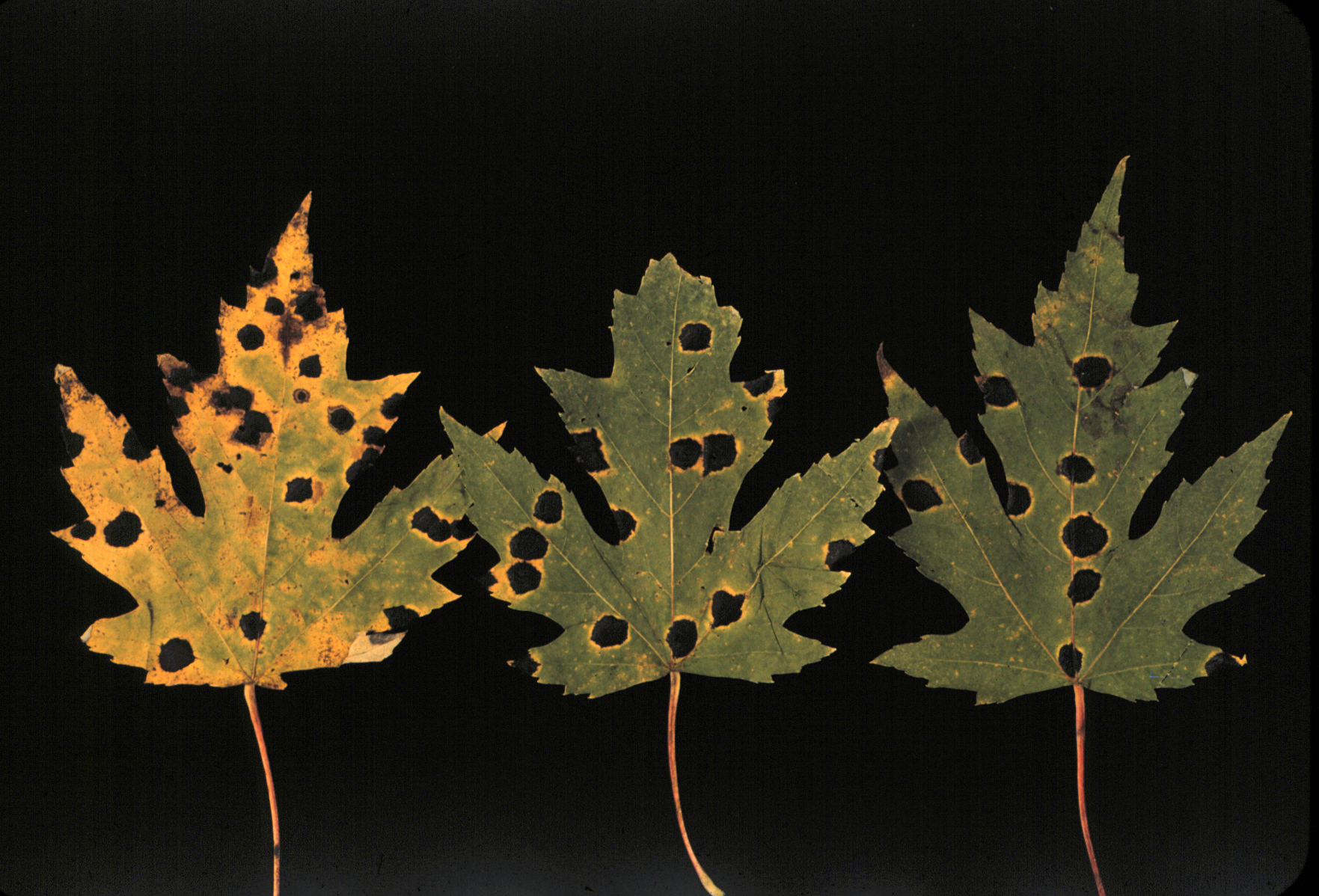
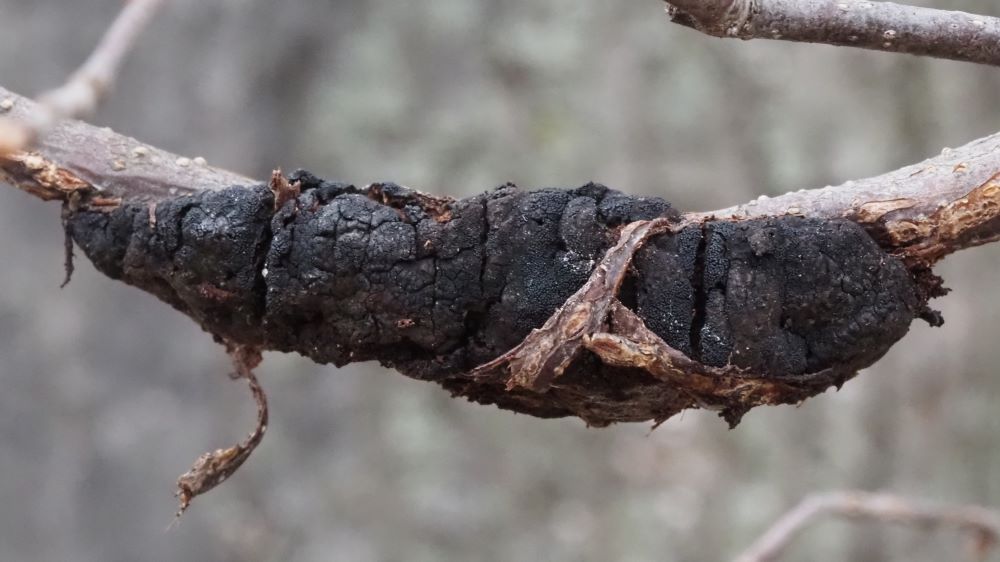
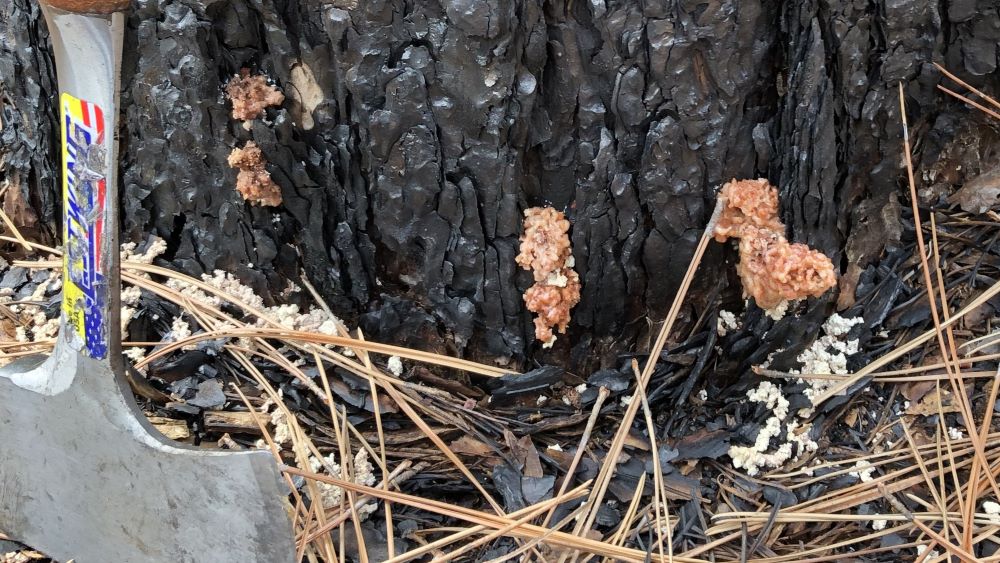
To diagnose health issues with your trees, you can start with the University of Minnesota Extension’s helpful tool to narrow down the possibilities. However, many issues are difficult or impossible to confidently identify without lab tests or other expert assessments. Learn more about experts who can help you figure out what’s affecting your trees.
Important pests and diseases in Wisconsin forests
A wide range of both native and non-native insects and diseases can affect tree health, and others are on our radar to potentially arrive in Wisconsin in the near future. The examples below are just a sampling—for more complete lists, check out the fact sheets by the UW–Madison Insect Diagnostic Lab and Plant Disease Diagnostics Clinic.
Native insects and diseases
Native insects and diseases that harm trees are a natural part of a healthy forest ecosystem. But when conditions are right for them to explode in population or spread rapidly among stressed trees, you may want to take action to protect your trees. Here are some common native insects and diseases in Wisconsin’s forests. Click a name or photo to learn more about it.
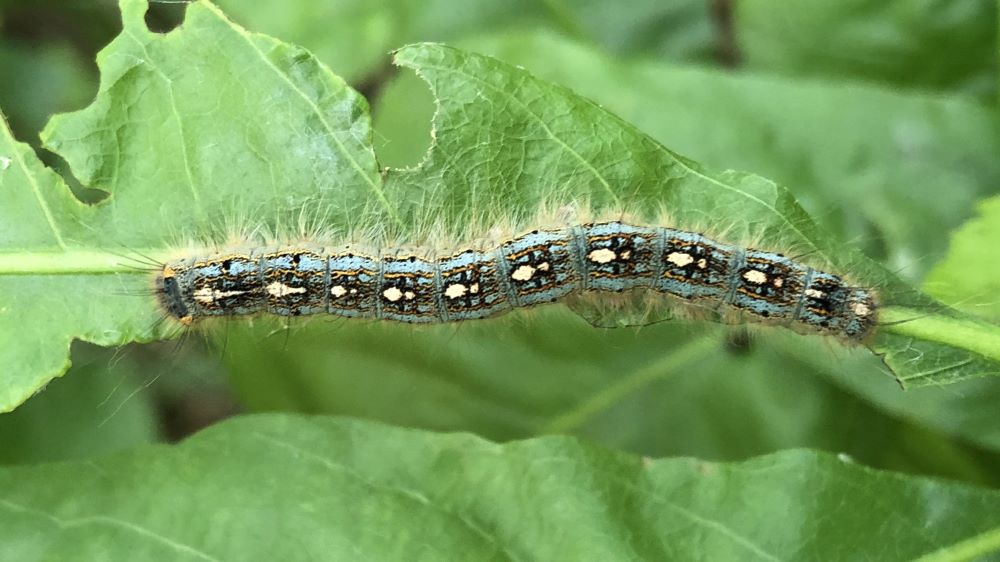
Forest tent caterpillar
These caterpillars eat the leaves of aspens, oaks, birches, and other broadleaf trees and shrubs. Their populations go through boom and bust cycles. Wisconsin has not had a major outbreak since the early 2000s.
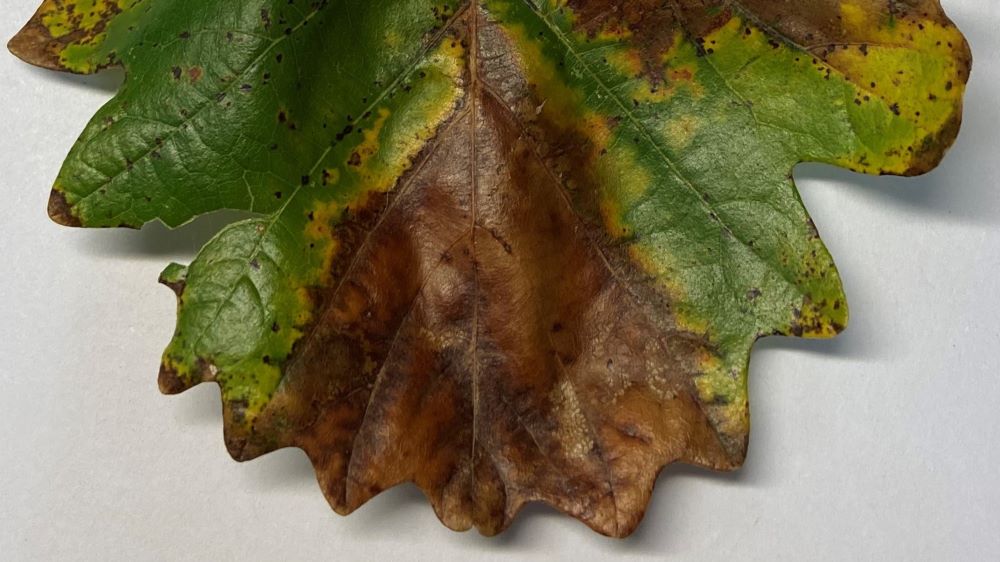
Bur oak blight
Symptoms of this fungal disease (which only affects bur oaks) include dark veins on the undersides of leaves and wedge-shaped brown segments between veins. Wet springs and summers make bur oak blight worse.
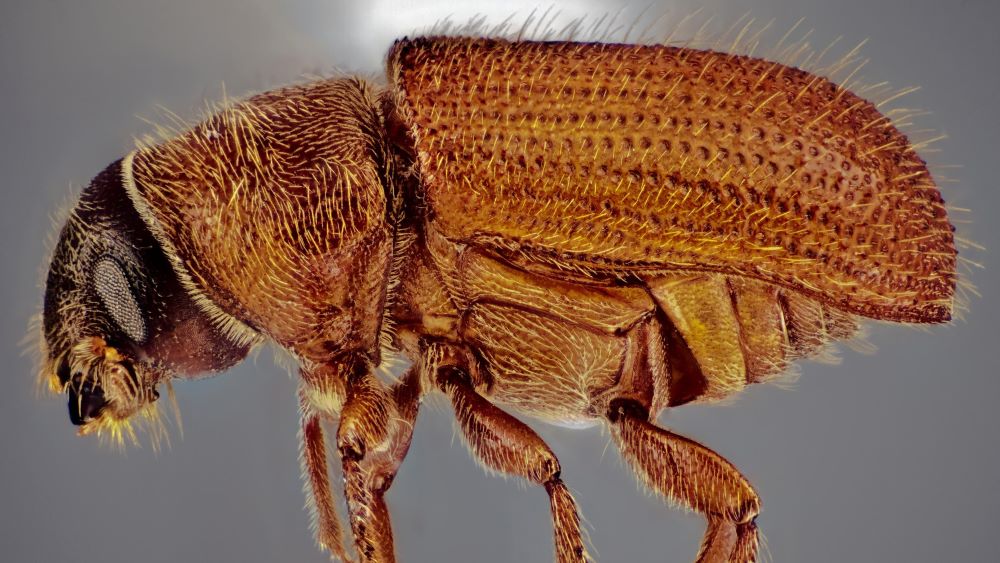
Eastern larch beetle
These beetles eat the needles of tamarack (larch) trees and move through a stand over the course of several years. As Wisconsin’s climate changes, longer growing seasons may allow the beetles to go through two generations per year instead of just one.
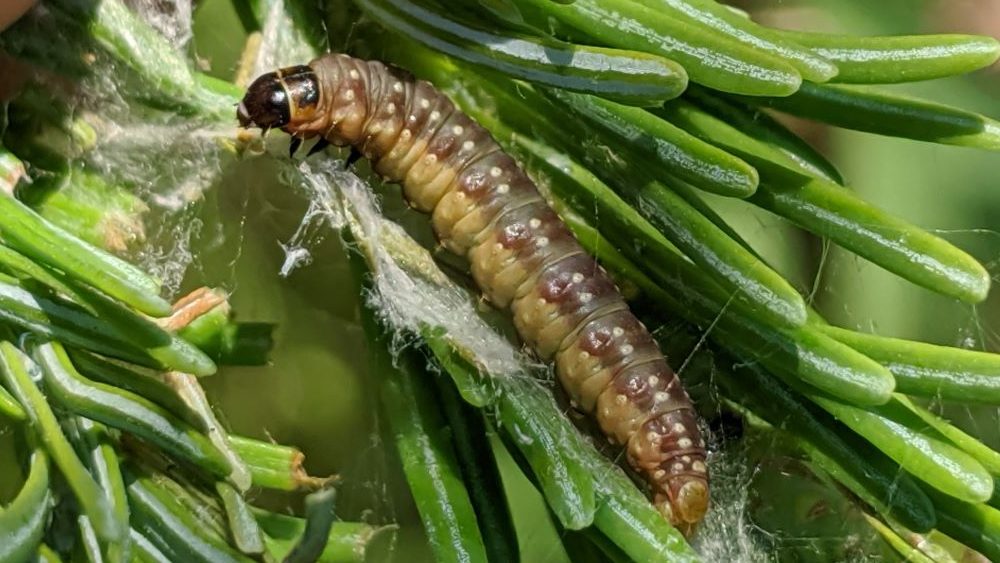
Spruce budworm
These caterpillars eat the needles of conifers, especially spruce and balsam fir. Outbreaks typically occur every 30 to 50 years and last around 10 years. As of 2025, we are currently experiencing an outbreak that started in 2012.
The four species above are all considered primary pests and diseases, meaning that they attack both healthy and weakened trees. Other species, like two-lined chestnut borer and Armillaria root disease, are considered secondary pests and diseases, meaning that they mainly attack trees that are already weakened by a primary pest or disease or other stresses.
Invasive insects and diseases
If a non-native species causes harm to the environment, economy, or human health, we consider it to be invasive. Often, insects and diseases exist in balance with the tree species they affect in their native range because those trees have evolved to tolerate them or because they are kept in check by predators. But when an insect or disease arrives in a new region, it can take advantage of similar tree species that don’t have much resistance to the unfamiliar species, and it can spread more quickly without natural predators. Here are some high-priority invasive insects and diseases in Wisconsin woodlands. Click a name or photo to learn more about it.
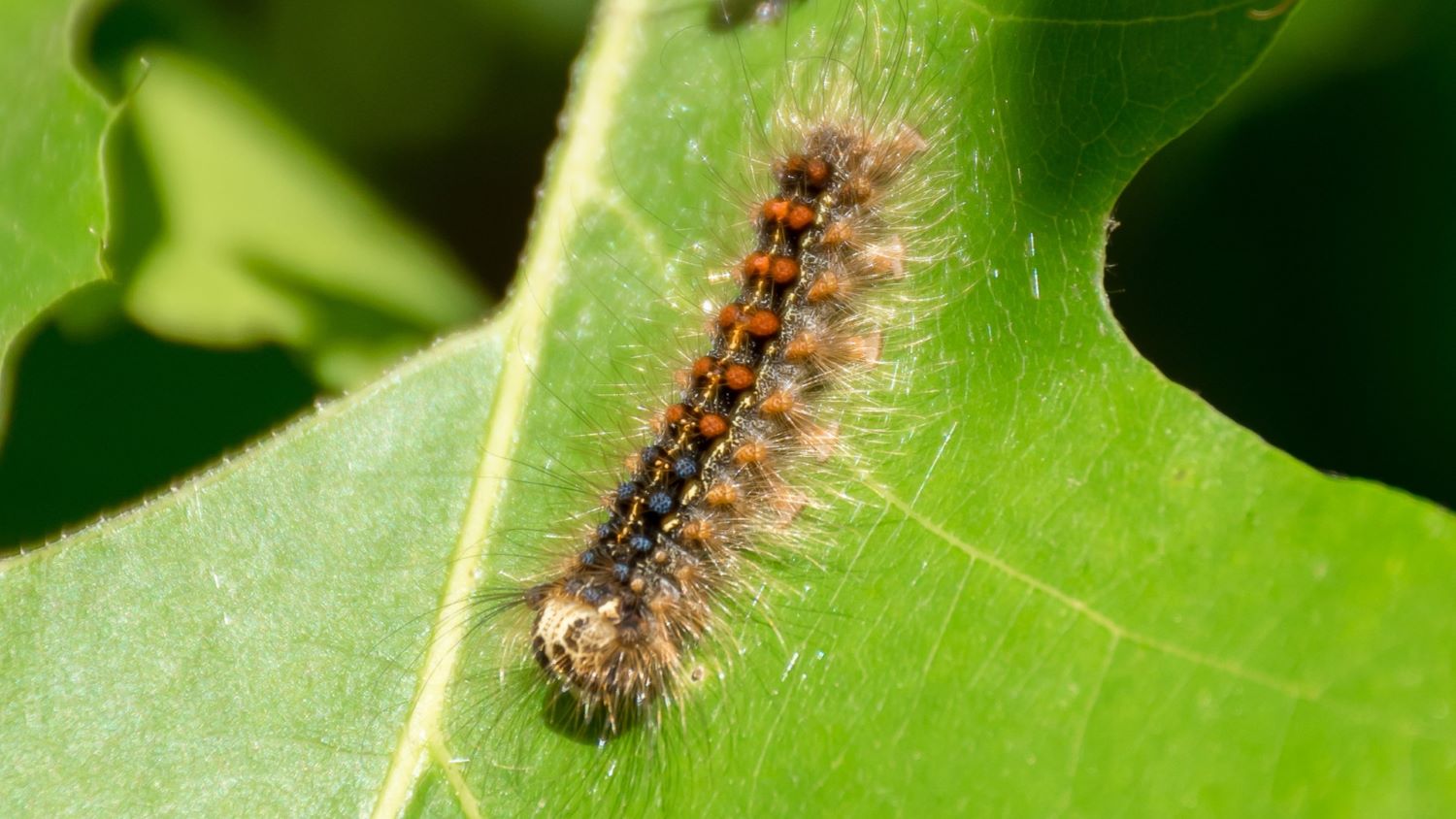
Spongy moth
This caterpillar eats the leaves of more than 300 tree species. Their populations tend to have large outbreaks every decade or so.
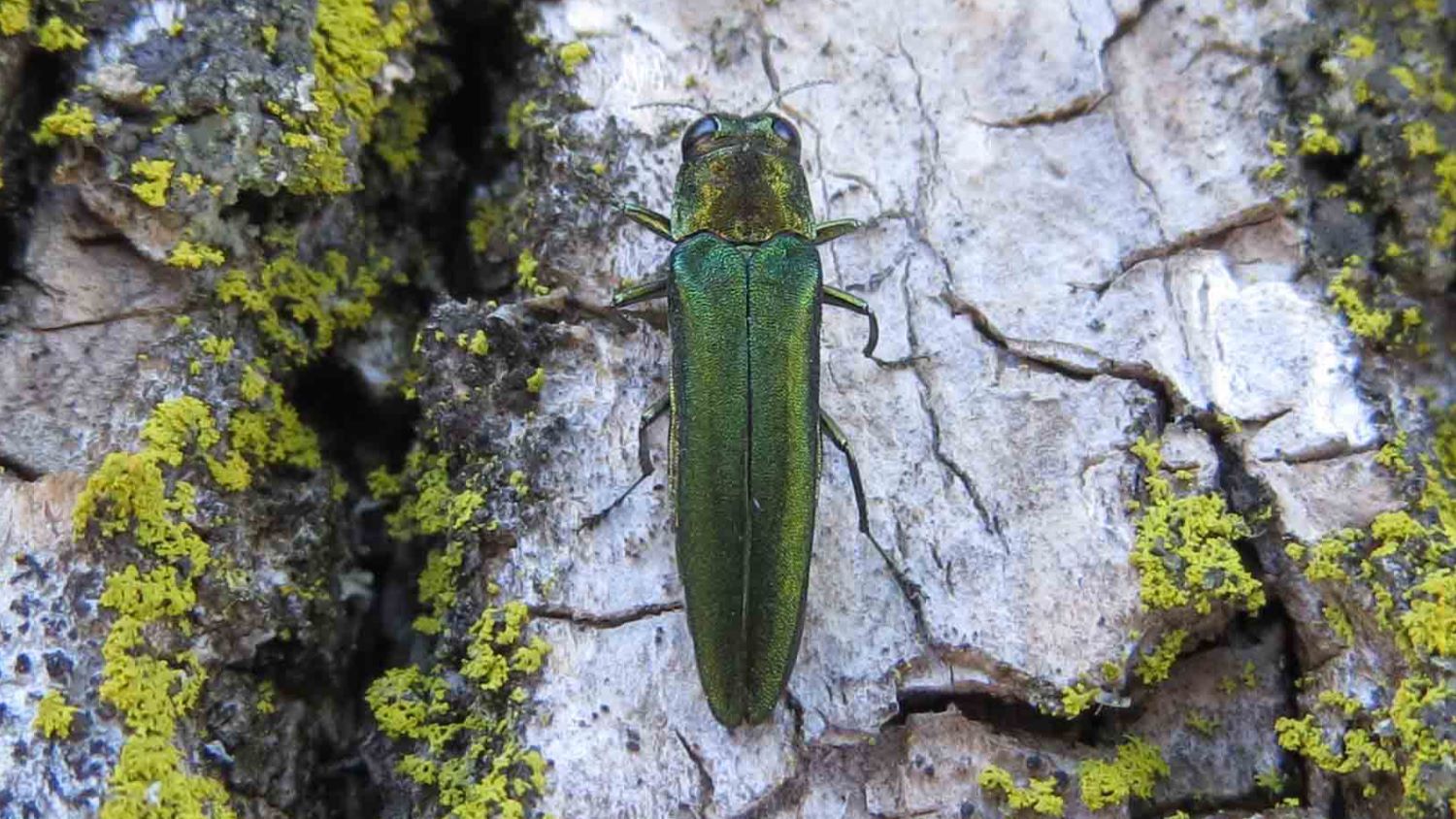
Emerald ash borer
This beetle kills more than 99% of the white, green, and black ash trees that it infests. Signs include curved galleries in the trunk and D-shaped exit holes in the bark.
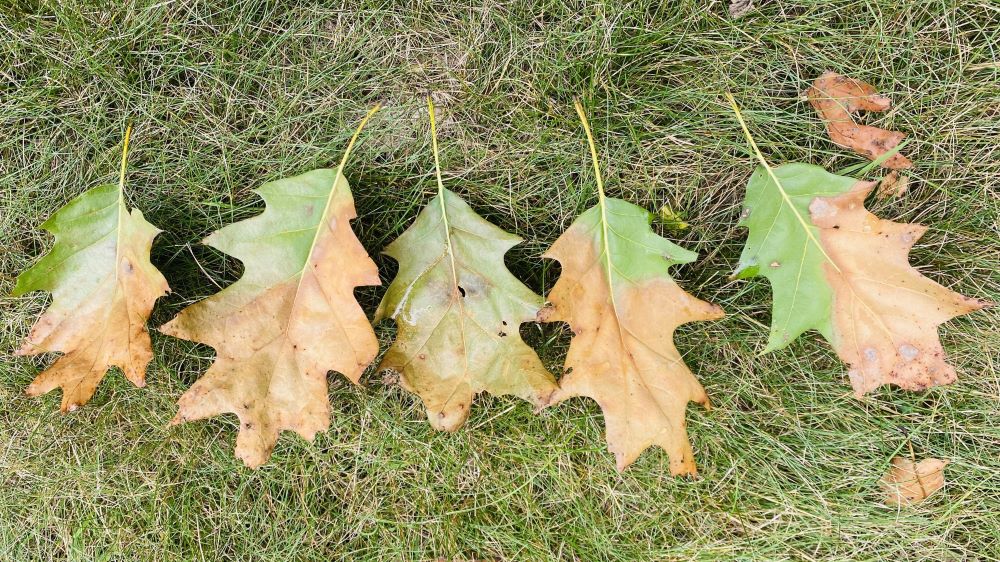
Oak wilt
This fungal disease affects all native oak species, causing the leaves to wilt and drop in summer. Red oak group species (such as red and black oak) are more vulnerable than white oak species (such as white and bur oak).
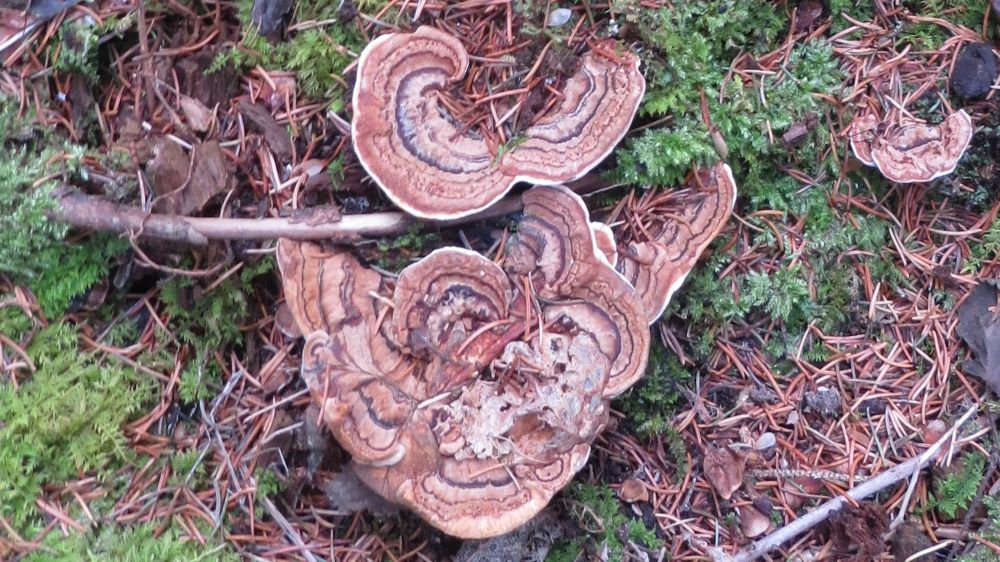
Heterobasidion root disease
This fungal disease affects conifers, and its fruiting bodies appear at the base of dead and dying trees. In Wisconsin, red and white pine plantations are the most commonly affected types of forests.
Threats on the horizon
Some invasive insects and diseases have been spreading across North America but have not yet reached Wisconsin. Here are a few to put on your radar and know how to spot. Click a name or photo to learn more about it.
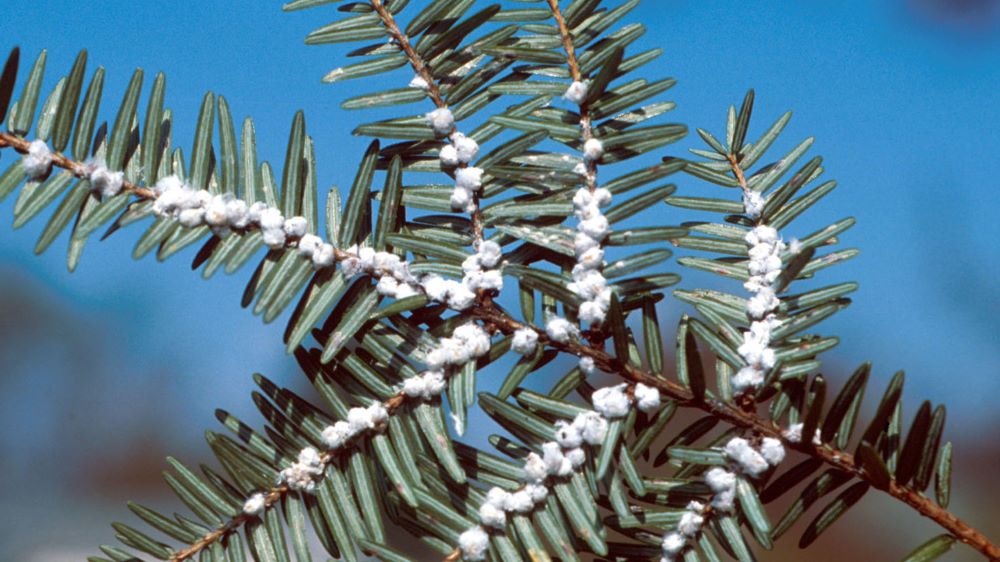
Hemlock woolly adelgid
This aphid-like insect feeds on hemlocks and leaves white, cottony egg sacs at the base of hemlock needles. It has killed millions of hemlocks in the eastern U.S.
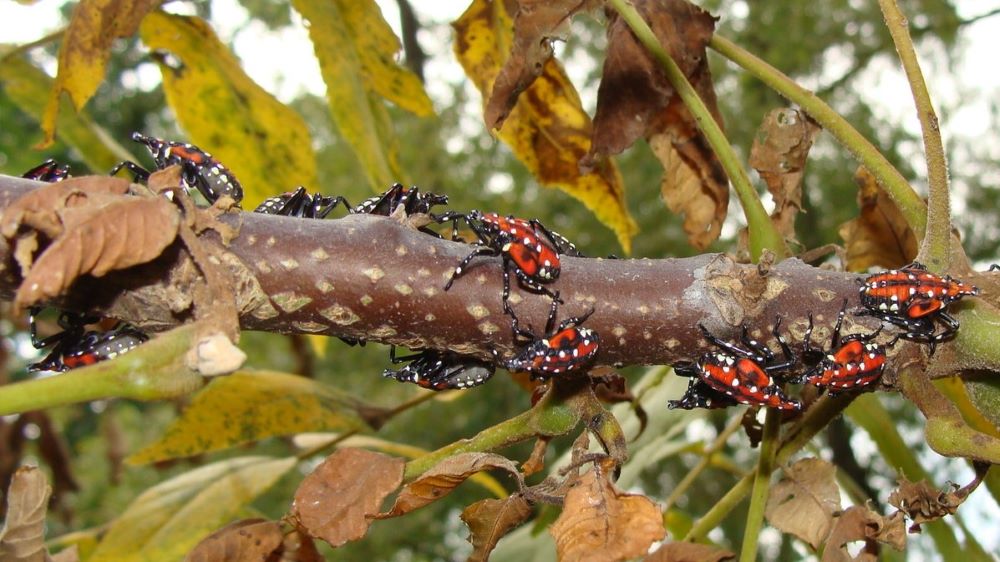
Spotted lanternfly
This insect can feed on more than 100 plant species, usually weakening but not killing them. The nymphs and adults are easy to see when they congregate on host plants.
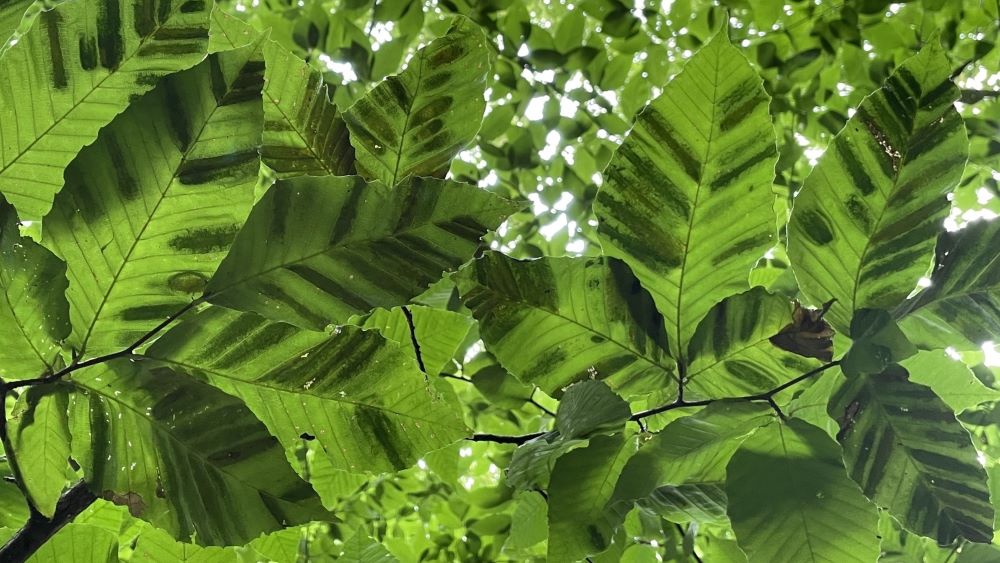
Beech leaf disease
This often-deadly disease of beech trees is caused by a nematode (a microscopic wormlike animal) that eats tissues inside beech buds. The first symptom is dark green stripes on the leaves.
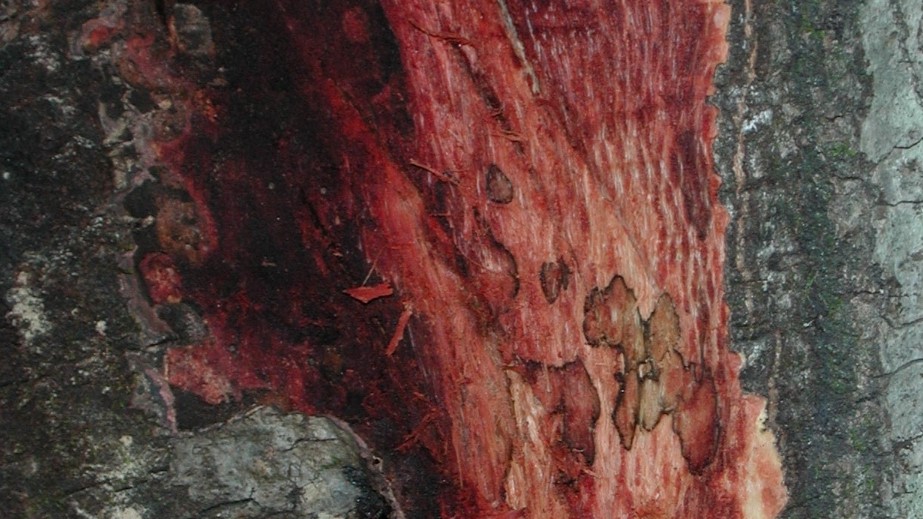
Sudden oak death (Ramorum blight)
This water mold can infect oaks as well as common ornamental plants. Symptoms can include shepherd’s crooks on branches, cankers on trunks, or brown spots on leaves, depending on the tree species.
What you can do and who can help
Before, during, and after your forest experiences a health issue, there are many steps you can take to protect your trees. In some cases, you’ll be able to prevent trees from dying by acting early. Even when saving the sick trees isn’t possible, you’ll still be able to guide the ecosystem toward a healthy future.
Monitor, identify, and report
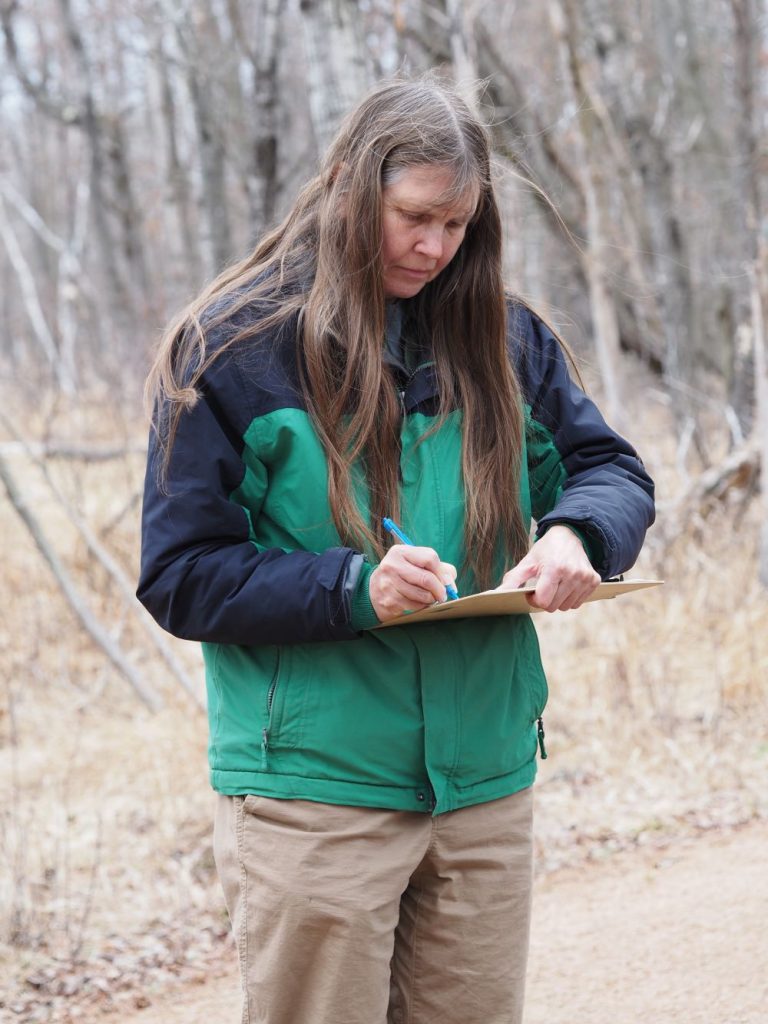
Going on frequent walks in your woods isn’t just great exercise and fresh air—it’s the best way to spot any potential problems early before they impact a large number of trees. Get to know what your woods look like at all times of year, and be aware that June and July are when the most important stress-related symptoms happen. When you see something concerning that you can’t identify, we recommend reaching out to one of the following experts for help identifying the problem.
- For insects, diseases, and other forest health concerns: DNR forest health staff
- For diseases: the UW–Madison Plant Disease Diagnostics Clinic
- For insects: the UW–Madison Insect Diagnostic Lab
- For problems with yard trees: a local certified arborist or the Extension Horticulture Program.
If you find an invasive insect, check EDDMapS to find out how common or uncommon it is in Wisconsin. If it is not yet widespread in the state, please report it by following these steps:
- Take a variety of photos, including close-up photos of all the signs and symptoms that you see.
- Write down the location, habitat, size, and density of the infestation, including which tree species are affected.
- Email Invasive.Species@Wisconsin.gov or forestry@extension.wisc.edu or submit an online report to EDDMapS.
Prevent the spread of invasive species
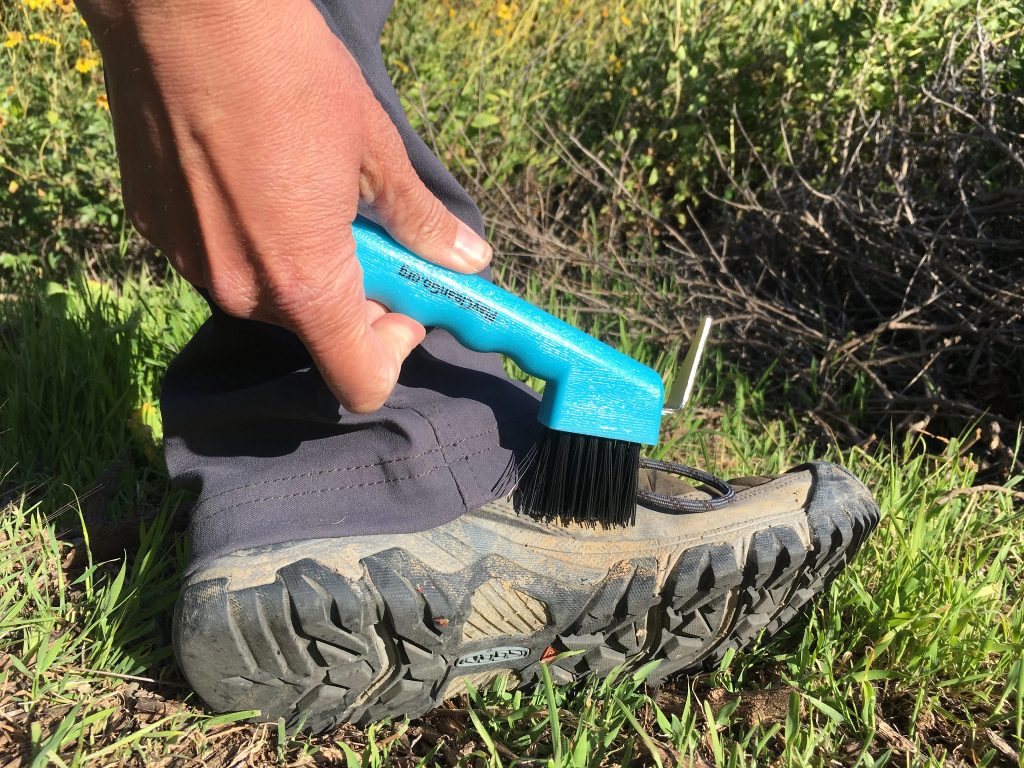
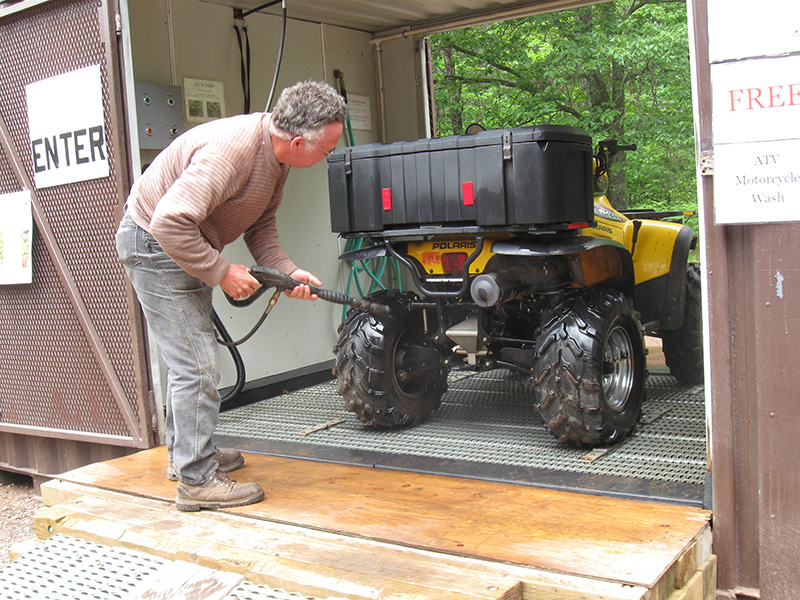
We all have a role to play in preventing the spread of invasive species that can threaten our forests. Whenever you move from one section of woods to another, make sure to clean your clothing, boots, pets, vehicle, and any equipment or machinery you’re bringing with you.
Clean boots by washing with soap and hot water and scrubbing with a stiff brush. Then use a screwdriver, hoof pick, butter knife, or tweezers to remove any remaining stuck material. Let your boots dry before storing. When possible, disinfect boots with 70% alcohol, spray disinfectants (with a percentage active ingredient as close to 70% as possible) or 0.5% sodium hypochlorite (the active ingredient in bleach) for at least 30 seconds, since soap and water is not enough to kill some plant pathogens.
Clean vehicles and heavy equipment before leaving the woods. Start with hand tools and a leaf blower. Back at home, use a hose to further clean off the equipment with water. See more detailed instructions from the Minnesota DNR (PDF).
Don’t move firewood more than 10 miles. Firewood can harbor eggs and larvae of invasive insects, as well as fungi that cause diseases. Always buy or harvest firewood locally where you plan to use it. Learn more about responsible firewood use from the Wisconsin DNR.
Prune or harvest oaks only when the risk of spreading oak wilt aboveground is low. In northern Wisconsin, the typical safe window is July 15 to April 15. In southern Wisconsin, the typical safe window is July 15 to April 1. However, it is best to play it safe and avoid pruning for as much of the spring, summer, and fall as possible. You can use this interactive tool to predict your local risk based on the climatic conditions needed by the main beetles that spread oak wilt spores. If your oaks get injured or need to be pruned during the danger window, immediately spray or paint tree wound sealer over the wound. Oak wilt-carrying beetles have been documented visiting a tree within 10 minutes of it being wounded.
Manage your woods to promote resilience
Forest resilience is the capacity of a forest to respond to a disturbance by resisting damage or stress and recovering quickly. Just like you are more likely to recover quickly from an illness if you are starting from a healthy baseline, a forest is more resilient to insects, diseases, and other stresses when it is healthy to start with. Here are some of the key characteristics of a resilient woodland.
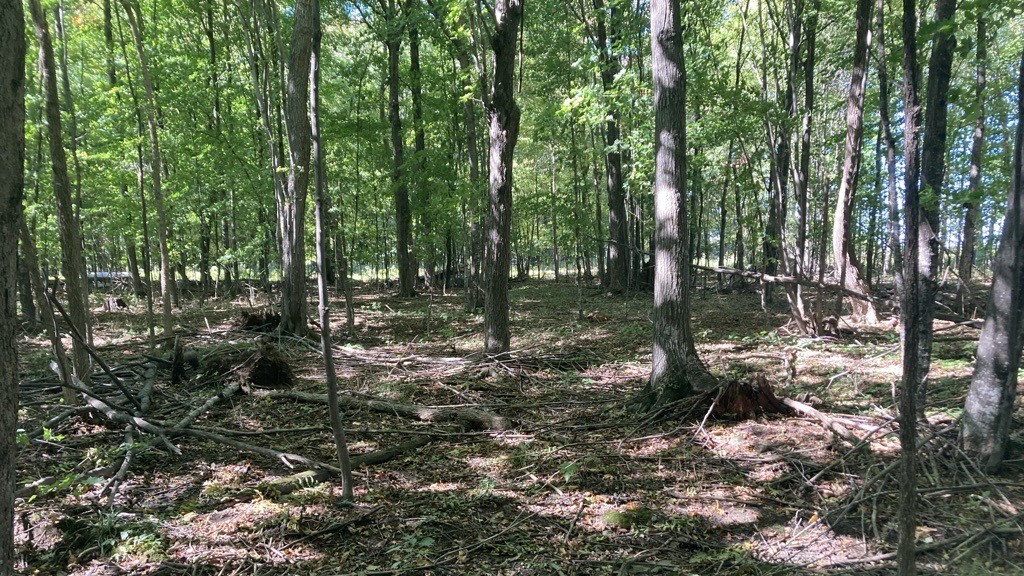
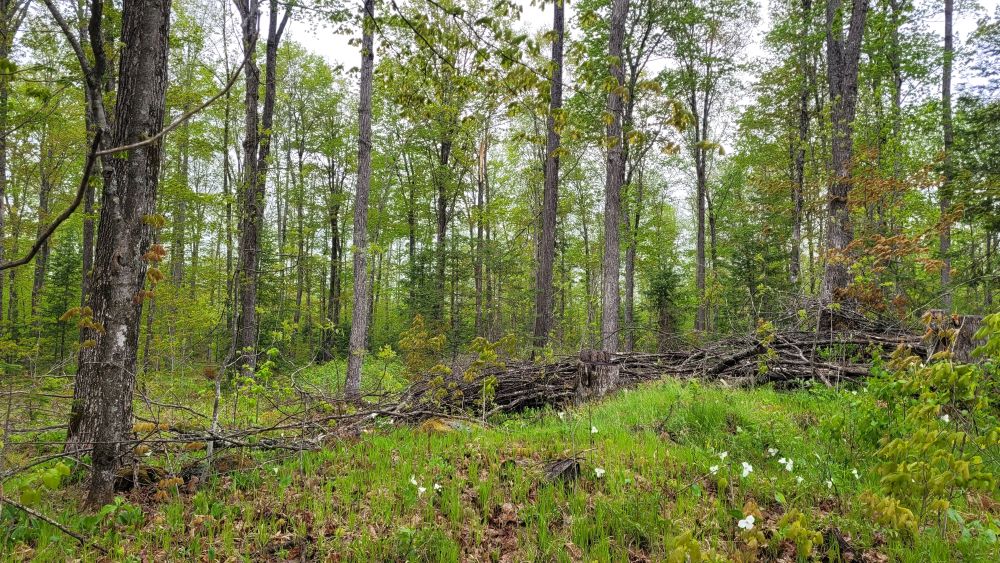
- Many different plant species: often, insects and diseases target one type or species of tree. A diversity of tree species will ensure that one insect or disease can’t wipe out all your trees. A diversity of understory plant species benefits pollinators and wildlife, who in turn benefit trees as well.
- Not crowded: trees become stressed when they are too crowded and have to fight for sunlight, nutrients, and water. This stress makes them more susceptible to attacks by insects and diseases.
- Structurally complex: a structurally complex forest has a variety of tree sizes and ages as well as shrubs and herbaceous plants. The greater variety improves a forest’s ability to respond to attack, and it supports wildlife that feed on unwanted insects.
Here are a few ways you can steer your woodland toward a more resilient future. To learn more, explore our climate resilience learning hub, use our Woods Health Scorecard (PDF), or talk with a forester.
- Thin your forest to keep it from getting too crowded. Removing some of the trees will give the remaining trees room to grow and easier access to light, water, and soil nutrients.
- Retain some snags (standing dead trees) and fallen logs. These will provide habitat for the predators that will eat the insects attacking your trees.
- Remove infested trees. If you have found that some of your trees contain particularly nasty insects and diseases, then it is a good idea to remove those from your property before the infestation spreads to your other trees.
Additional resources
- What’s Wrong with My Plant? (UMN Extension)
- What Insect Is This? (UMN Extension)
- Wisconsin DNR Forest Health website
- 2025 Wisconsin DNR Forest Health Report
- Plant Disease Fact Sheets (UW Plant Disease Diagnostics Clinic)
- Landscape Insects Info Sheets (UW Insect Diagnostic Lab)
- Guide to Common Diseases of Oaks in the Midwest (US Forest Service, 2017)
- Ten Common Plant Diseases/Disorders You Can Diagnose by Eye (UW Plant Disease Diagnostics Clinic)
- Fundamentals of Plant Disease talk (UW Plant Disease Diagnostics Clinic)
Explore all learning hub webpages
Woodland stewardship topics
Use a chainsaw safely & effectively
> Protective gear for safe chainsaw use
> Grow mushrooms using sawdust spawn
> Grow mushrooms using plug spawn
People and programs who provide assistance
If you have feedback on this webpage, fill out this form. If you have questions about pests and diseases and your woods, contact:

Keith Phelps
Forestry Educator
keith.phelps@wisc.edu
920-840-7504
Page written by Kris Tiles, Bill Klase, and Sky Hershberger (UW–Madison Extension) and reviewed by Keith Phelps (UW–Madison Extension), PJ Liesch (UW–Madison Insect Diagnostic Lab) and Brian Hudelson (UW–Madison Plant Disease Diagnostics Clinic). Last updated May 2026.
Additional photo credits:
- Forester walking toward oaks killed by oak wilt: Linda Williams, Wisconsin DNR
- Forest tent caterpillar: Bill McNee, Wisconsin DNR
- Bur oak leaf with bur oak blight: Bill McNee, Wisconsin DNR
- Eastern larch beetle: Steven Valley, Oregon Department of Agriculture, Bugwood.org
- Spruce budworm: Neil Thompson, University of Maine at Fort Kent, Bugwood.org
- Spongy moth caterpillar: Karla Salp, Washington State Department of Agriculture, Bugwood.org
- Emerald ash borer: Bill McNee, Wisconsin DNR
- Oak wilt on red oak leaves: Mike Hillstrom, Wisconsin DNR
- Hemlock woolly adelgid egg sacs on hemlock needles: Michael Montgomery, USDA Forest Service, Bugwood.org
- Spotted lanternfly nymphs: Eric R. Day, Virginia Polytechnic Institute and State University, Bugwood.org
- Beech leaf disease: Matthew Borden, Bartlett Tree Experts, Bugwood.org