

Home » Learn about Woodland Stewardship » Working with a Chainsaw in Your Woods » Protective Gear for Safe Chainsaw Use
Protective Gear for Safe Chainsaw Use
Protective Gear for Safe Chainsaw Use
This page is intended as a safety refresher for landowners, not a replacement for formal training. Make sure you have proper chainsaw safety training, and consider professional help for projects beyond your knowledge. Please also consider your own personal health before starting strenuous activities like using a chainsaw. Talk to your physician to understand potential health risks from chainsaw use.
Related webpages
When working with heavy equipment, safety is no accident! From your first time starting a chainsaw to your umpteenth season bucking firewood, safety requires intentional thinking, planning, and acting.
From 2018 to 2022, nearly 130,000 people in the U.S. went to hospital emergency rooms for chainsaw-related injuries. Injuries to the hands, knee/upper thigh, and feet are among the most common chainsaw injuries, but accidents can happen from head to toe. Many of these injuries could have been made less severe or avoided entirely through proper use of personal protective equipment (PPE).
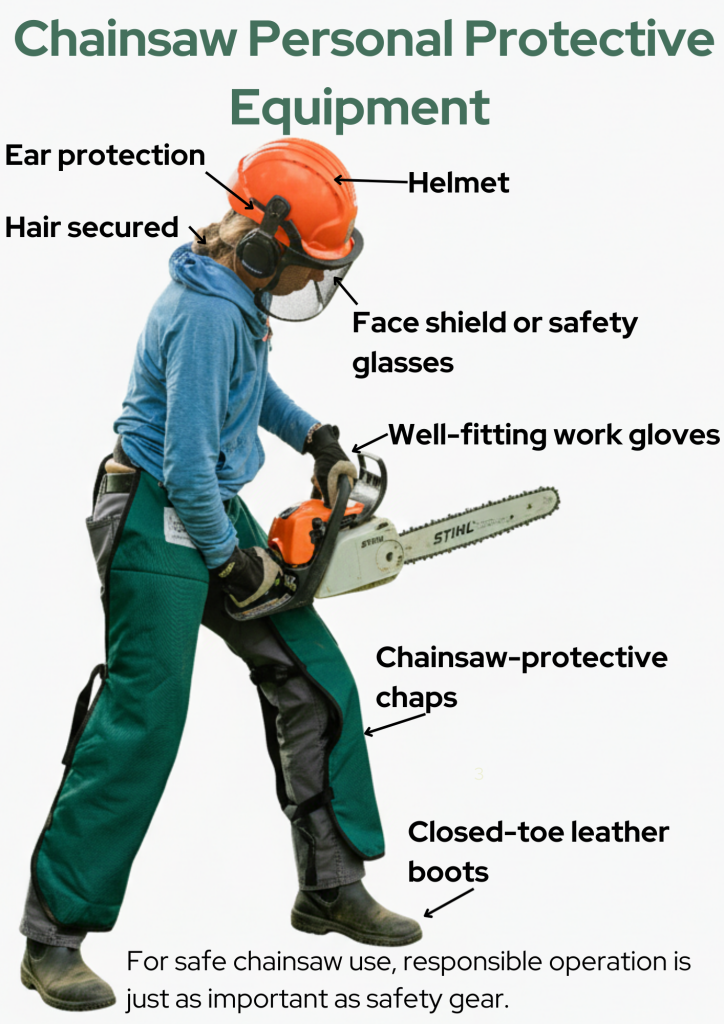
Safety technology has come a long way over the decades. To put it into perspective, cars in the early 20th century used rigid steering columns, relied on drum brakes, and didn’t have seatbelts. That was just the technology of the time, and drivers had to work with what was available. Modern driving now offers a new level of control and safety: airbags, seatbelts, and controlled braking are all important on Wisconsin’s icy winter roads.
Similarly, protective equipment for chainsaw usage continues to advance. Has anyone ever said to you, “I’ve never used PPE with a chainsaw, and I still have all ten fingers and toes”? If so, they are probably speaking from a place of luck! Even if you didn’t use protective gear back when learning to cut, that doesn’t mean you shouldn’t start now.
Protective equipment isn’t just for looks. The most advanced and knowledgeable sawyers are never without specialized safety gear. Wearing helmets, chaps, and safety goggles is not a sign of a novice. It’s a sign that you’re using the best gear available to protect yourself from the risks of chainsawing. For both cars and chainsaws, the technology provides a fail-safe that doesn’t depend on luck, but actual safety measures.
Here’s an overview of the fundamental chainsaw PPE we recommend for each part of your body. Make sure to have all of these for your next woodland project.
Head and face
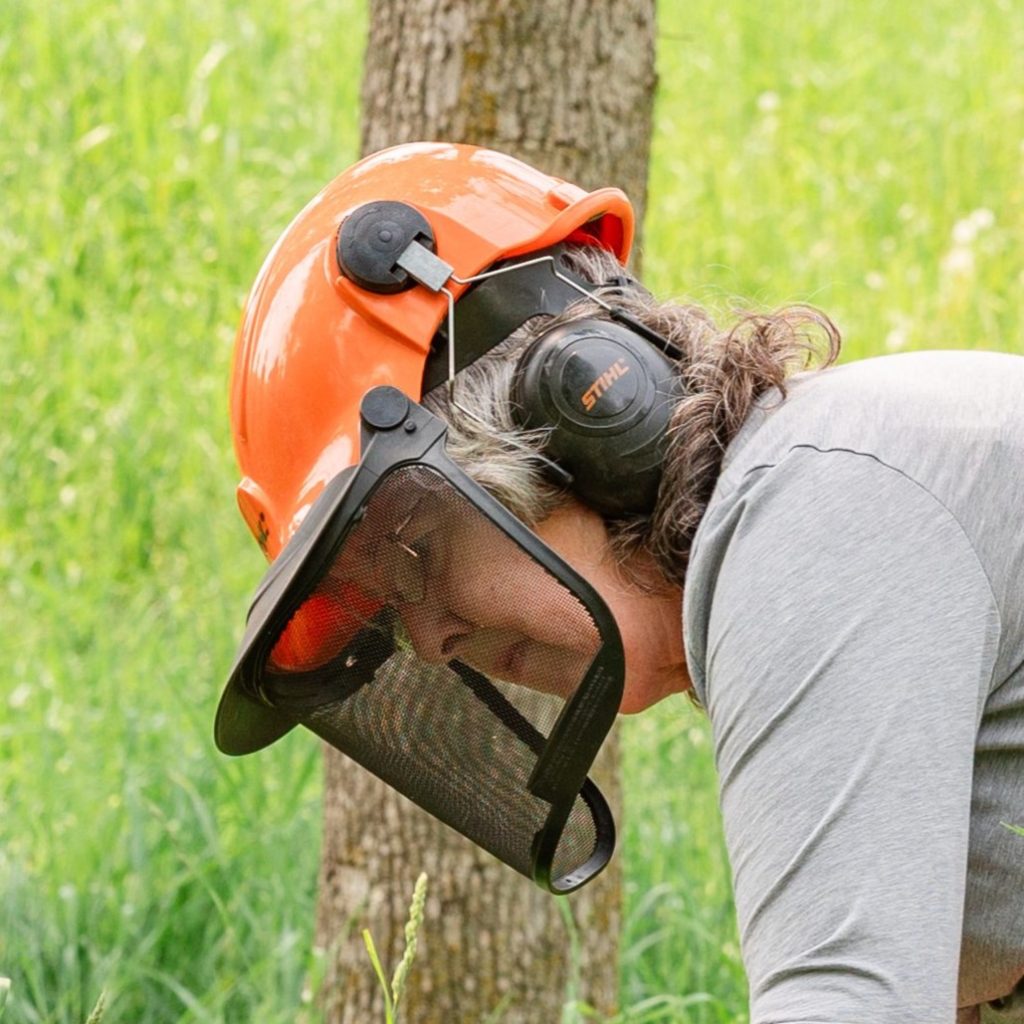
A safety helmet protects your head from falling debris, such as branches or limbs overhead. Remember that your helmet should fit snug, and all helmets have expiration dates. If your helmet ever experiences a significant impact, or if the expiration date has arrived, it is time to replace your helmet. Always check for cracks and warping in the material to ensure proper function.
Safety glasses, goggles, or a face shield act as a barrier against flying woodchips, sawdust, and small particles. Some helmets come with a mesh shield, and these also work effectively as eye protection. Many people find that they like walking around the woods with their goggles on while removing small branches and trees—many small twigs are ready to poke your eyes otherwise!
Ears and hearing
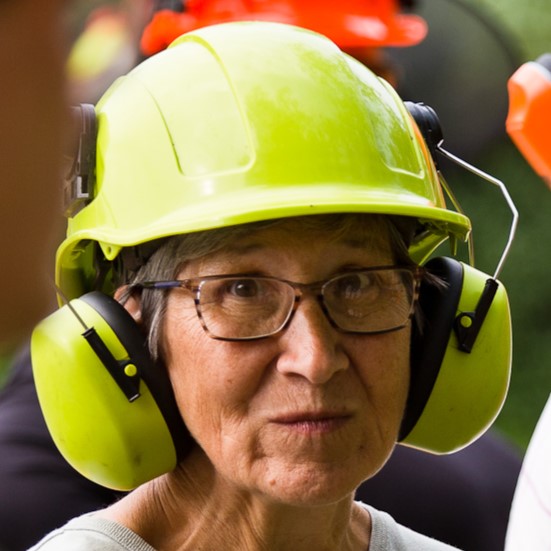
It’s no secret that chainsaws (especially gas-powered ones) are loud. Chainsaws run between 100 and 120 decibels for the person holding the saw. For comparison, the upper limit for safe exposure over the course of a full day of work is 85 decibels, and the National Institute on Deafness and Other Communication Disorders recommends keeping average exposure at 70 decibels. That means that a chainsaw can quickly cause permanent hearing damage if you don’t protect yourself.
Earmuffs or earplugs are essential to protect your hearing. Some helmets come with convenient earmuffs, or you can buy your own, or you can use earplugs. You should also wear earmuffs or earplugs when you’re near someone using a chainsaw, even if you won’t be using the saw yourself. Wearing earmuffs or earplugs can reduce noise levels by about 30 decibels. Additionally, it’s helpful to take breaks when using a saw, not only to avoid exhausting your body and saw, but to give your ears a break as well! The good news is that earmuffs usually last a long time and only need the foam inserts to be replaced to maintain their seal. Small earplugs should be replaced often for cleanliness and a good seal.
Legs
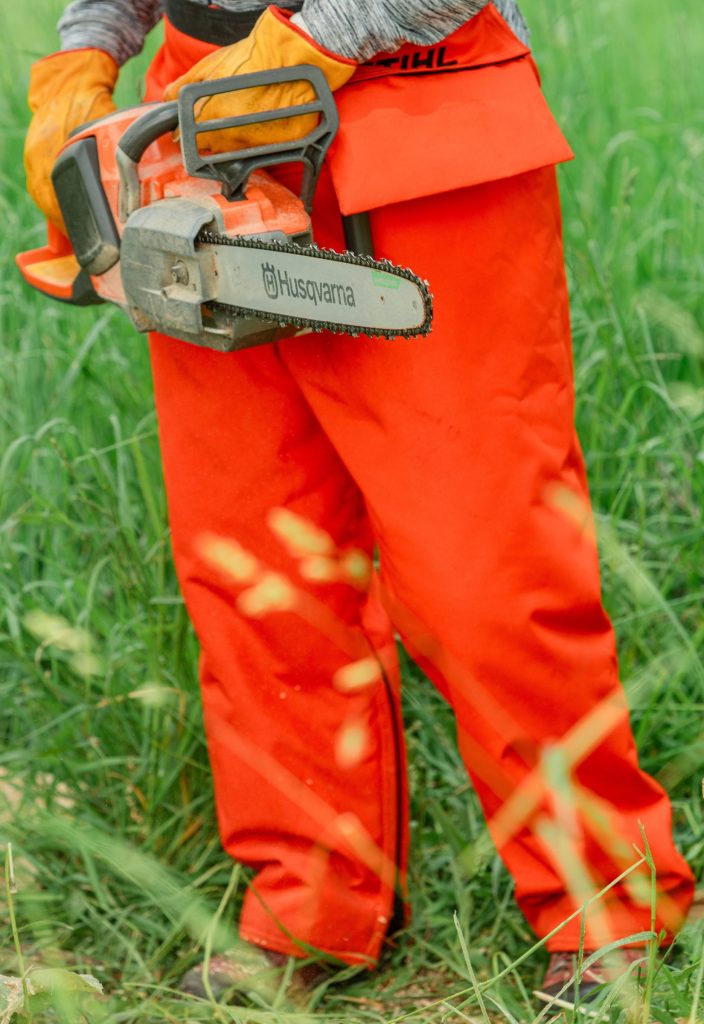
Leg injuries can happen if you don’t engage the chain brake or if your saw experiences a force called kickback. To protect your legs, you should wear long pants as well as a set of cut-resistant chaps. These are an additional layer that you put over your pants to cover the front of your leg from your hips to the top of your boots.
We recommend chaps made of Kevlar fibers. You can also get pants with Kevlar already sewn into them. If Kevlar comes in contact with a running saw, the fibers would instantly clog the sprocket of the saw, stop the chain, and prevent a severe cut.
A little care and maintenance can keep your chaps safe and functioning longer. Start by keeping them as clean as possible, which will reduce general wear and tear. The US Forest Service recommends spot-cleaning chaps with a scrub brush and citrus-based cleaning products. Please see the make and brand of your specific chaps, as some (but not all) can be machine-washed on delicate (no bleach, no fabric softeners). Minor tears to the surface nylon fabric of chaps can be sealed with a urethane-based adhesive sealant. If the Kevlar fabric is damaged, the chaps’ safety is compromised, and you need to get new chaps.
Hands and feet
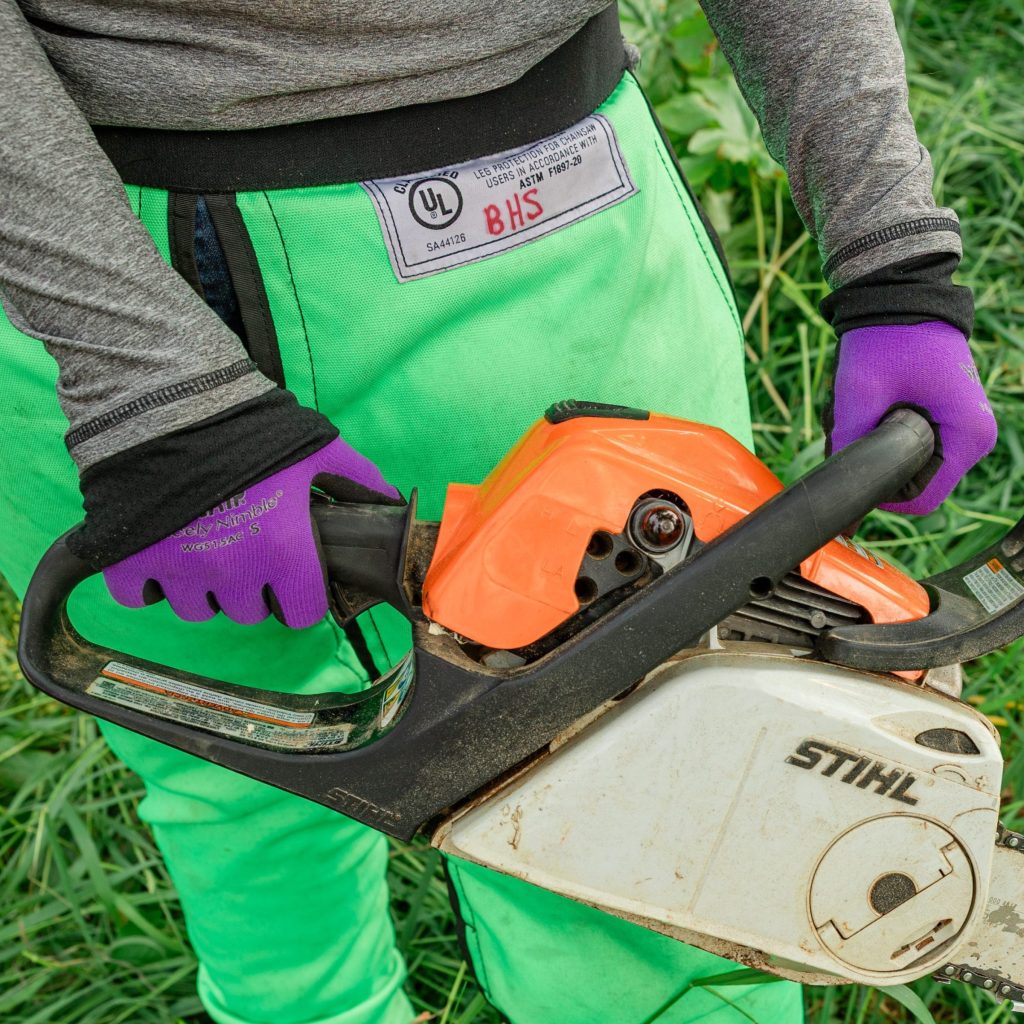
Gloves can help protect your hands when small wood chips or other sharp objects fly through the air. They can also help keep your hands somewhat warm in colder weather, when many folks are doing chainsaw work. Your gloves do not need to be cut-resistant, since they are mainly to help bolster your grip on the saw.
Whether you use leather gloves or latex-coated gardening gloves, make sure that they fit well on your hand, with no large gaps or flaps. Any extra space between your fingers and the tip of a glove will become dangerous if you are working with the chain brake or other small grasps on a chainsaw.
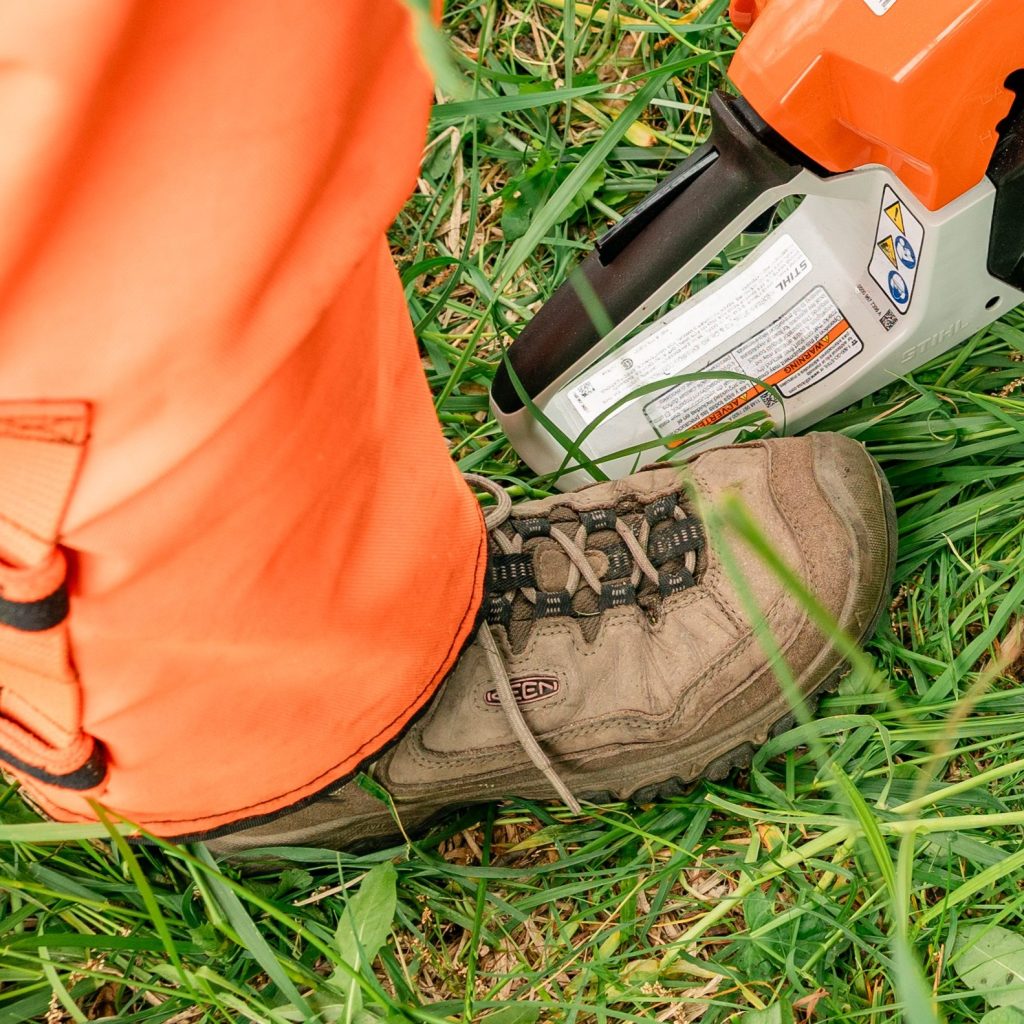
You should wear sturdy work boots such as leather boots—something that provides strong traction in various terrains while still feeling comfortable. Some organizations require steel-toed boots, and some boots have Kevlar sewn into them.
Closing thoughts
Always take the time to wear safety gear when using a chainsaw, even for a quick cut. Make sure to check your gear regularly for wear and tear and replace it when necessary.
It’s also important to remember that using the right personal protective equipment is only one aspect of safety. Falling trees and branches can hurt you even if you are wearing all the right gear. To avoid that type of accident, you also need to use proper chainsaw techniques and maintain your saw. Learn to recognize hazards, be aware of your surroundings, and always have a safety plan whenever you fire up your chainsaw.
Additional resources
If you have feedback on this webpage, fill out this form. If you have questions about working with a chainsaw, contact:

Olivia Kovacs
Forestry Educator
olivia.kovacs@wisc.edu
608-509-3012
Page written by Olivia Kovacs and Sky Hershberger (UW–Madison Extension). Last updated July 2026.
All photos on this page credit Sarah Monson Photography except the following:
- Woman in green helmet and earmuffs: Jon Martin