

Home » Learn about Woodland Stewardship » Explore Wildfire and Prescribed Fire » Wildfire and Wisconsin’s Forests
Wildfire and Wisconsin’s Forests
Wildfire and Wisconsin’s Forests
Related webpages
Wisconsin forests have a complex relationship with fire. While many forests need prescribed fire for them to remain healthy, wildfires can harm people, homes, wildlife—and even the forests themselves. Luckily, there are many things we can do to be more aware of the nuances of fire in Wisconsin and reduce the risk wildfire poses to our cherished woodlands.
This webpage is not intended to provide legal advice. We encourage landowners to learn about personal liability related to fire on their property by checking in with local ordinances, personal insurance providers, personal attorneys, and the Wisconsin DNR.
Wildfire in Wisconsin
A wildfire is an uncontrolled or unplanned fire that often occurs in weather conditions which fuel intensive fire growth.
Wildfire damage to forest ecosystems varies based on how intense the fire behavior is. Intense wildfires can harm forest ecosystems by increasing soil erosion, decreasing air and water quality, and killing desired native vegetation.
In Wisconsin, most wildfires occur in the spring from March through May, making it our most important fire season. In spring, weather such as low relative humidity, higher temperatures, and stronger winds increase wildfire risk. The second most critical time of year for wildfires in Wisconsin is in October and November, after the leaves fall and the grasses have died and dried up. We can also see a spike in wildfires during summertime droughts, typically around the 4th of July holiday with fires caused by fireworks, campfires, and equipment. The Wisconsin DNR keeps track of current and historic wildfires, which you can explore through the online Wisconsin DNR Wildfire Dashboard.
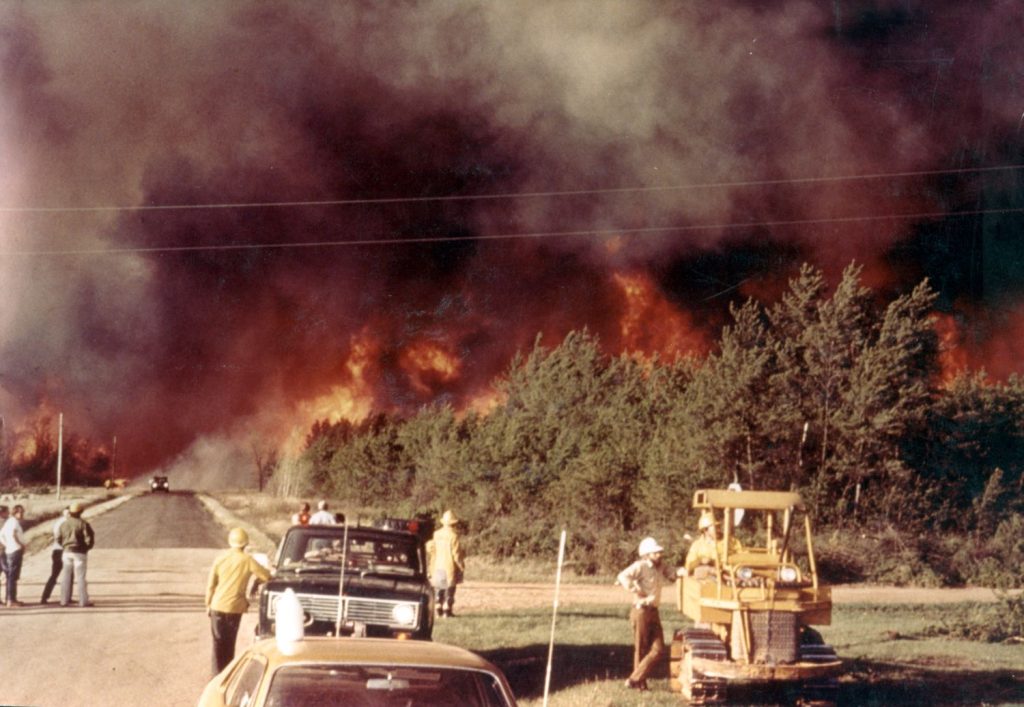
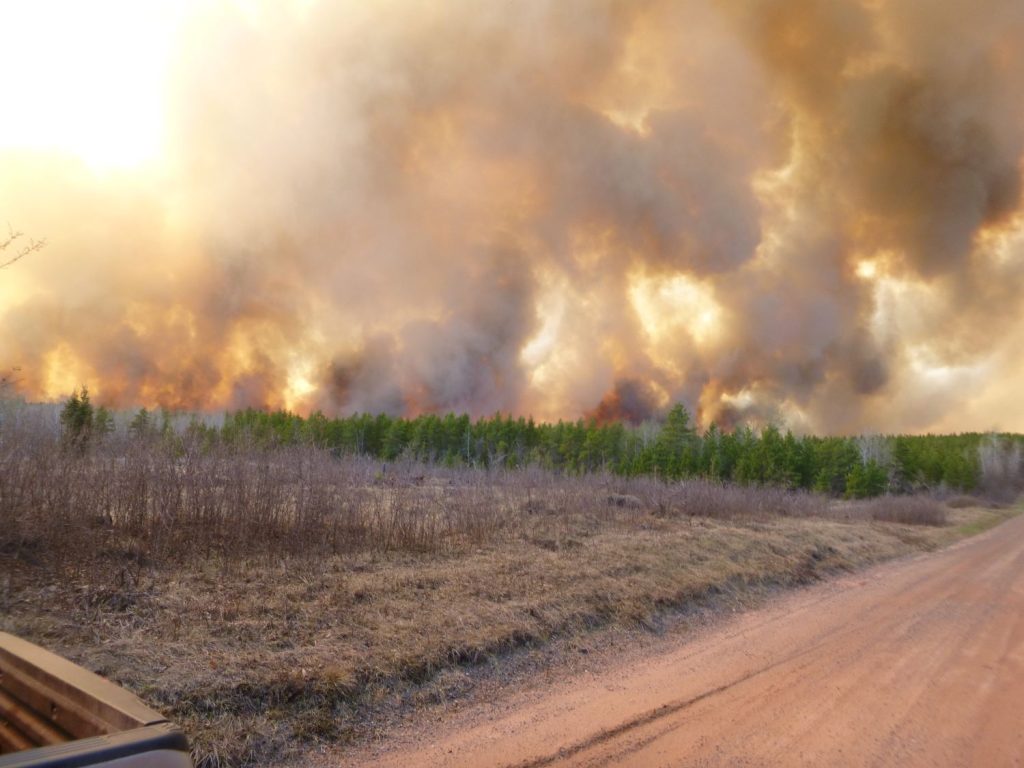
Wind, temperature, relative humidity, and precipitation all influence the likelihood of a wildfire starting and how fast it will spread. Based on these weather conditions and other factors, there are 5 fire danger ratings that help us track the potential for fires to start and their likely severity. “Low” fire danger days mean wildfires are unlikely to start and will spread very slowly (think of a rainy spring day). “Extreme” fire danger days mean wildfires can start very easily, spread incredibly fast, and will be difficult to control (think of a very dry spring day with low relative humidity, above normal temperatures, and gusty winds). Fire danger for Wisconsin is updated daily, and you can review the current fire danger by county on the DNR’s WisBurn website.
Over 98% of all wildfires in Wisconsin are linked to human causes, and the burning of debris (brush and leaves) is the most common way wildfires start. We see most wildfires that started from debris pile burning happening in the spring after the snow melts and before vegetation greens up. The second-leading cause of Wisconsin wildfires is related to vehicles and outdoor equipment—specifically sparks and hot exhaust systems that ignite dry grass, brush or leaves. Jump ahead to learn how you can prevent wildfires with safe burning practices and other strategies.
What is changing with wildfire in Wisconsin?
Changes in the climate, fire policies, and people’s behaviors are all influencing the present and future of fire in Wisconsin’s forests.
In the coming decades, wildfires could become more frequent, burn more acres, and last longer, due in part to the changing climate. In recent years, less winter snowpack has led to longer fire seasons than in the past. In 2024, a widespread spring drought resulted in a more intense and longer fire season. Similarly, in 2025, fueled by dry conditions and the lack of snow, Wisconsin had a record number of wildfires in January and February, earlier than the typical wildfire season. However, we still see a lot of variability from year to year—2026 was more similar to normal fire seasons in previous decades.
Just like forests across the continent, Wisconsin’s forests are still dealing with the legacy of centuries of fire suppression. Without the low-intensity fires that used to be common in many types of forests, fuel has built up on the forest floor, and plants that are sensitive to fire have replaced fire-adapted plants. So when a wildfire does happen, it is often more damaging than it would have been in the past.
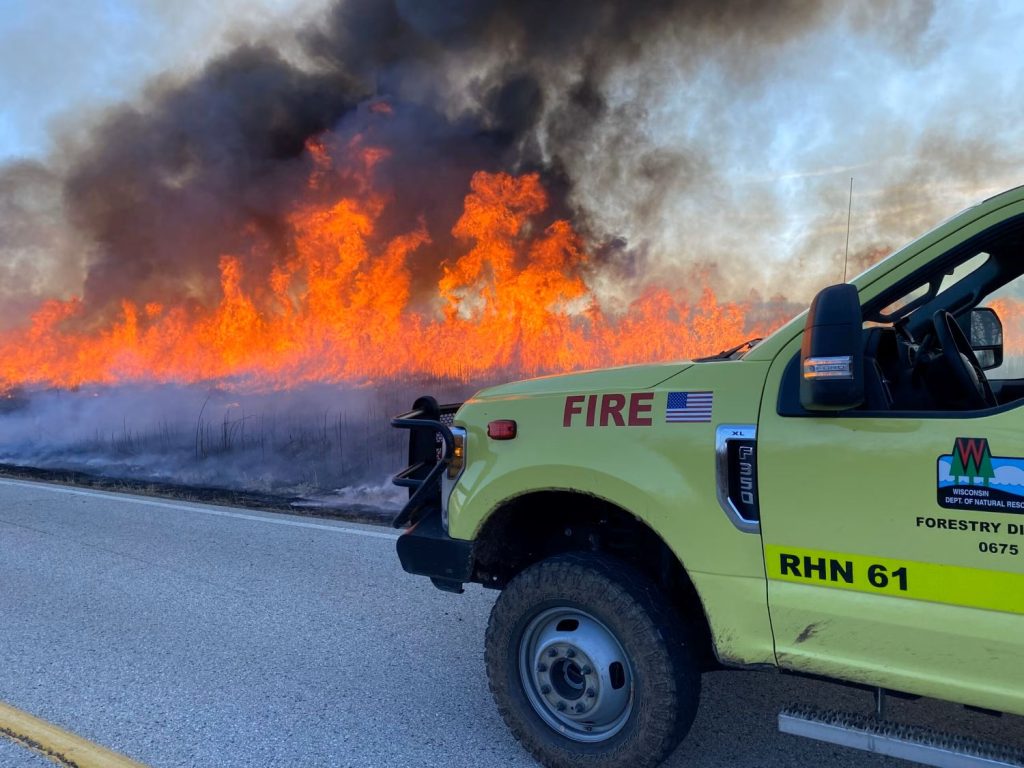
But we’re not destined to have a future full of devastating forest fires. Prescribed fire and other sustainable management strategies can reduce the chances of a wildfire running out of control. And since most wildfires in Wisconsin are sparked by people, responsible behavior can make unwanted fires much less likely.
How to prevent wildfires
There are many things you can do to lower the chance that a wildfire will start on your land.
Burn debris safely and get burn permits
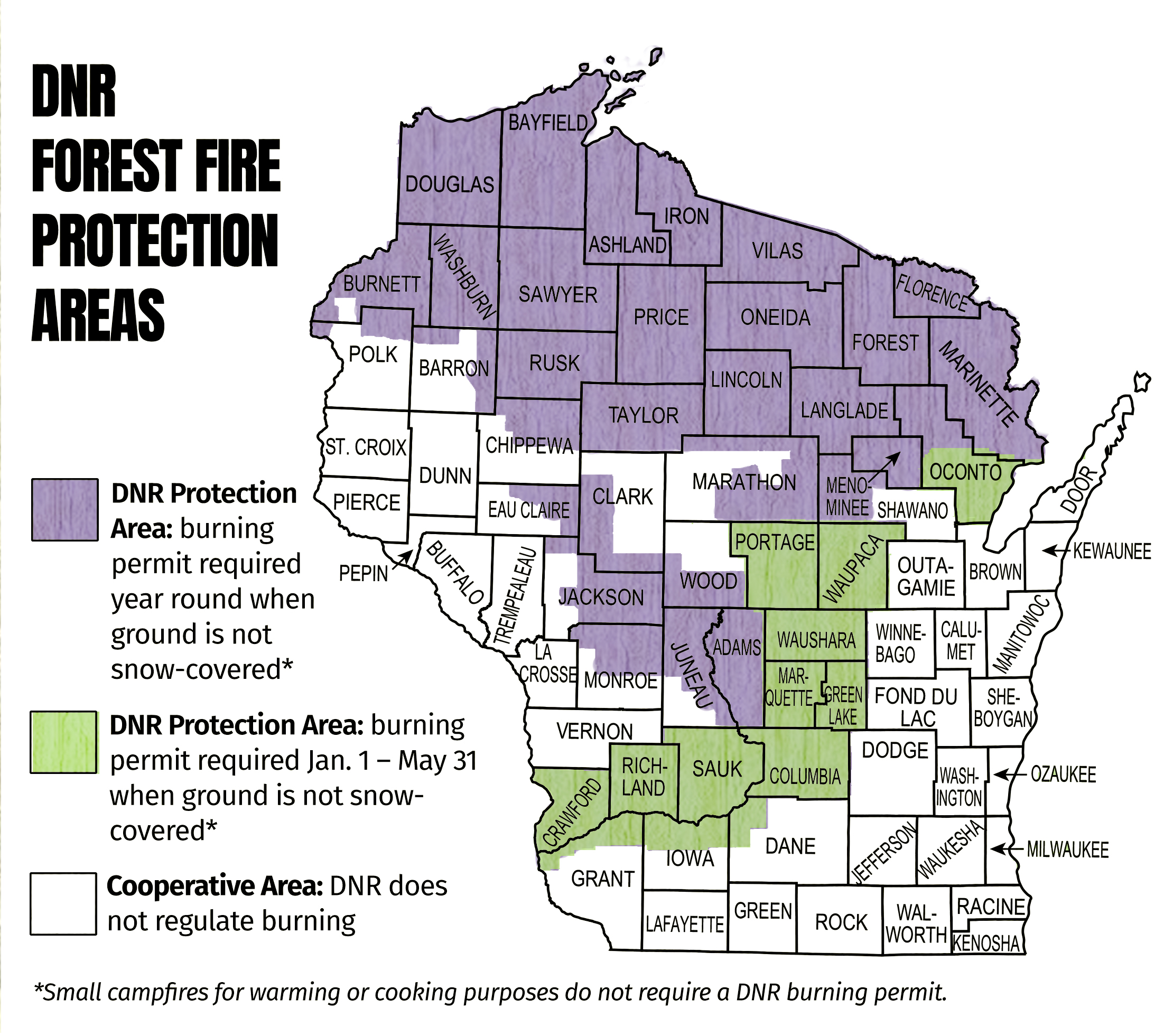
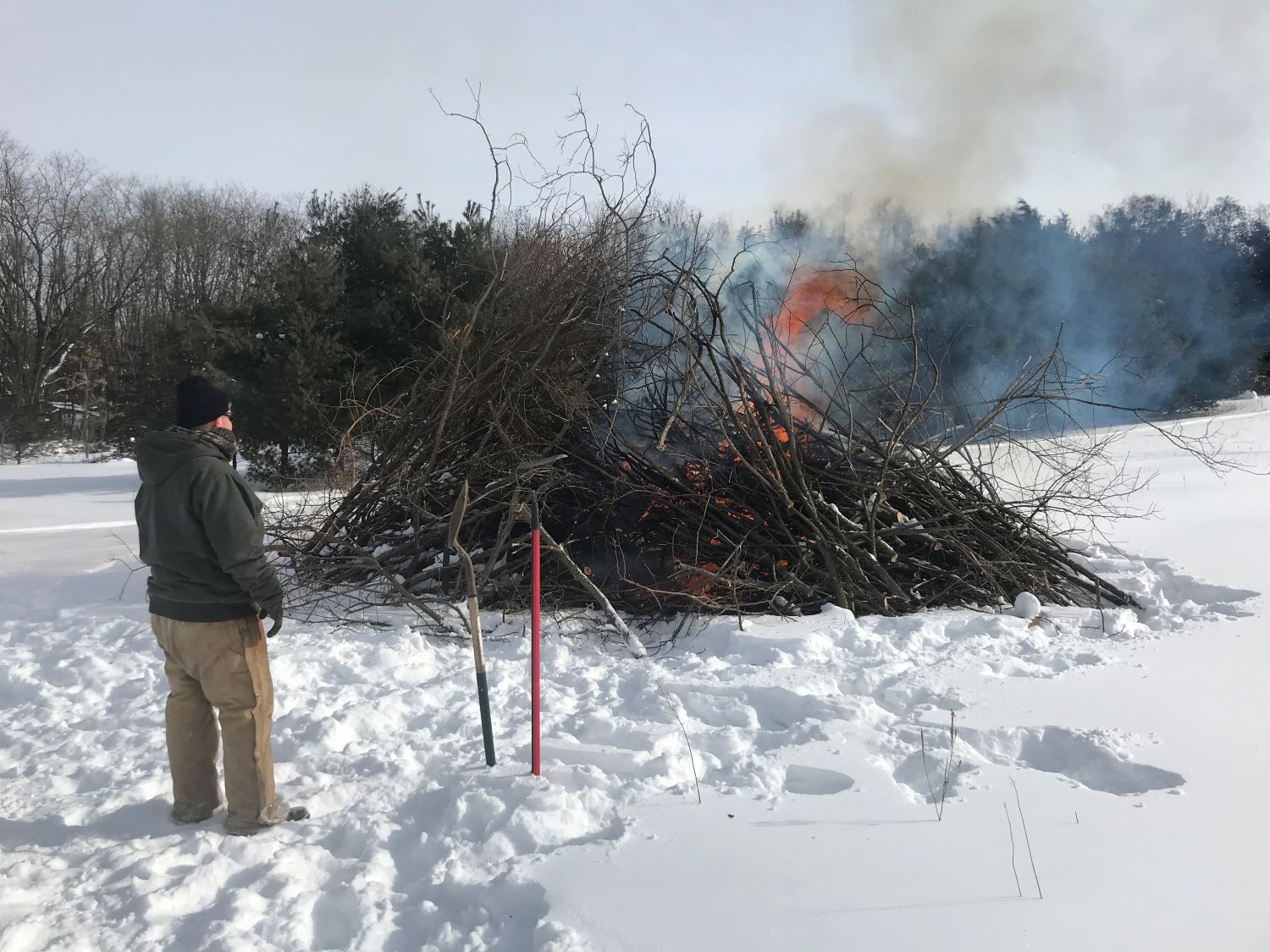
If you are burning brush or leaf debris, first ask yourself if there are other ways to dispose of the material, like composting or chipping brush. If you decide to conduct debris burning, it is best to wait until winter when the ground is completely covered by snow to help contain the fire. As a first step, obtain proper burn permits and follow any local burning ordinances. In Wisconsin, burn permits are required in Fire Protection Areas (see map) when the ground is not completely covered by snow.
If you are in a Fire Protection Area, you can obtain a burn permit online. If you have burn permit questions and are in a Fire Protection Area, you can reach out to the local Wisconsin DNR Fire Dispatch.
Keep in mind that a Wisconsin DNR burn permit does not apply to incorporated cities and villages. In these areas, the local municipality will have their own burn permit requirements. You can check if your property is in a Wisconsin DNR Fire Protection Area online via the WisBurn website. Finally, some townships may have additional burning requirements. Even if you have a DNR burn permit, you should reach out to your local municipality to review their requirements.
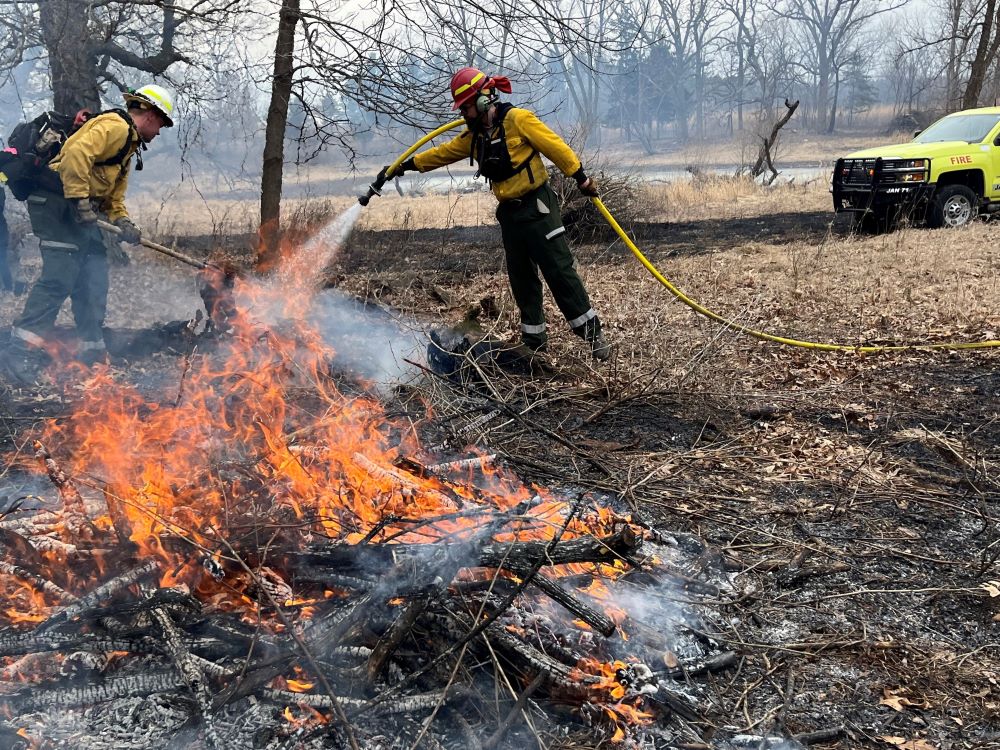
Before and during the debris burn, check local weather conditions and see if there are any day-of DNR burning restrictions in your area. Make sure to only burn legal materials. When you are burning, ensure your fire is small and controllable. Always burn with a water source and firefighting tools (shovel, rake) nearby, and never leave your fire unattended. When you’re finished burning, drown the fire with water and stir the ashes. Come back later to check if any of the ashes are still smoldering.
Inspect equipment
Avoid using equipment and machinery in forested areas during dry conditions or on elevated fire danger days. Or try to operate them early in the morning or late in the day, outside the peak fire conditions during the middle of the day. Inspect your equipment for any dragging parts including towing chains. Always carry a fire extinguisher when operating vehicles and avoid driving on dry brush and grass.
Use spark arrestors for chainsaws, ATVs, and mowers and be sure to inspect them for carbon build up. And speaking of mowers, be cautious of metal blades hitting rocks, which can create sparks. Clean mower decks each time you use your mower to avoid debris buildup and don’t mow on very dry, hot, and windy days.
Use campfires and fireworks responsibly
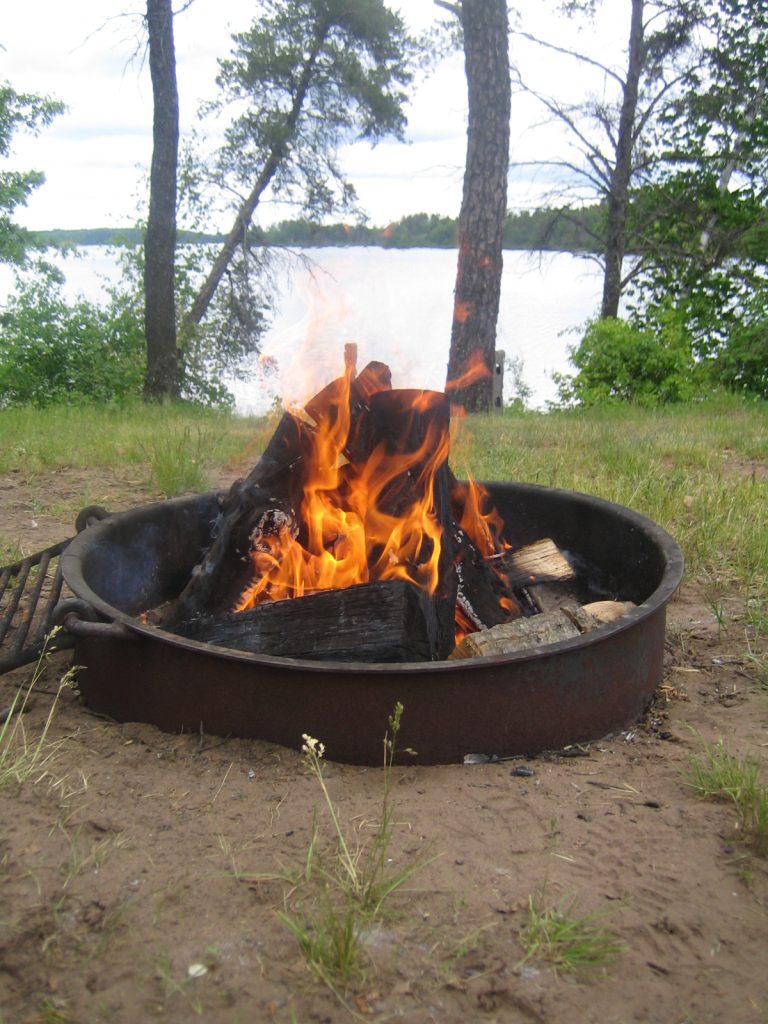
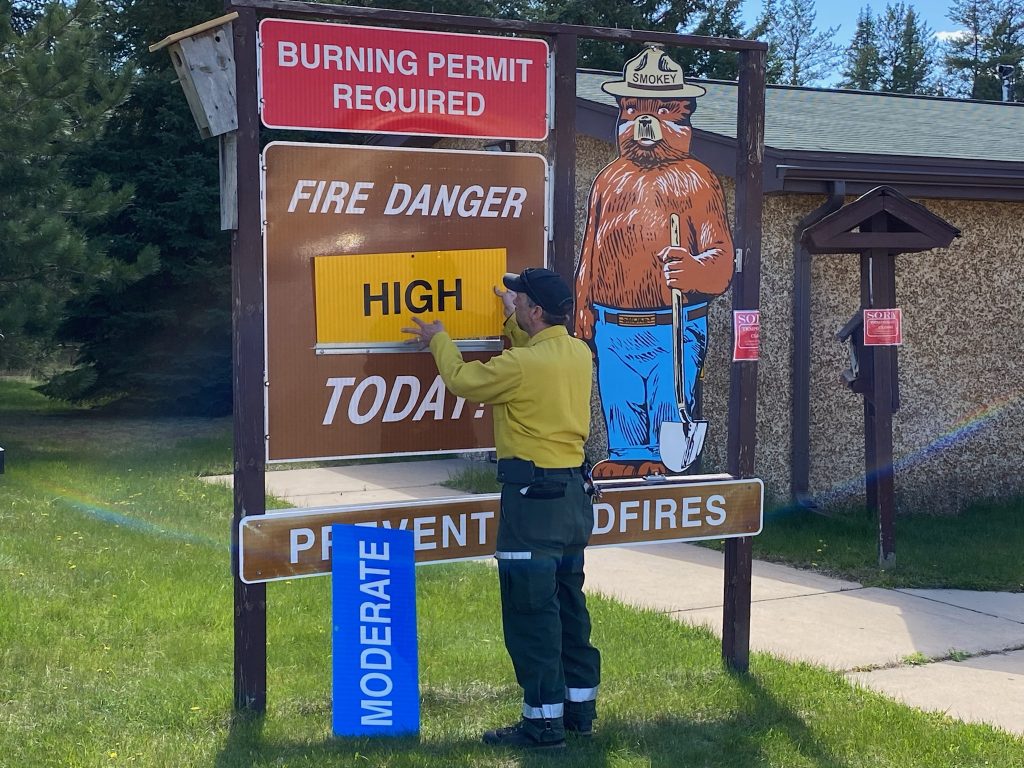
Small campfires for warming or cooking purposes do not require a burn permit from the Wisconsin DNR. However, check the WisBurn website before making a campfire to check the current fire danger in your area. Never leave your campfire unattended and always use the “drown-stir-feel” technique to properly extinguish campfires.
If using fireworks, use them in a safe area away from flammable materials. Understand that certain fireworks may require a permit and avoid using fireworks on elevated fire danger days. Much like a campfire, make sure all fireworks are out cold after use. And finally, remember that Wisconsin DNR prohibits the use of fireworks in all state parks, forests, and public hunting and fishing areas.
Protect your property
Fire prevention is also important in and around your property. If you use a fireplace or wood stove, be sure to empty ashes in a metal container with a tight lid. Cool ashes by drowning and stirring and avoid dumping them outdoors if the ground is not snow-covered—hot embers can still start a fire. Finally, you can prepare the immediate area around your property to reduce wildfire risk.
Some homes and cabins in Wisconsin are at greater risk to wildfires due to their location in the wildland urban interface. The wildland urban interface is where natural or undeveloped vegetation butts up against, or is mixed within, human development. Your property is at greater risk of wildfire if your home or cabin is:
- In a rural and wooded area,
- Surrounded by tall grass, oaks, or pines,
- On sandy soil, and
- Located where campfires and debris burning are common.
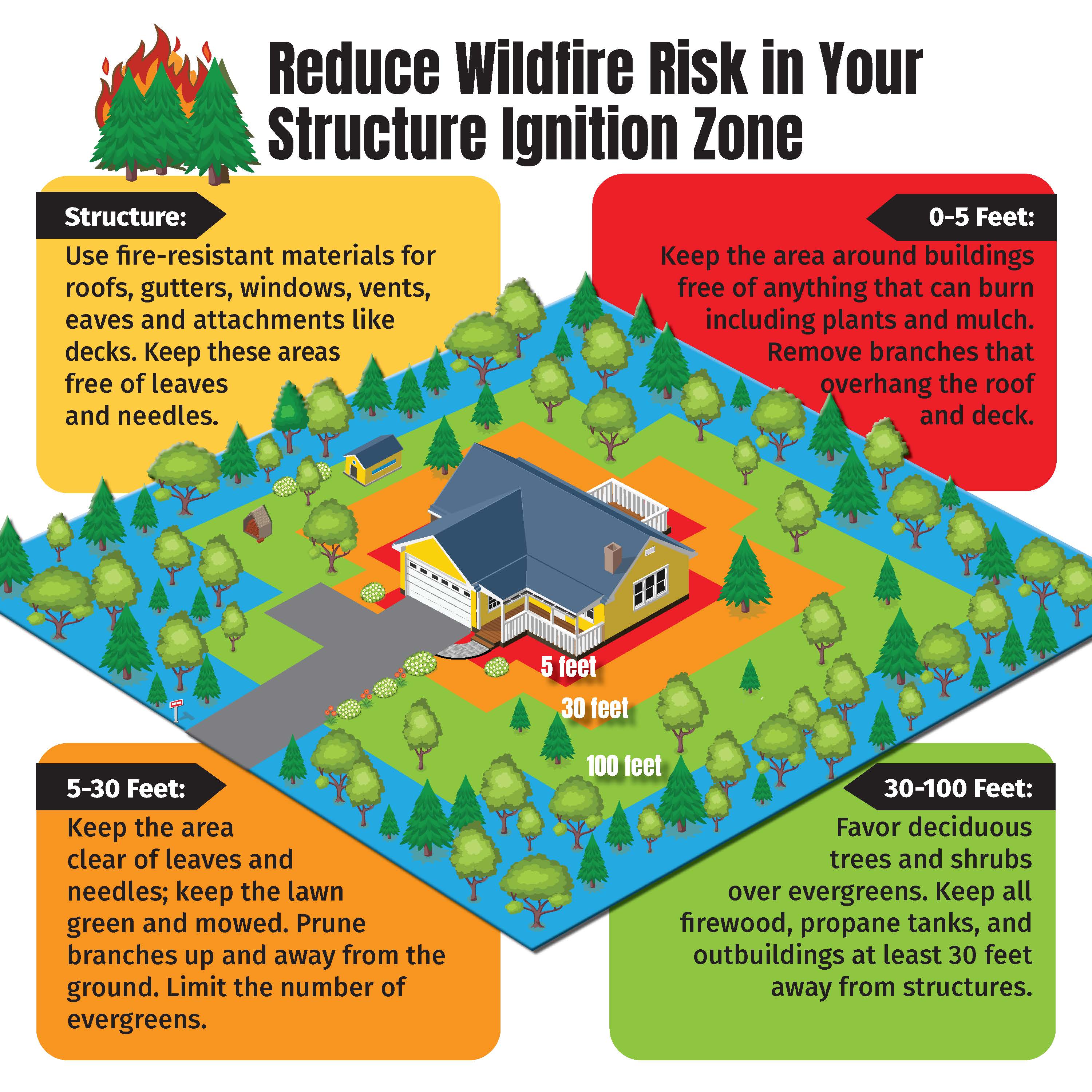
Thankfully, you can do several things to become “firewise.” In a nutshell, becoming “firewise” means building a defensible space around your property in the case of a local wildfire. Each structure ignition zone (the area 100 to 200 feet from a property and its surroundings) will have different strategies to create this defensible space. These strategies include cleaning your roof and gutters, using ignition-resistant building materials, and keeping firewood and other flammable materials at least 30 feet away from buildings.
Additional resources
Explore all learning hub webpages
Woodland stewardship topics
Use a chainsaw safely & effectively
> Protective gear for safe chainsaw use
> Grow mushrooms using sawdust spawn
> Grow mushrooms using plug spawn
People and programs who provide assistance
If you have feedback on this webpage, fill out this form. If you have questions about wildfire and your woods, contact:

Keith Phelps
Forestry Educator
keith.phelps@wisc.edu
920-840-7504
Page written by Keith Phelps and Sky Hershberger (UW–Madison Extension) and reviewed by Catherine Koele (Wisconsin DNR). Last updated July 2026.
Additional photo credits:
- Wildfire at night: Mike Lehman, Wisconsin DNR
- Campfire in fire ring: Wisconsin DNR
- Fire danger sign in Eagle River: Wisconsin DNR